There are places in Norway that are beautiful – and then there is Stryn.
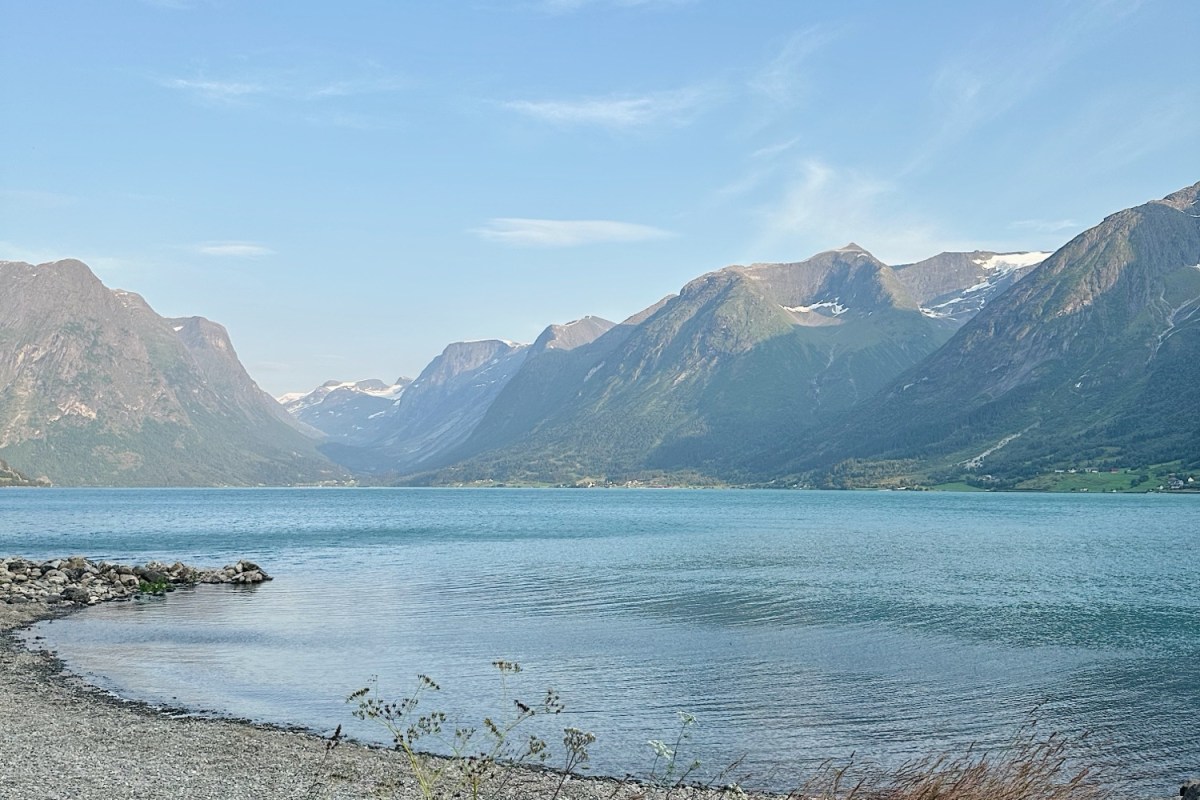
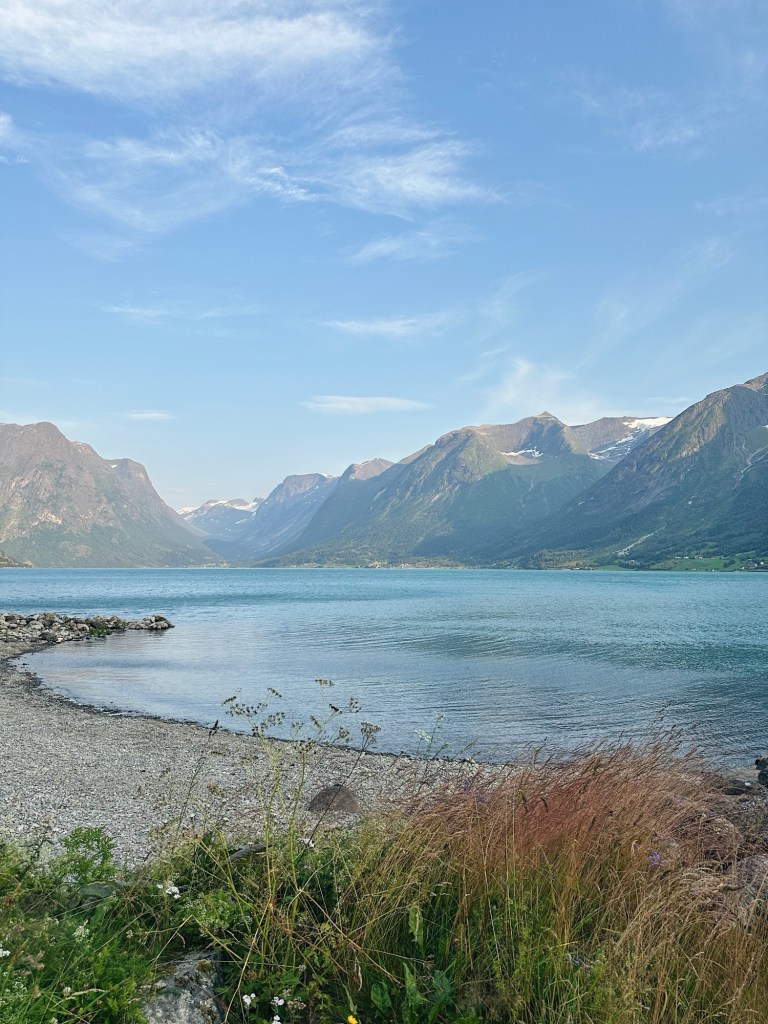
We have stayed in this part of Western Norway a couple of times now, and I still think the landscape around Lovatnet, Oldevatnet and Oppstrynsvatnet is among the most beautiful we have seen in the country. Turquoise glacial lakes, waterfalls appearing almost everywhere you look, tiny farms, steep green mountains and snow-covered peaks in the distance. It is almost ridiculously picturesque.
There are hotel stays, and then there are places you remember simply because getting there is part of the experience.
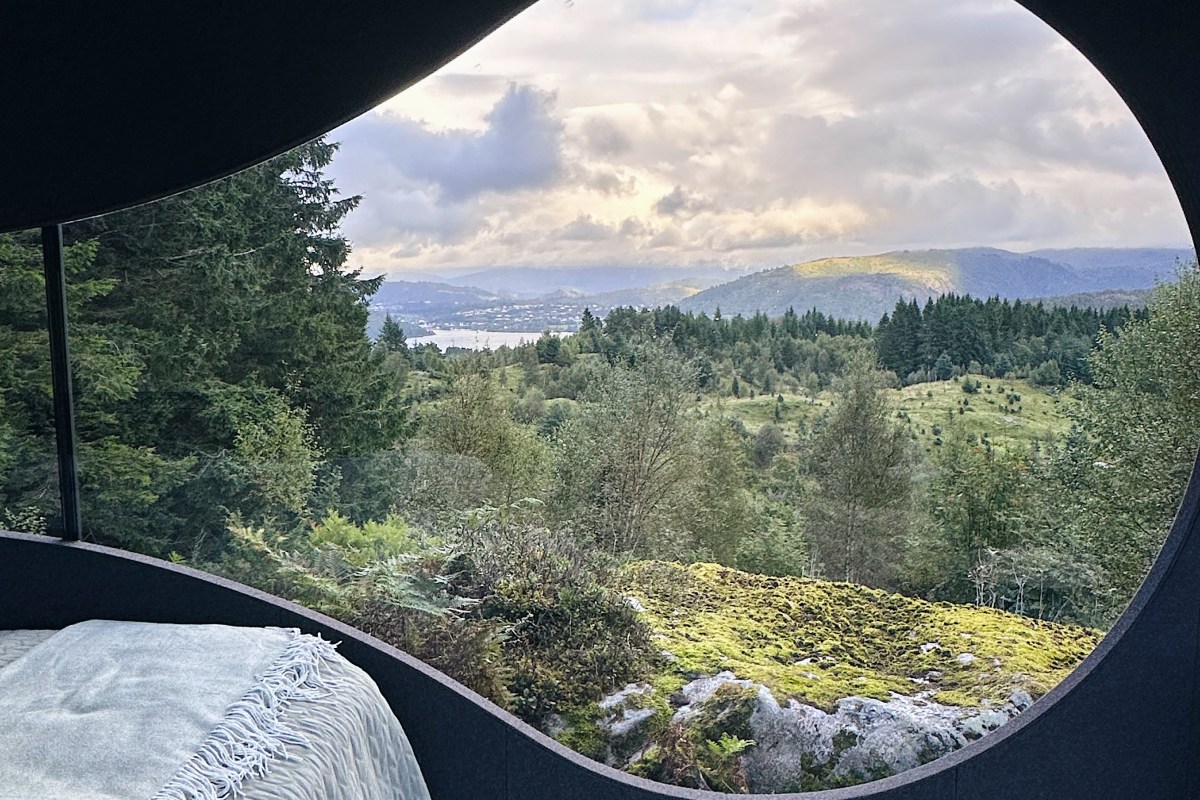
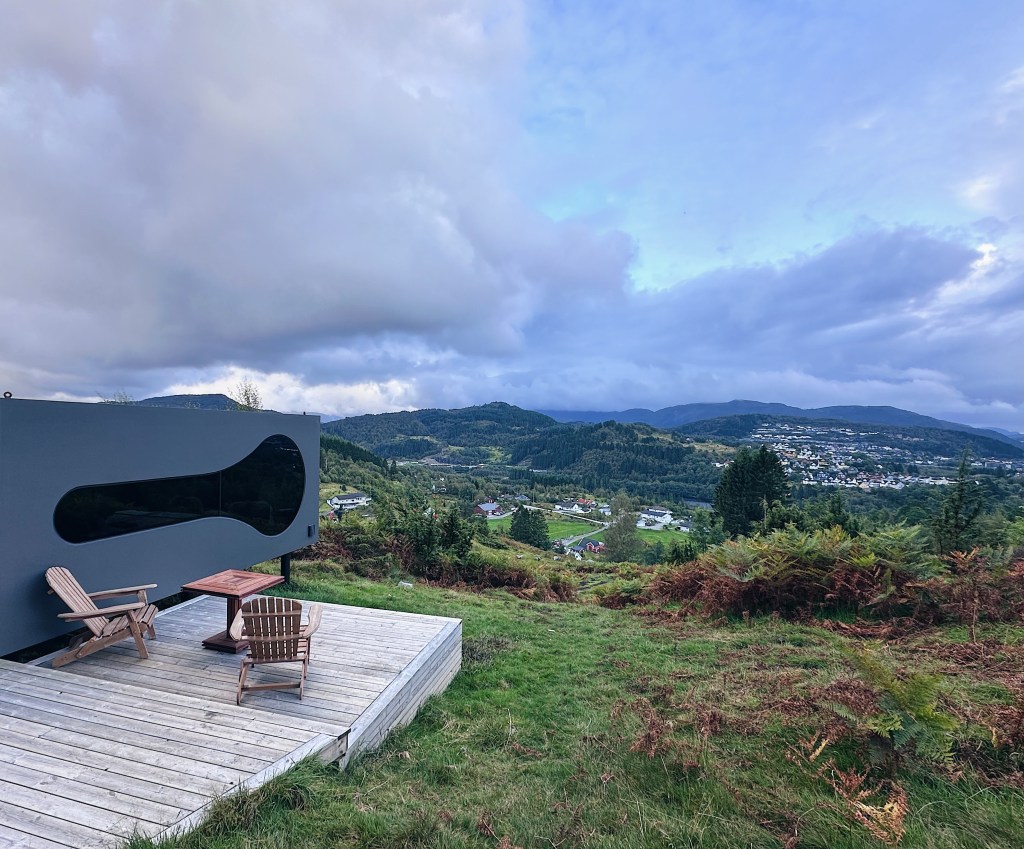
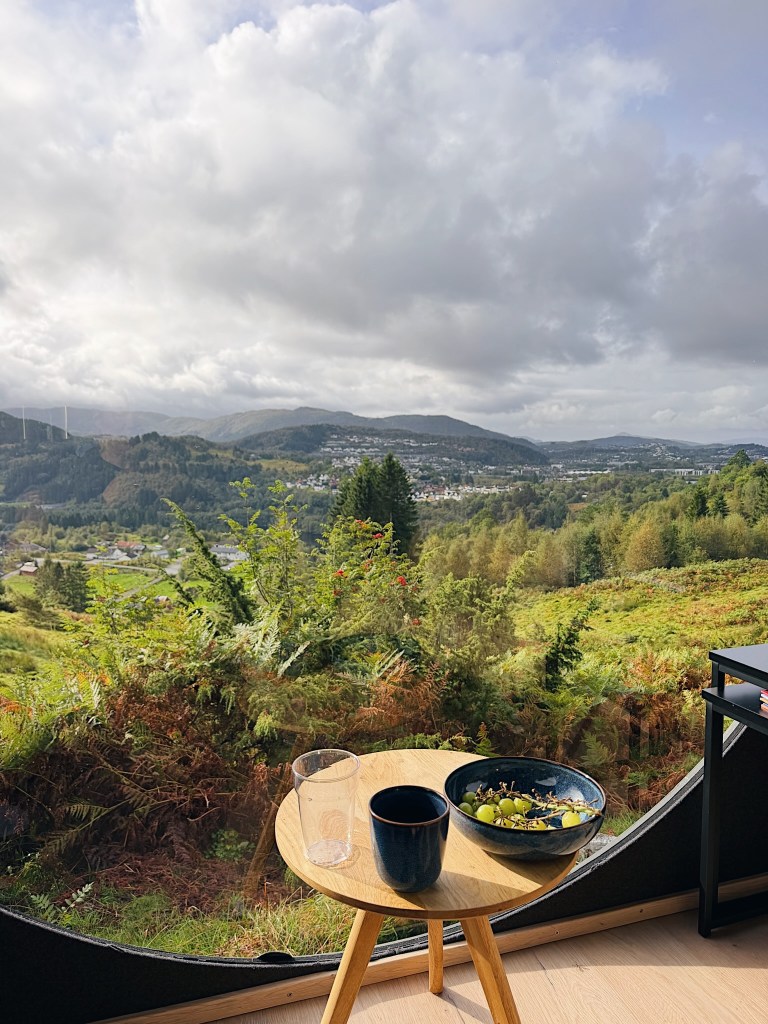
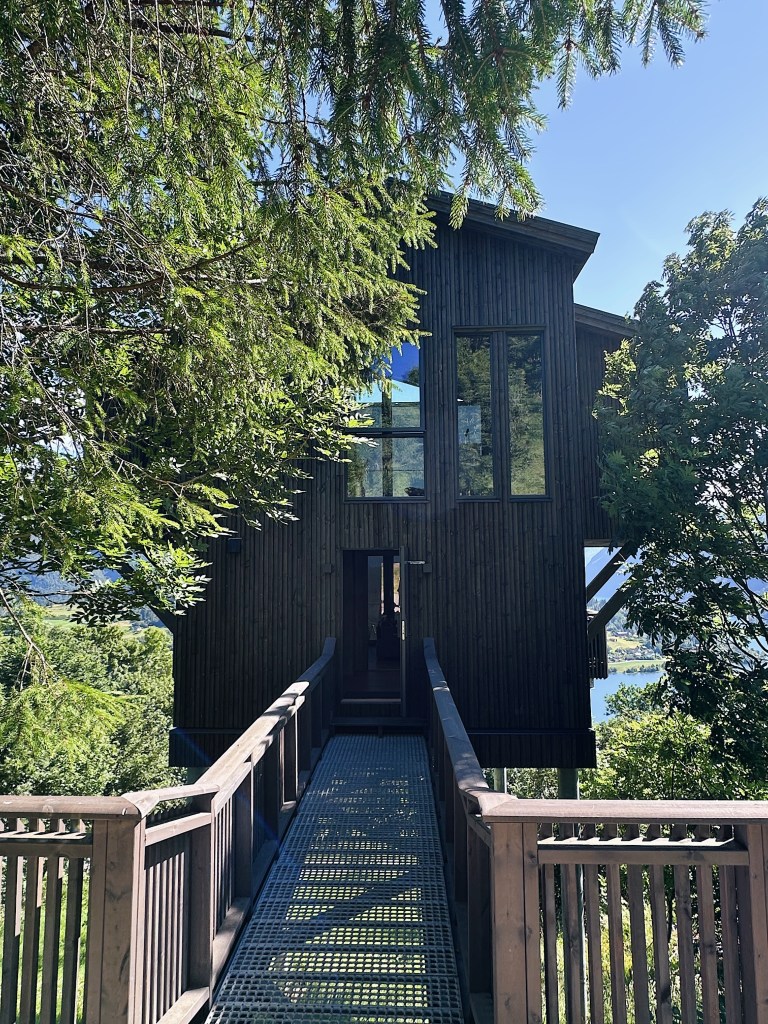
Just 20 minutes from downtown Bergen, high above the city and surrounded by sheep, grass and mountains, you’ll find one of the most unique places we stayed during our trip through Norway: Birdbox Bergen.
Pack light – you have to walk there
This is definitely a place where you want to know what you are getting into before you arrive.
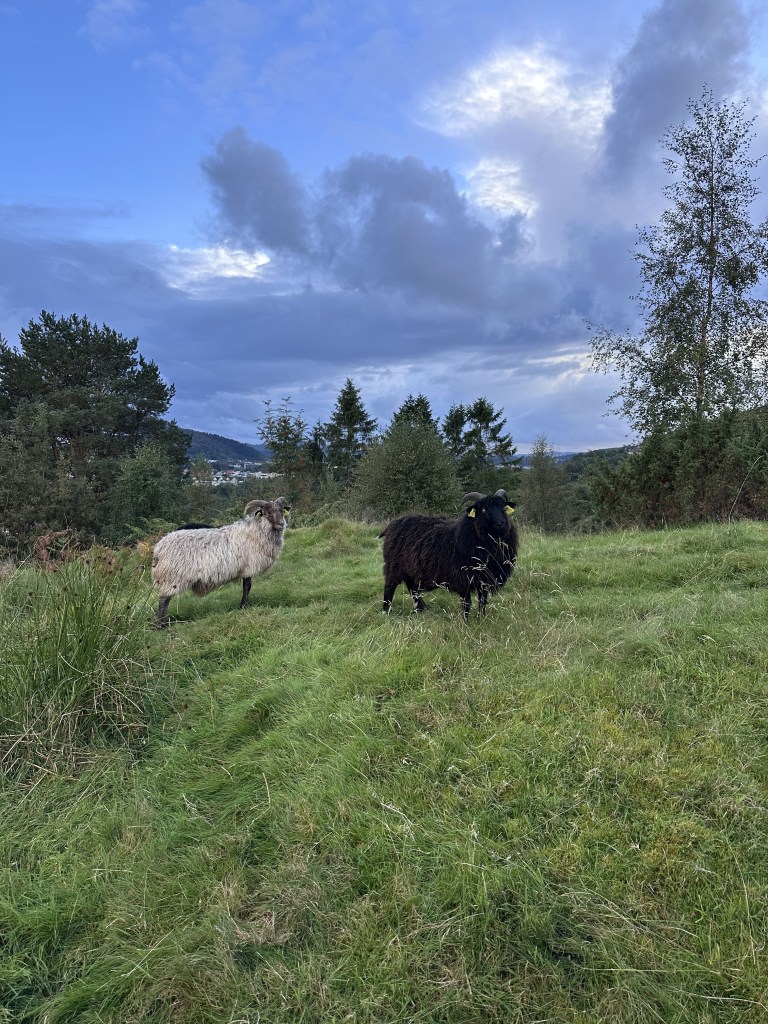
There is no road leading directly to the Birdbox, so we left our suitcases behind and packed everything we needed for the night into our backpacks. The final stretch is a fairly steep walk uphill across grass, gravel, rocks – and past quite a few sheep.
It isn’t an especially long hike, but the terrain is uneven and can be slippery, particularly in typical Bergen weather, so proper shoes and light luggage make the experience much easier.
Birdbox sends a very good guide before arrival explaining exactly how to get there and what to expect. They can also transport luggage up by ATV if needed, but we actually really enjoyed walking up ourselves. It made arriving at the little cabin feel even more special.
Bring dinner – and a bottle of wine
The Birdbox itself is tiny, so we kept things very simple. We brought takeaway for dinner, a few things for breakfast the following morning and, perhaps most importantly, a bottle of wine tucked under one arm.
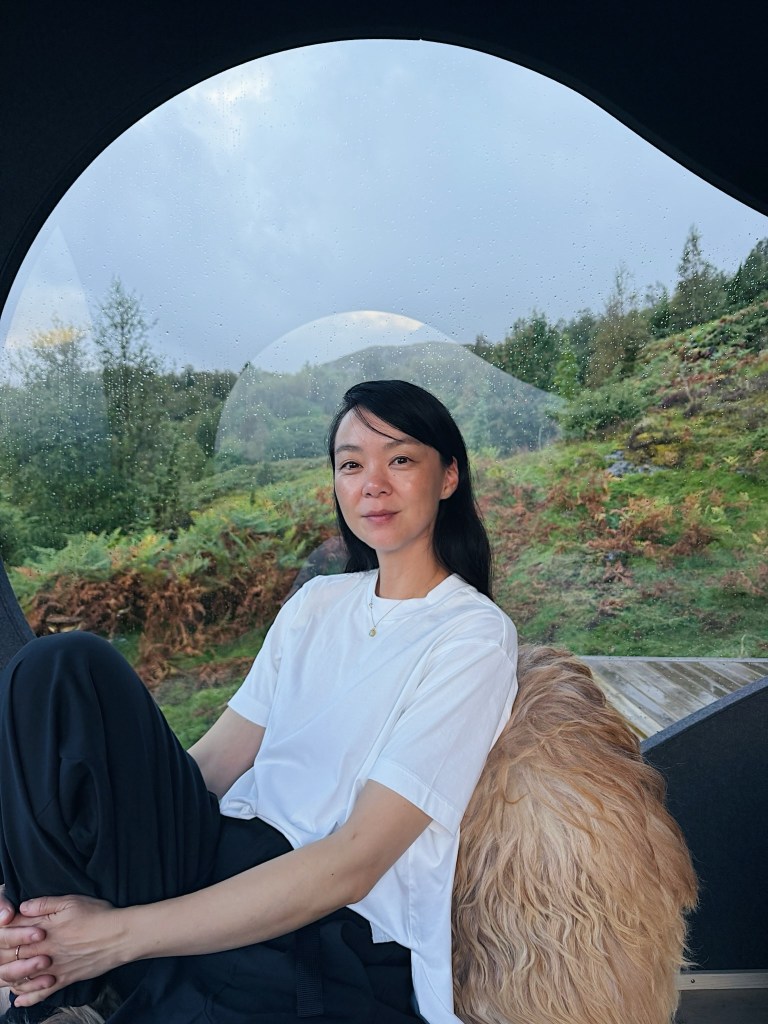
And then the weather did what the weather in Bergen does. Almost immediately after we arrived, the rain started pouring down. We felt very lucky with our timing – walking up the steep grassy and rocky path in heavy rain would definitely have made the experience slightly less charming. From inside the Birdbox, however, it was perfect.
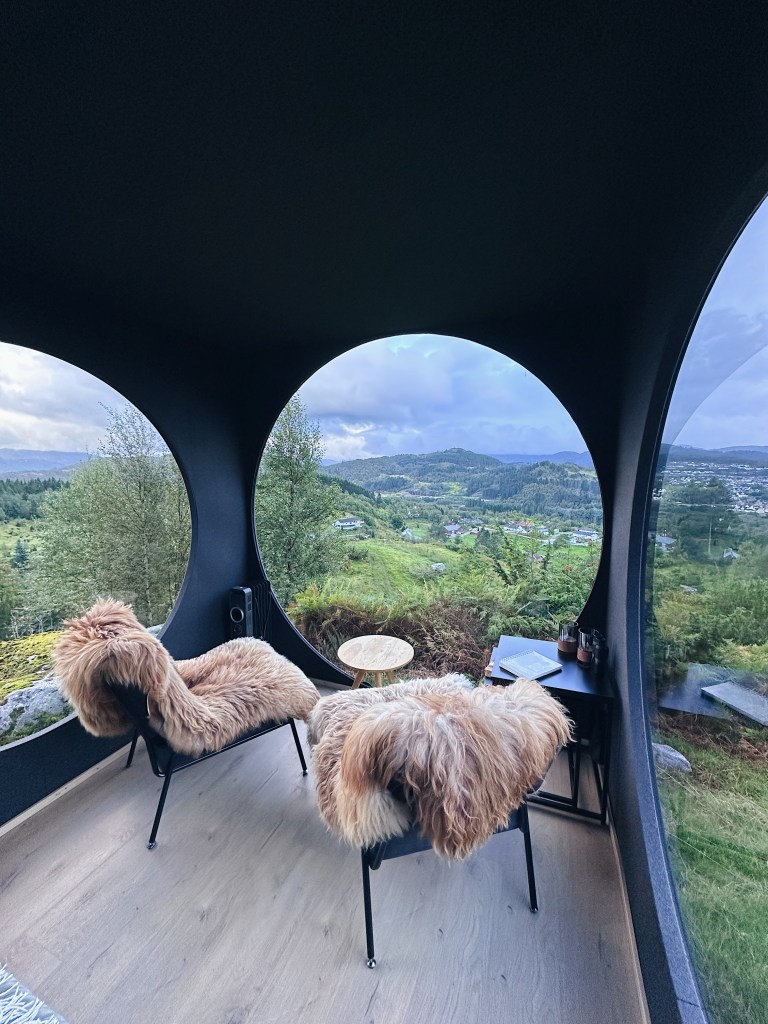
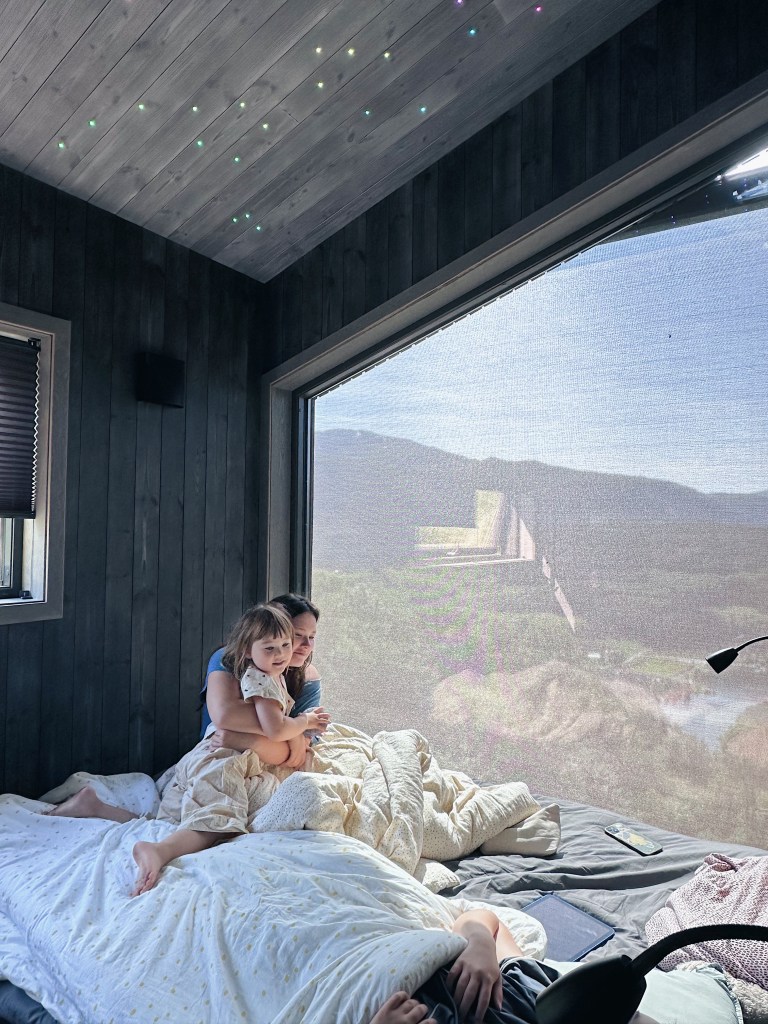
There is something incredibly cosy about sitting inside such a well curated space while the rain is hammering against the windows, looking out across the landscape with nowhere else you need to be.
A bathroom with a difference
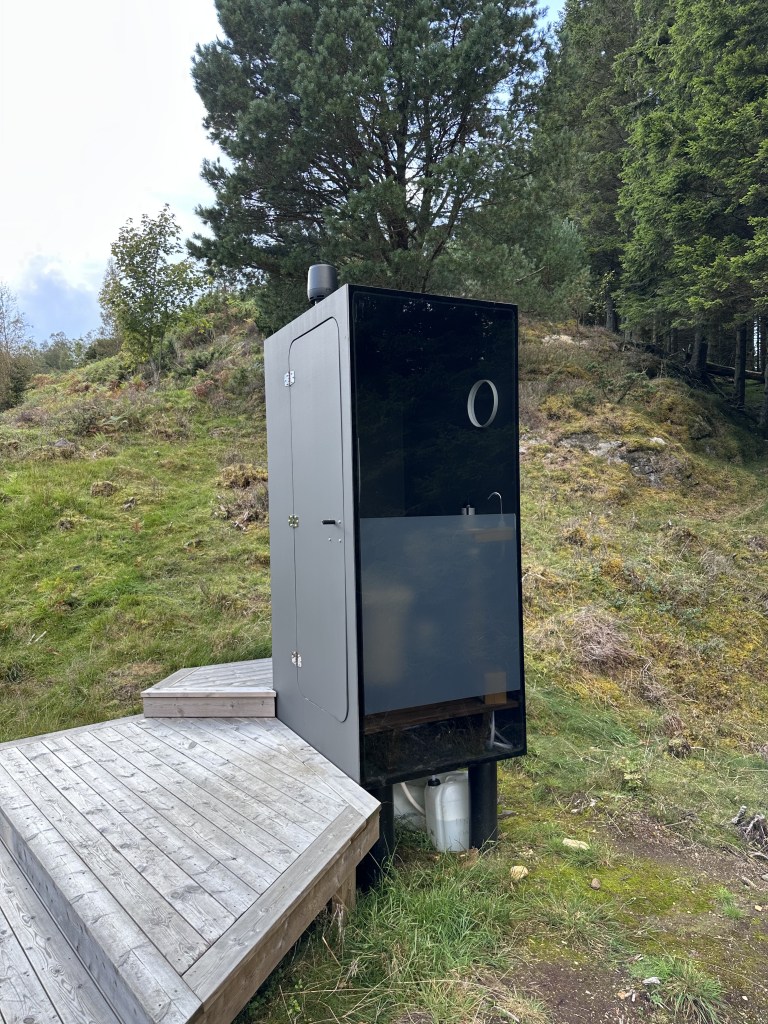
One detail worth knowing before booking: the toilet is outside the Birdbox in its own tiny cabin.
It is a combustion toilet, which might sound slightly intimidating if you have never used one before, but again, everything was very well organised. There were clear instructions explaining exactly how it worked and how to use it.
It is all part of the off-grid feeling -and there is no shower, just FYI.
The view is the reason to come
The real magic of Birdbox Bergen is the location.
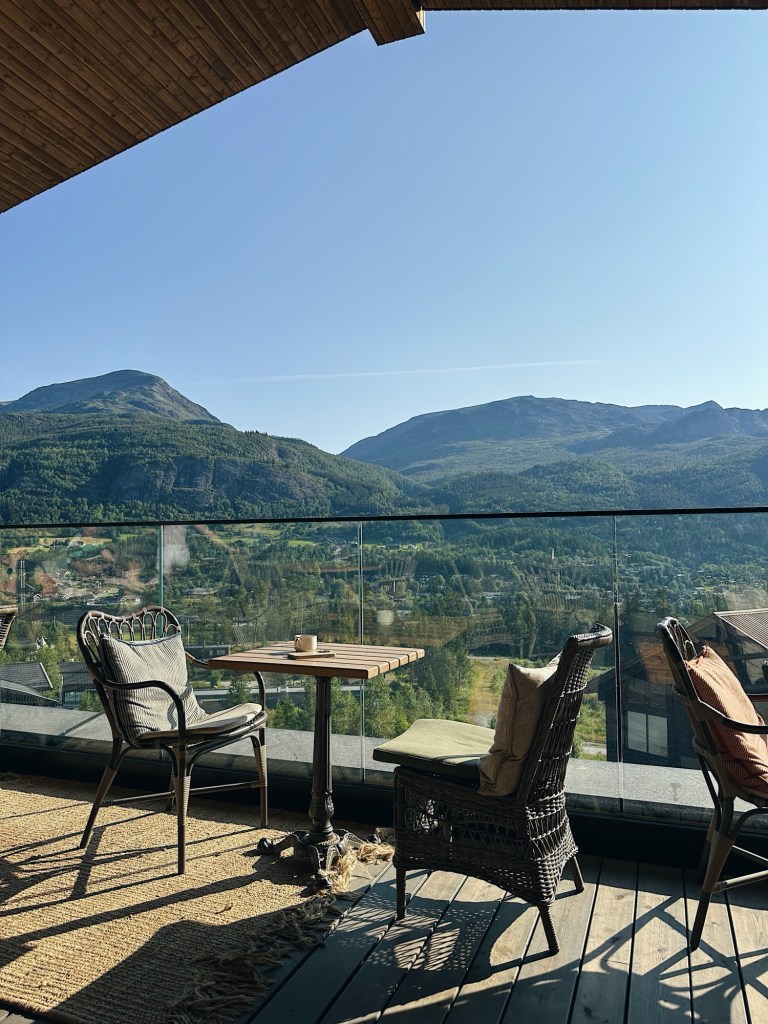
You are only around 20 minutes from downtown Bergen, yet once you are up there, it feels surprisingly remote. The little box sits quietly in the landscape with an incredible panoramic view, sheep wandering nearby and very little between you and the Norwegian scenery.
It is not luxury in the traditional hotel sense. The space is small, you carry your belongings up the hill, your bathroom is outside and you need to arrive with your own food.
Good to know before staying at Birdbox Bergen
Pack light. A backpack is much easier than a suitcase for the walk up.
Wear proper shoes. The final climb is steep in places with grass, gravel and rocks, and Bergen weather can change quickly.
Bring food and drinks. We brought takeaway for dinner and breakfast for the following morning.
Read the arrival guide. Birdbox sends detailed instructions before your stay – definitely read them before setting off.
Luggage transport is possible. If you don’t want to carry everything up yourself, Birdbox can arrange transport by ATV.
Expect a very small space. This is part of the charm. Come for the experience and the view rather than traditional hotel comforts.
The toilet is outside. It is a combustion toilet in a separate micro cabin, with clear instructions provided.
Allow for the weather. We were lucky to reach the Birdbox just before the rain started. In wet weather, the path can naturally be more challenging.
Would we stay again?
Yes. Absolutely.
Birdbox Bergen manages to feel like a tiny escape into the Norwegian wilderness while still being incredibly close to Bergen. It is quirky, simple and slightly adventurous – and waking up to that view makes the climb completely worth it.
If you are visiting Bergen and looking for something very different from a traditional hotel, I would definitely put this one on the list.
Stay:Birdbox Bergen Location: Bergen, Norway From Bergen city centre: Approximately 20 minutes by car + the final walk uphill Best for: Couples, one-two-night escapes, nature lovers and anyone looking for a slightly different Bergen experience
Sometimes the places you don’t really know what to expect from turn out to be the ones you remember the most.
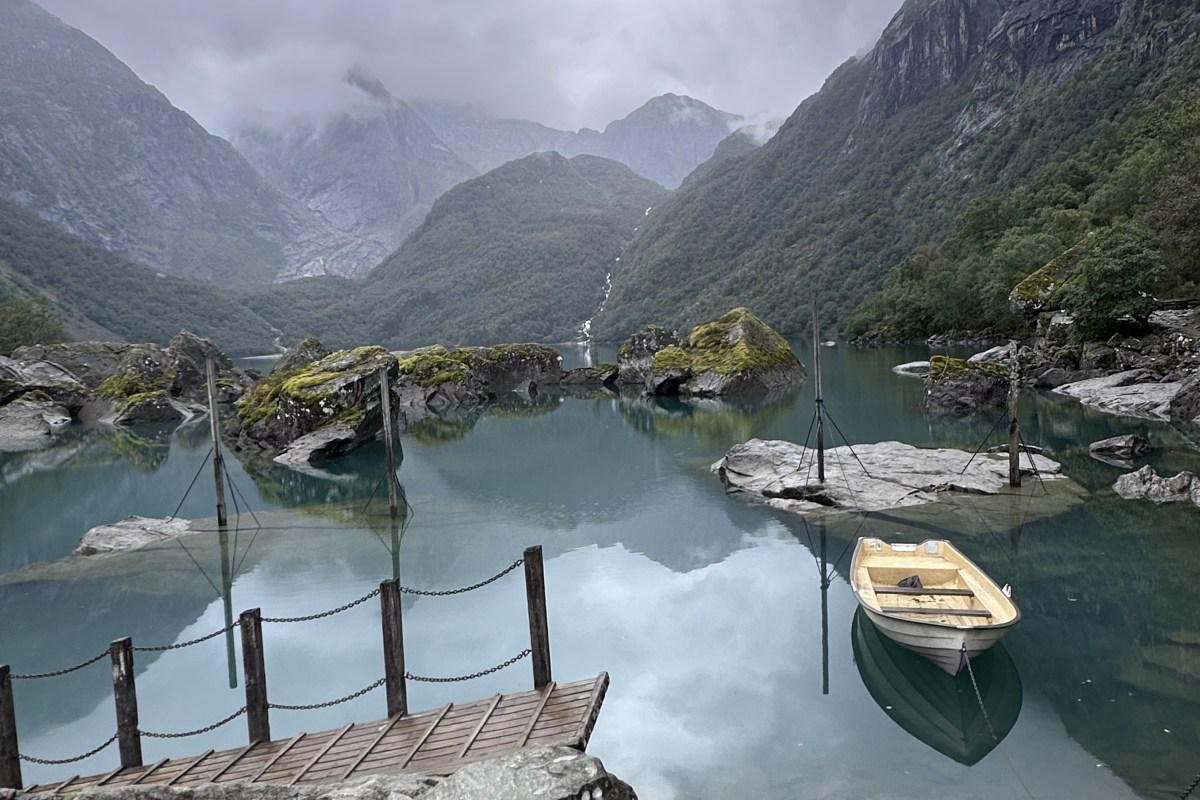
On our way from Odda back towards Bergen, we decided to make a little detour to Bondhusvatnet; a glacier lake hidden in Bondhusdalen, close to Sundal in the Hardanger region. It has been on my bucketlist for many years, and I finally got to go.
We knew it was supposed to be beautiful. We didn’t quite expect this.
Bondhusvatnet
A short hike with a very big reward
The walk to Bondhusvatnet is wonderfully uncomplicated: around 2.3–2.5 kilometres each way, following a gently climbing gravel road through the valley. At a relaxed pace, you can expect around two hours for the return walk, although you will probably want to spend some time at the lake itself. (Hardanger)
There is a large paid parking area at the beginning of the trail, and we arrived sometime during the morning.
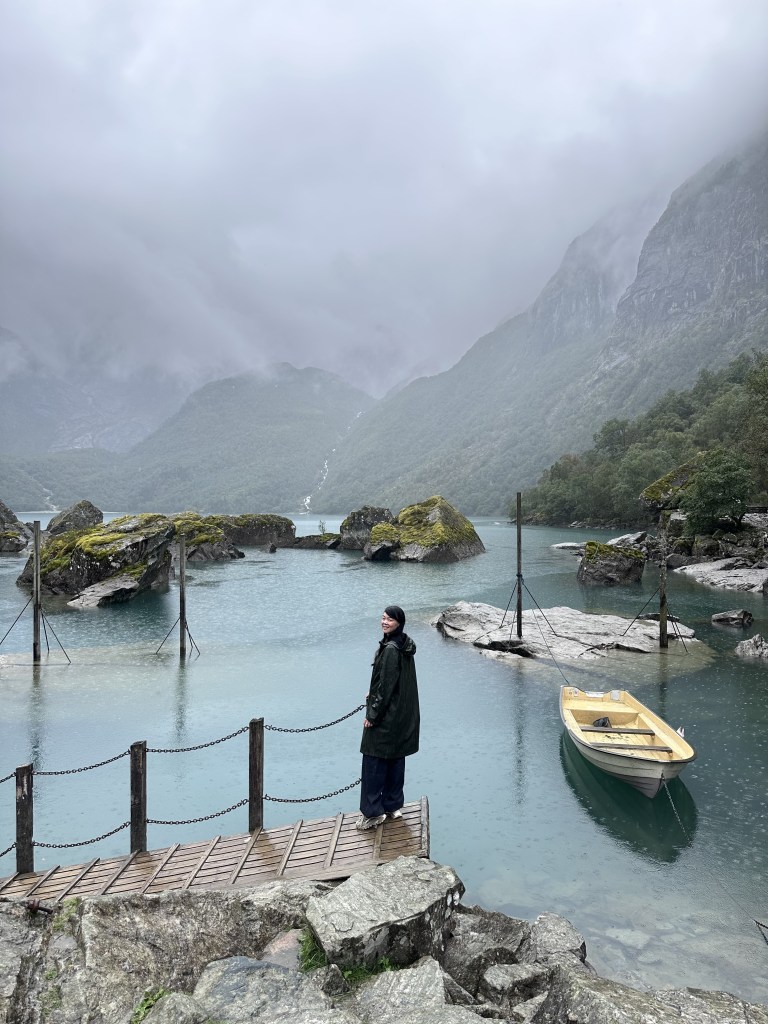
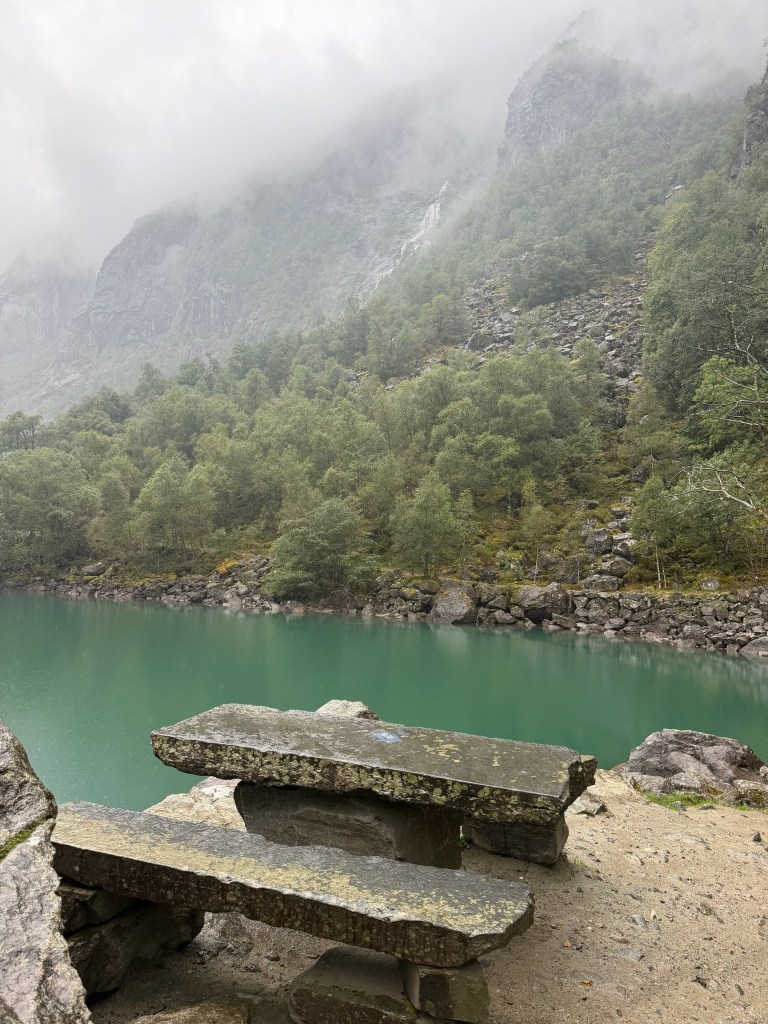
It was raining. Normally that isn’t exactly what you hope for when setting off on a hike in Norway, but this time the rain turned out to be very much in our favour. There were hardly any people around.
Following the river into Bondhusdalen
Almost immediately, the walk feels like entering another world.
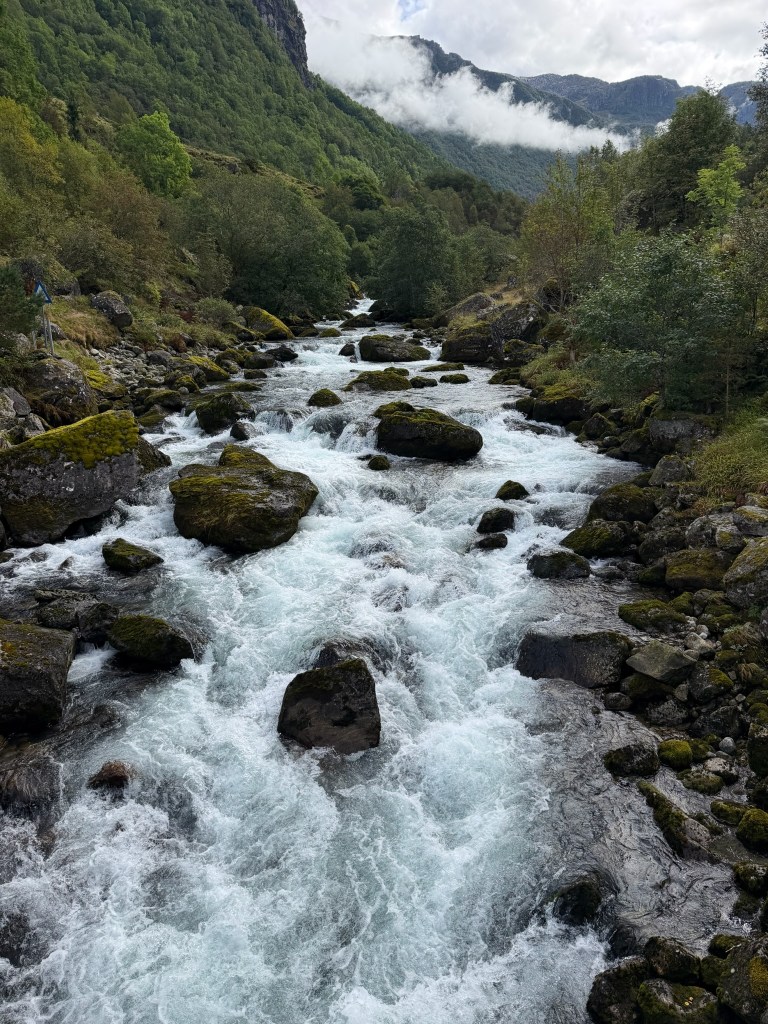
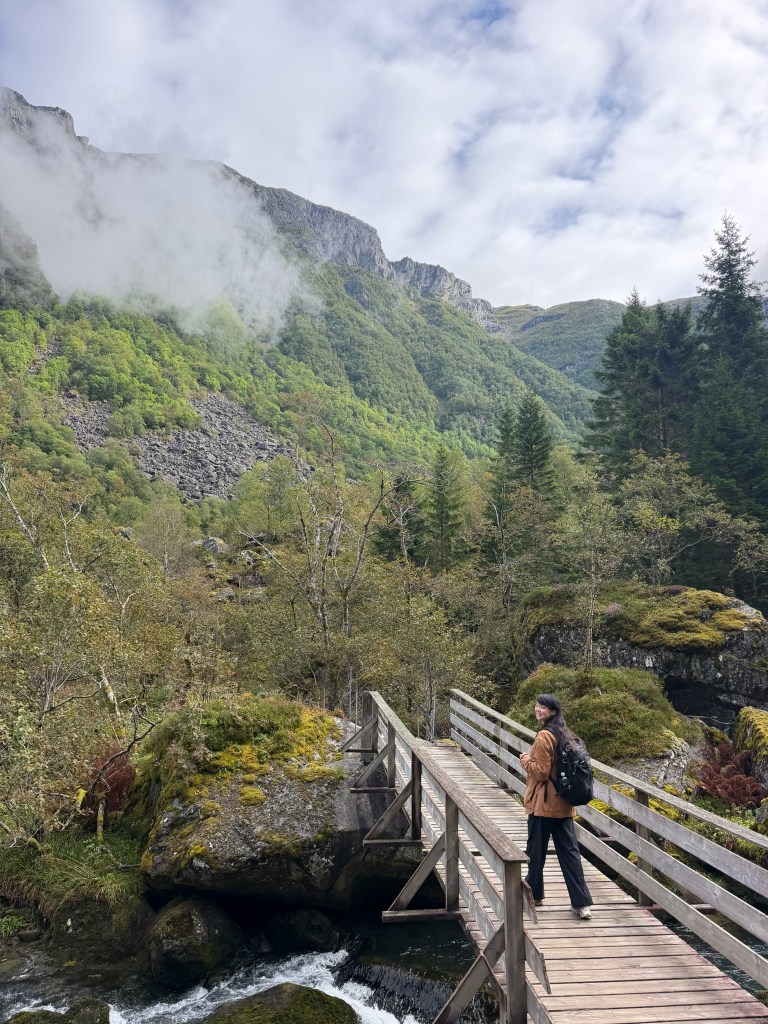
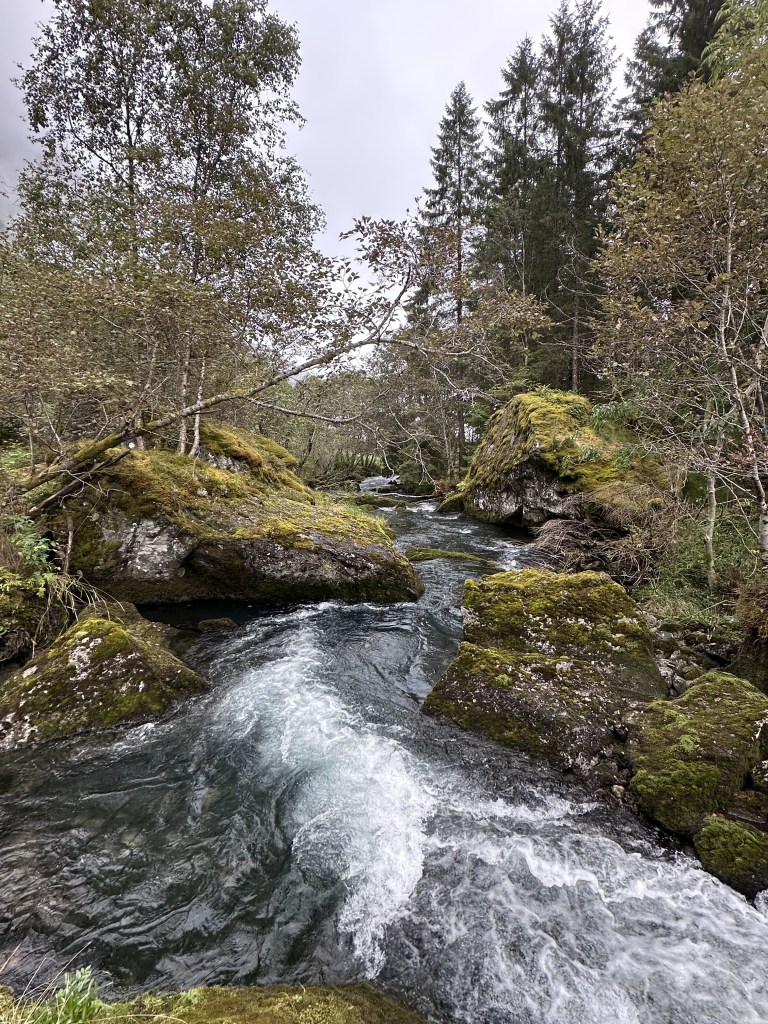
The trail follows the beautiful Bondhuselva river, with clear glacier water rushing between huge moss-covered rocks, surrounded by dense green forest. It felt almost fairytale-like – particularly in the rain, when everything became even greener.
This is not a hike where you need to wait until the end for the scenery. The walk itself is part of the experience.
But then you reach the lake. And everything opens up.
Bondhusvatnet
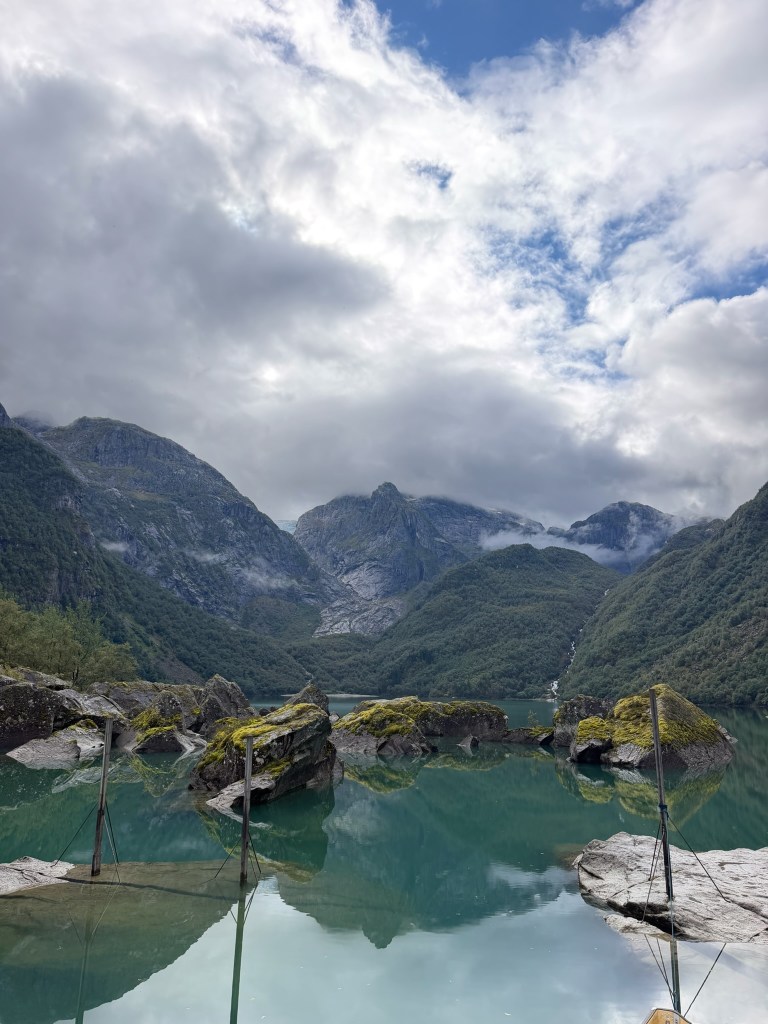
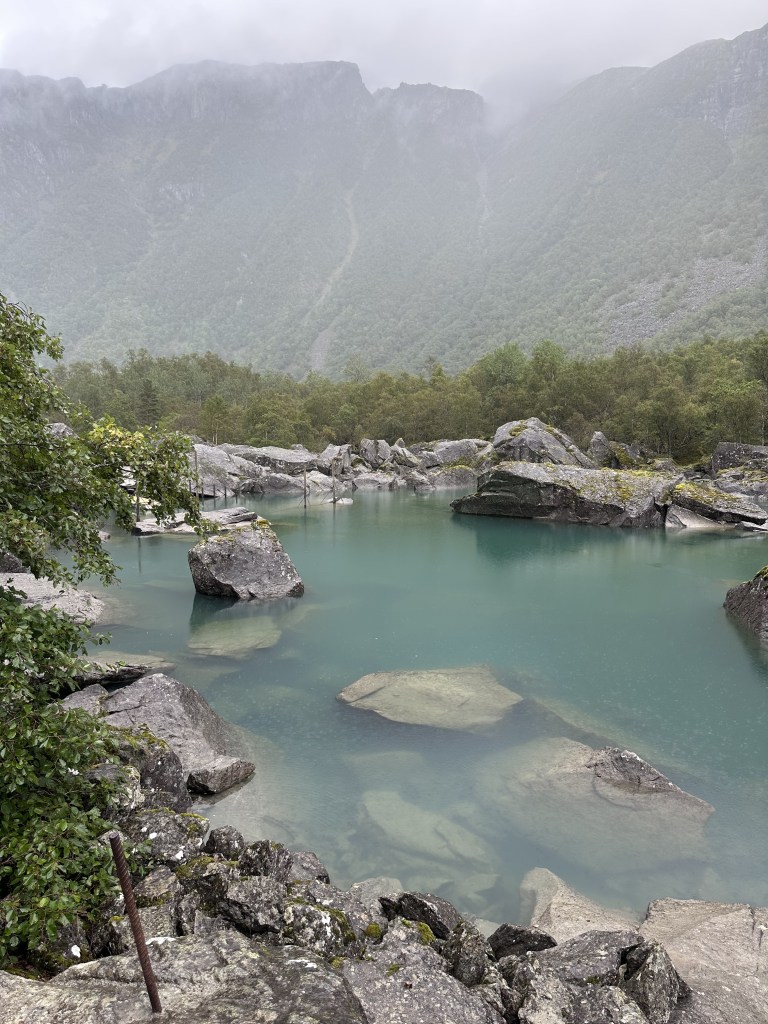
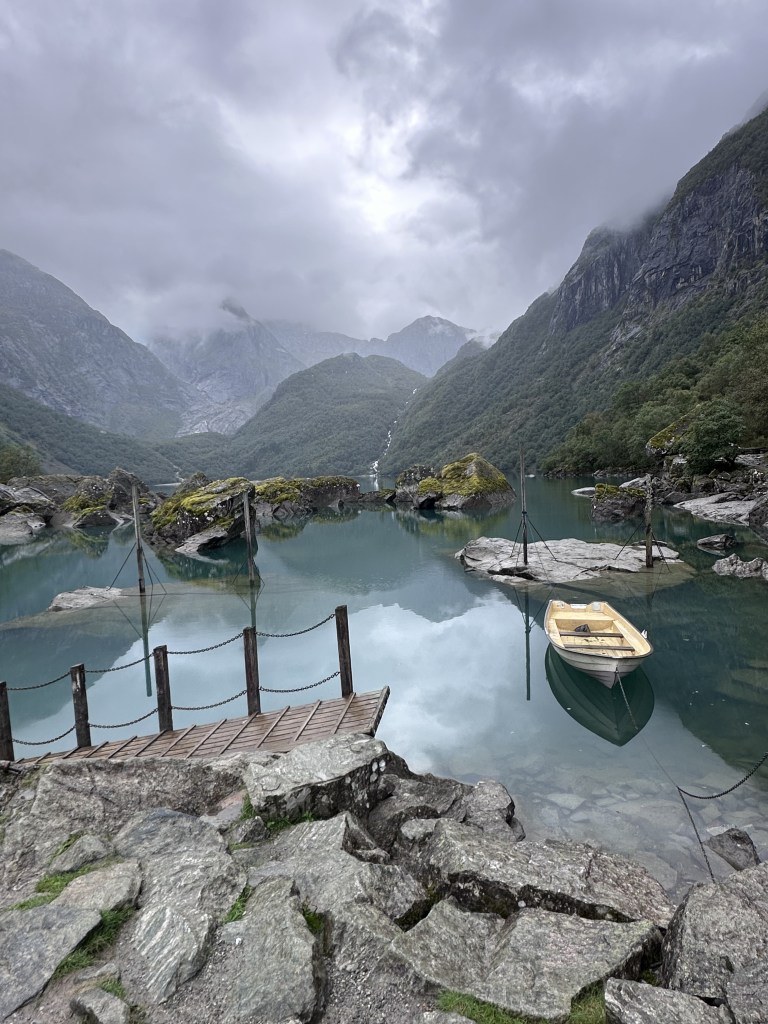
It is difficult to describe quite how beautiful Bondhusvatnet is when you first see it.
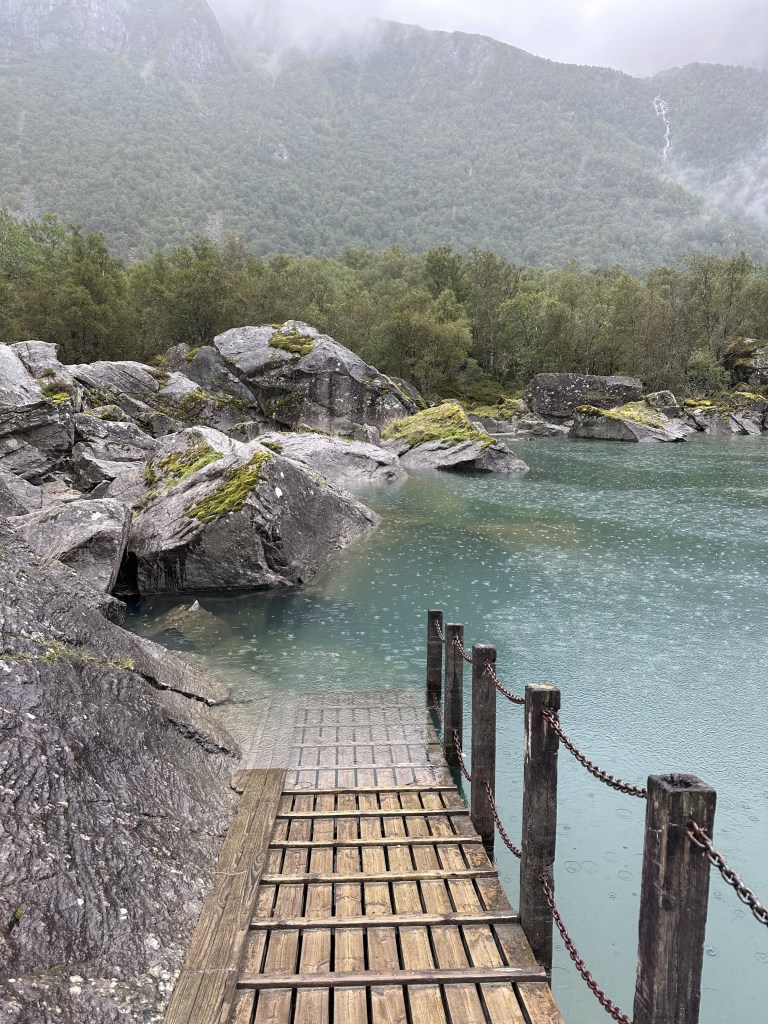
Turquoise glacier water. Enormous mountains rising almost vertically around it. Moss-covered rocks scattered through the water. Waterfalls appearing in the distance.
And when we arrived, almost complete silence. A small group left just as we reached the lake, which meant that for a while we had the entire place to ourselves. We stood there in the soft rain, looking across the water, and it felt slightly unreal.
Then the rain stopped. And eventually, the sun came out. And then we discovered the glacier
What we hadn’t realised before arriving was that there was another surprise hidden behind the clouds.
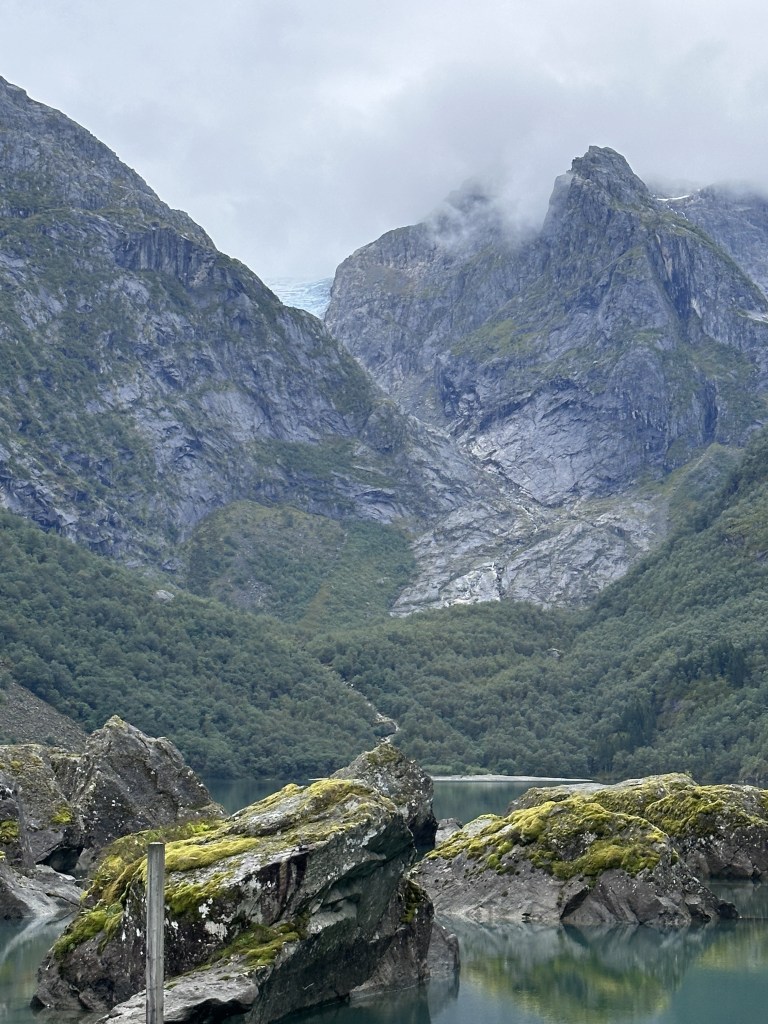
We noticed Bondhusbreen mentioned on an information board by the lake. Bondhusbreen is an arm of the much larger Folgefonna glacier, and on clear days you can see it high above the lake. (Hardanger)
We hadn’t even known it was there.
As the clouds slowly lifted from the mountains, a strip of blue-white glacier suddenly appeared between them. It was one of those perfect travel moments you could never really have planned.
We stayed for a while, had some snacks, watched the weather change across the mountains and simply enjoyed having this extraordinary place almost entirely to ourselves.
Timing is everything
Walking back down, we realised just how lucky we had been.
More and more people started coming towards us. And then more.
By the time we reached the bottom, the parking area that had been relatively quiet when we arrived was completely full.
Bondhusvatnet is one of the most popular hikes in Hardanger, so our rainy morning had accidentally given us something rather special. (Hardanger)
If I were visiting again, I would absolutely aim for early morning, particularly during the busier months.
And don’t necessarily let a little rain put you off. Norwegian weather changes incredibly quickly, as we experienced more than once on this trip. Sometimes the rain is exactly what gives you the place to yourself.
Good to know before hiking to Bondhusvatnet
Distance: 5 km return Time: Around 2 hours return at a relaxed pace Difficulty: Easy Elevation: Approximately 135 metres Trail: A gravel road Parking: Paid parking at Bondhusdalen; currently NOK 125 per day Facilities: Toilets are available by the parking area. (Hardanger)
The walk is considered easy and is suitable for families. The official tourism information even notes that the main route can be managed with a stroller. (Hardanger)
One important thing to know: swimming in Bondhusvatnet is not permitted, as the lake provides drinking water for the local communities of Bondhus and Sundal. (Hardanger)
And if you plan to continue beyond the lake towards Bondhusbreen, check the current conditions and signs. Access further into the valley can be restricted because of glacial conditions; the innermost section is closed during summer 2026. (Hardanger)
Is Bondhusvatnet worth the detour?
Completely.
After hiking Trolltunga the day before, this was an entirely different kind of experience. No long day in the mountains, no big physical challenge – just an easy walk into one of the most beautiful landscapes we saw in Hardanger.
For such a short hike, the reward is almost ridiculous: The river, the turquoise water, the enormous mountains, the rain, the silence – and finally watching Bondhusbreen emerge from behind the clouds.
There are some places that are even more spectacular than you imagine them to be. Trolltunga was one of them.
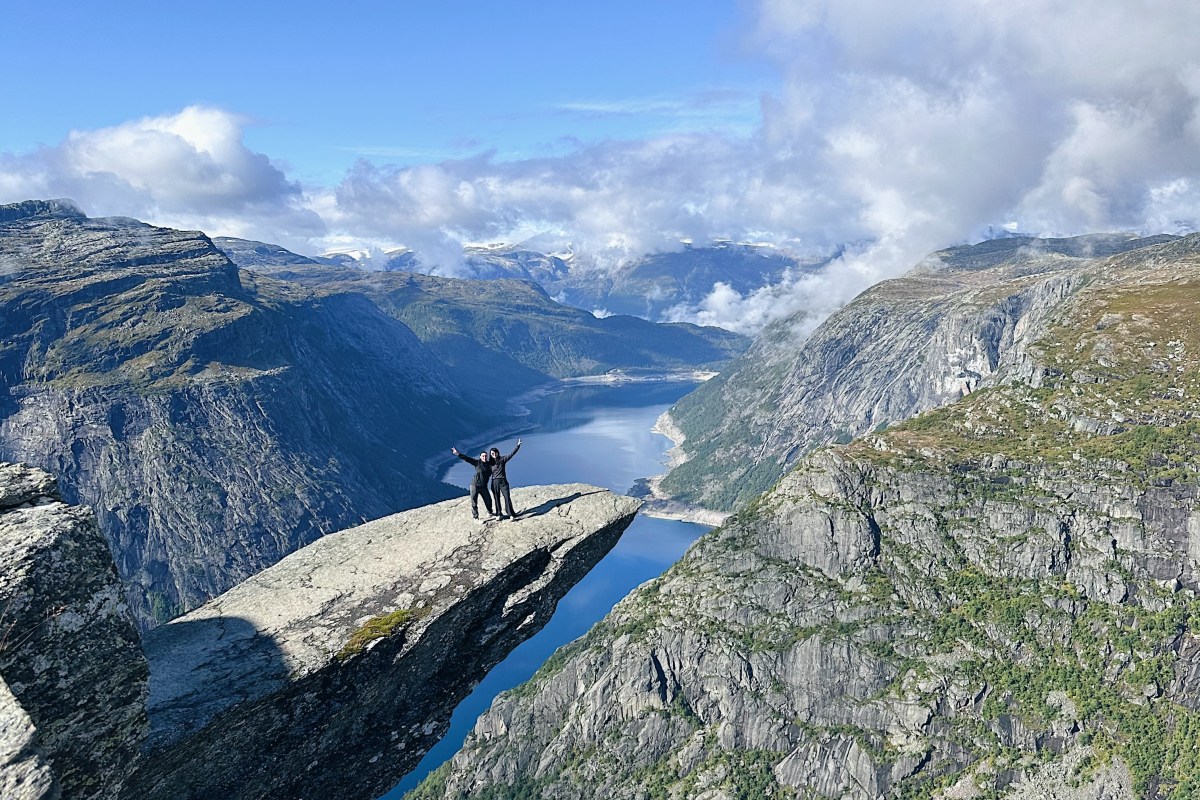
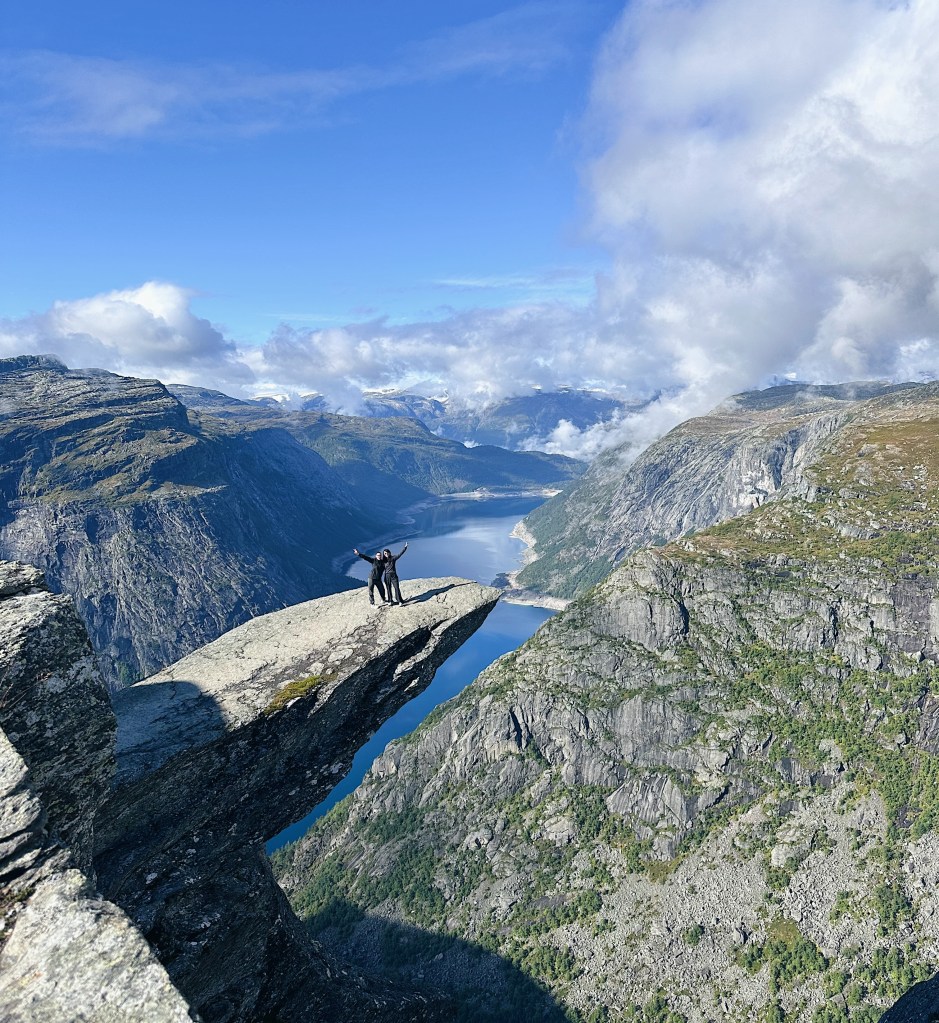
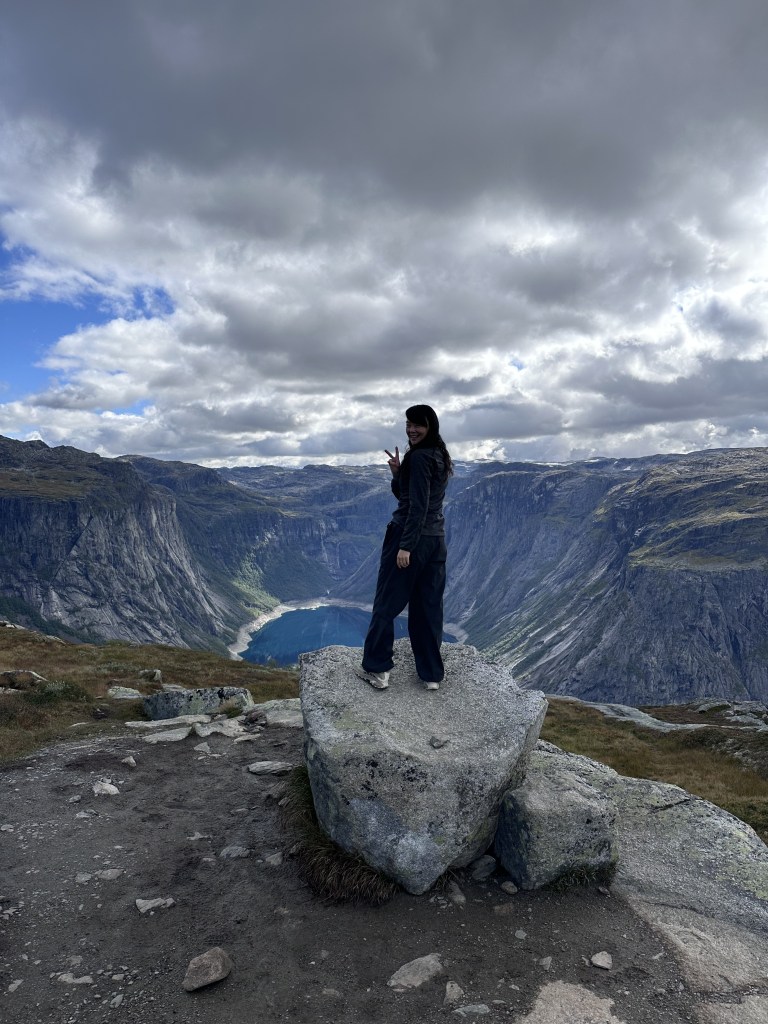
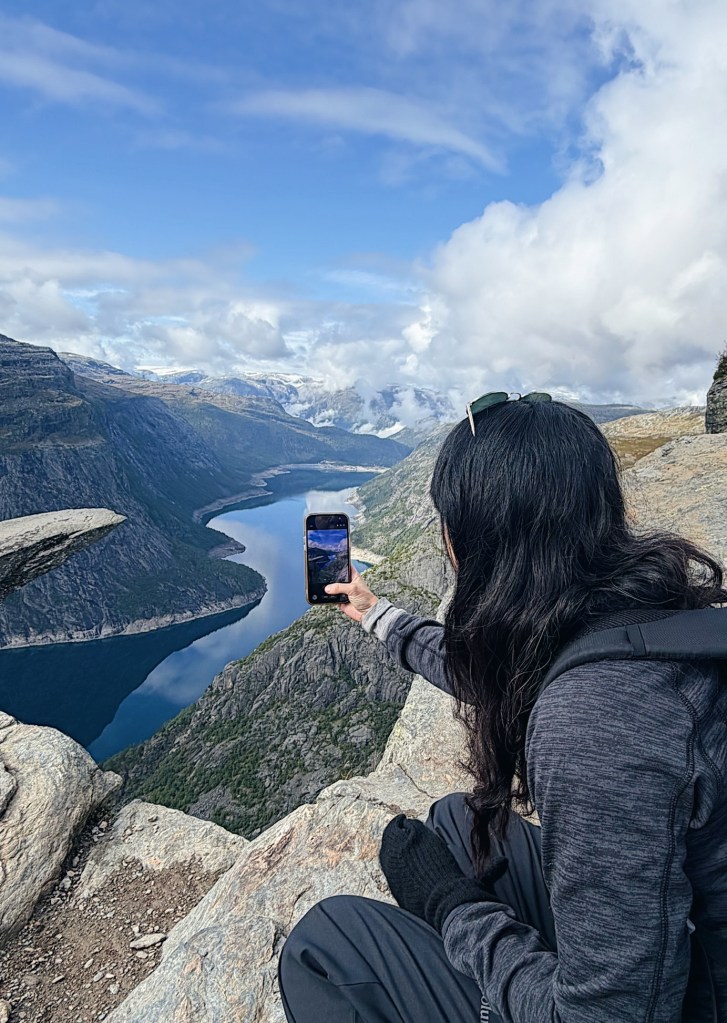
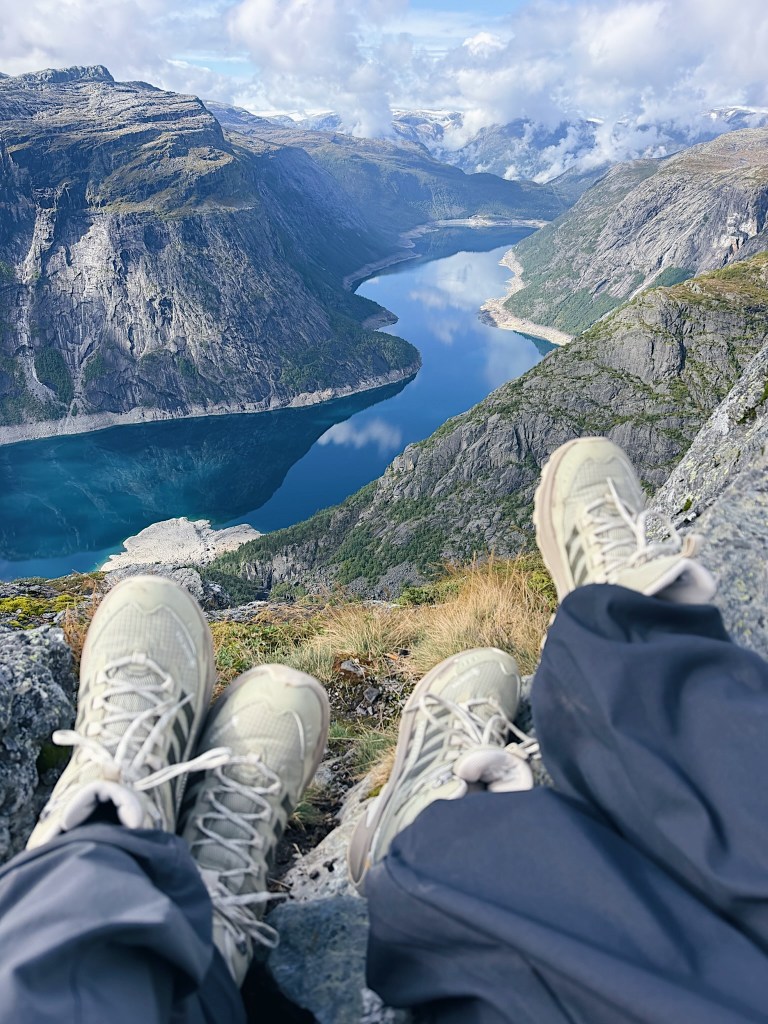
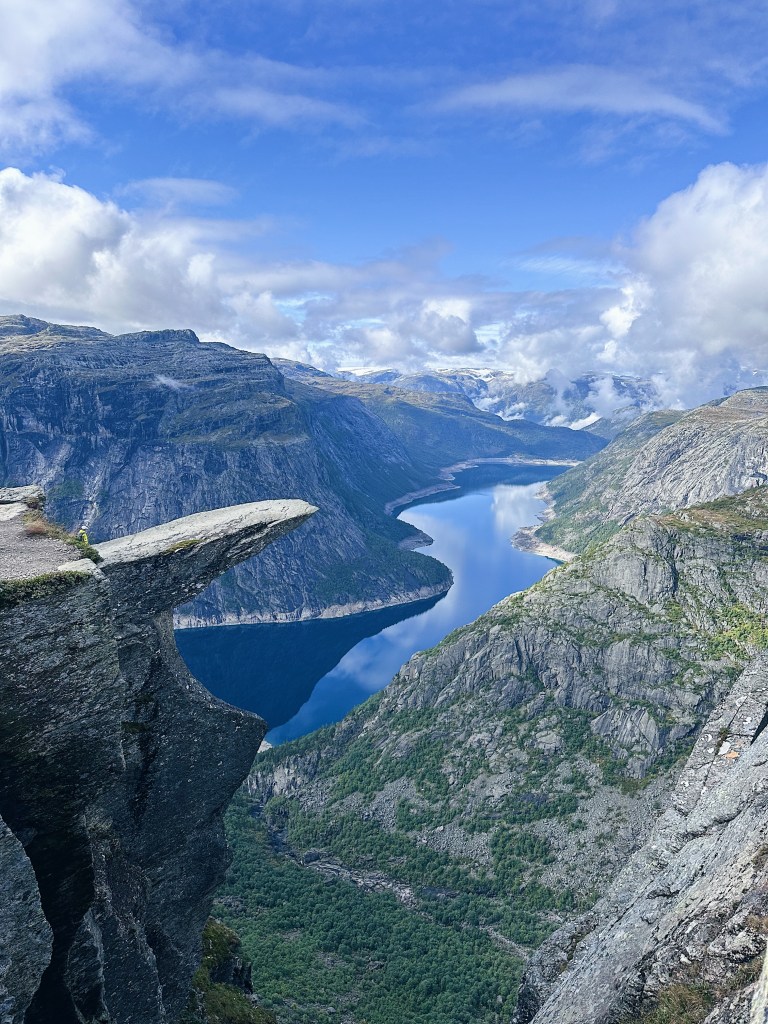
Of course, the famous rock itself is incredible – jutting out around 700 metres above Ringedalsvatnet with nothing but mountains and water around you. But what surprised me most was that hiking Trolltunga wasn’t really just about reaching the Troll’s Tongue.
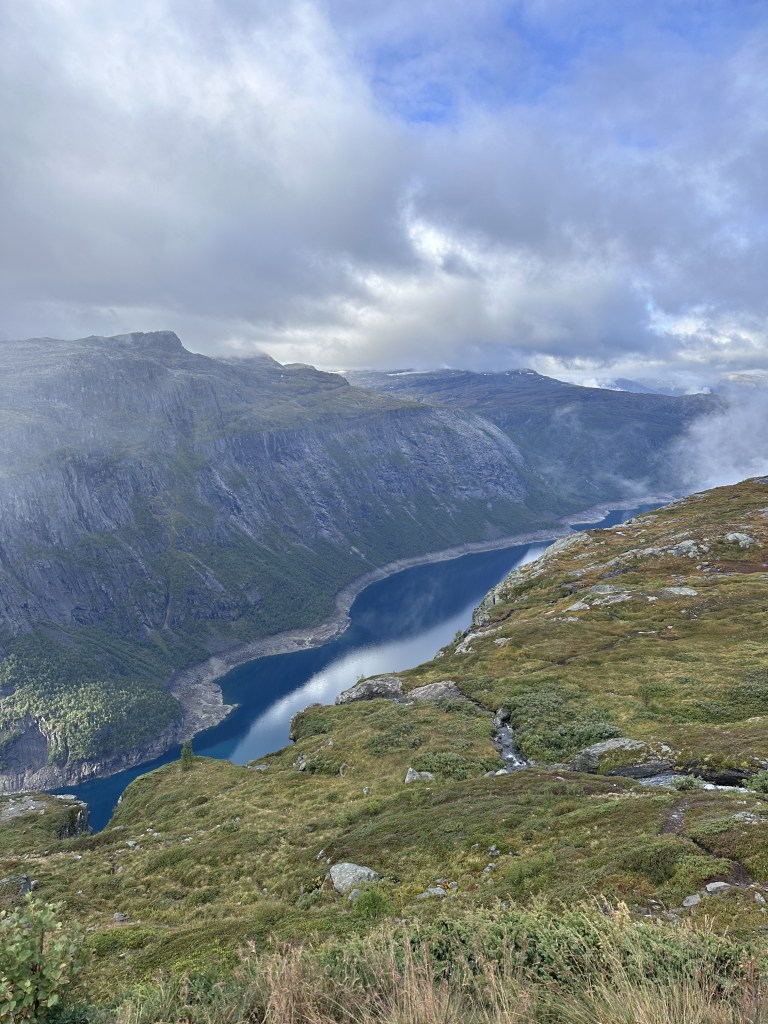
The entire hike was spectacular.
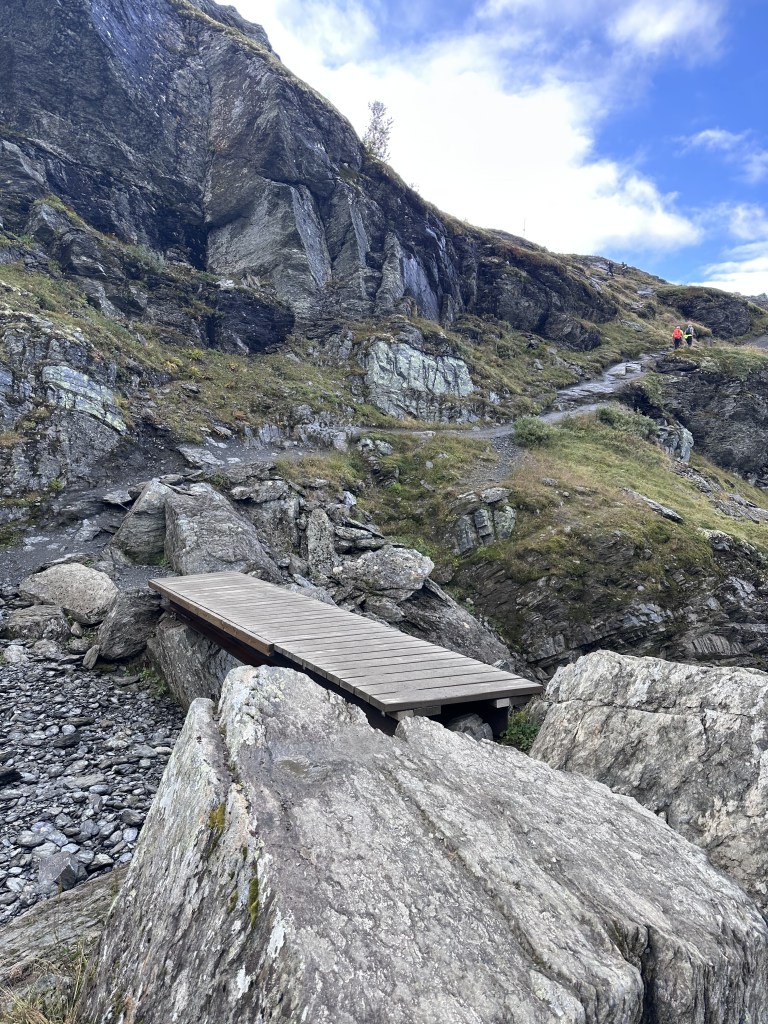
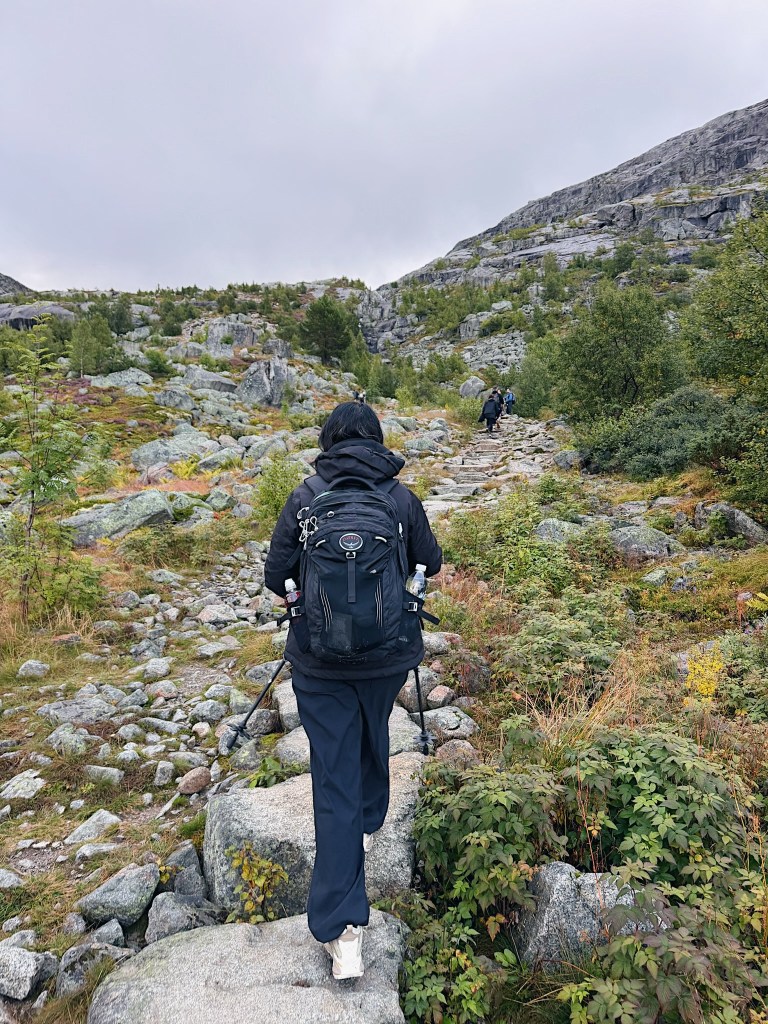
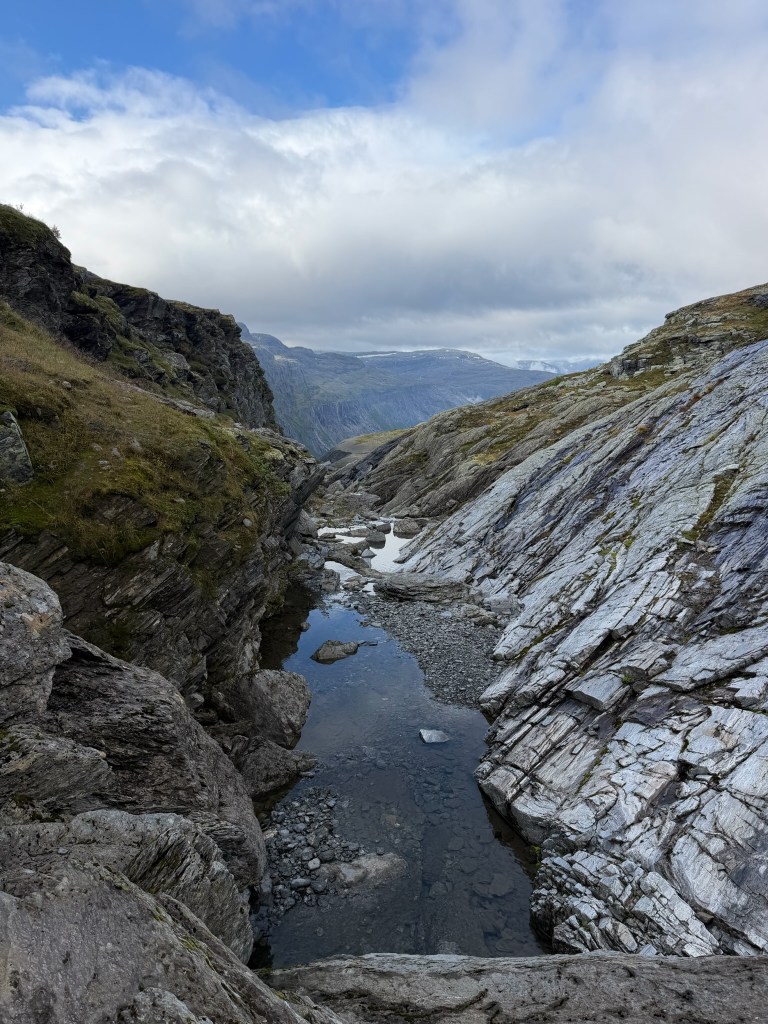
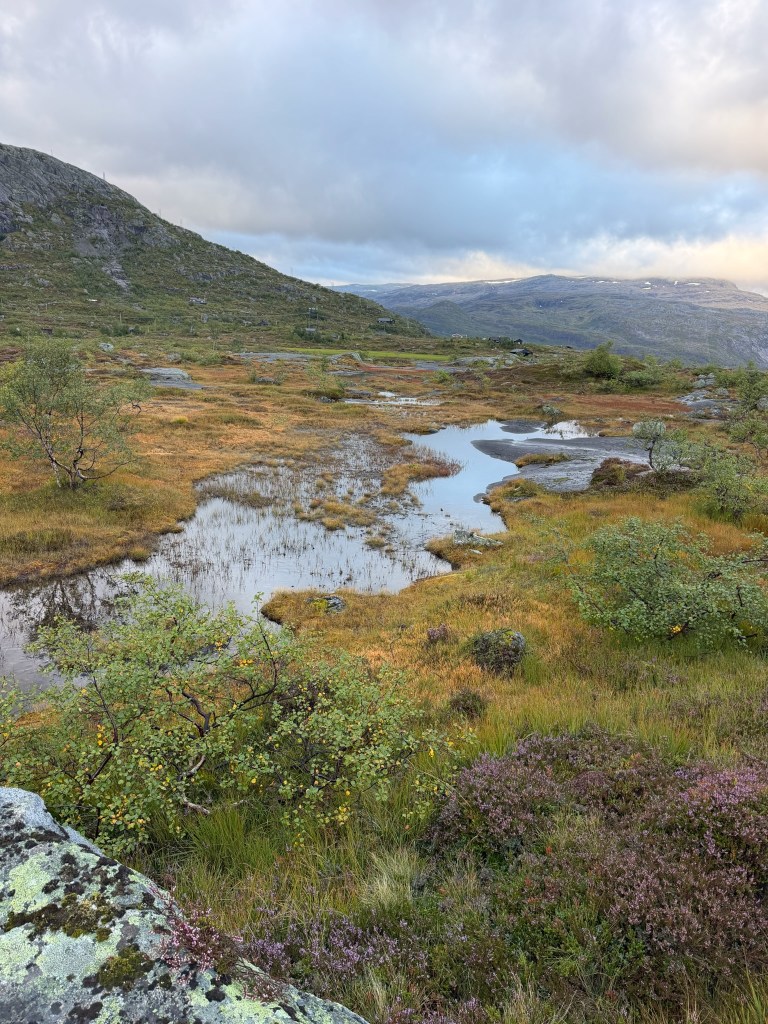
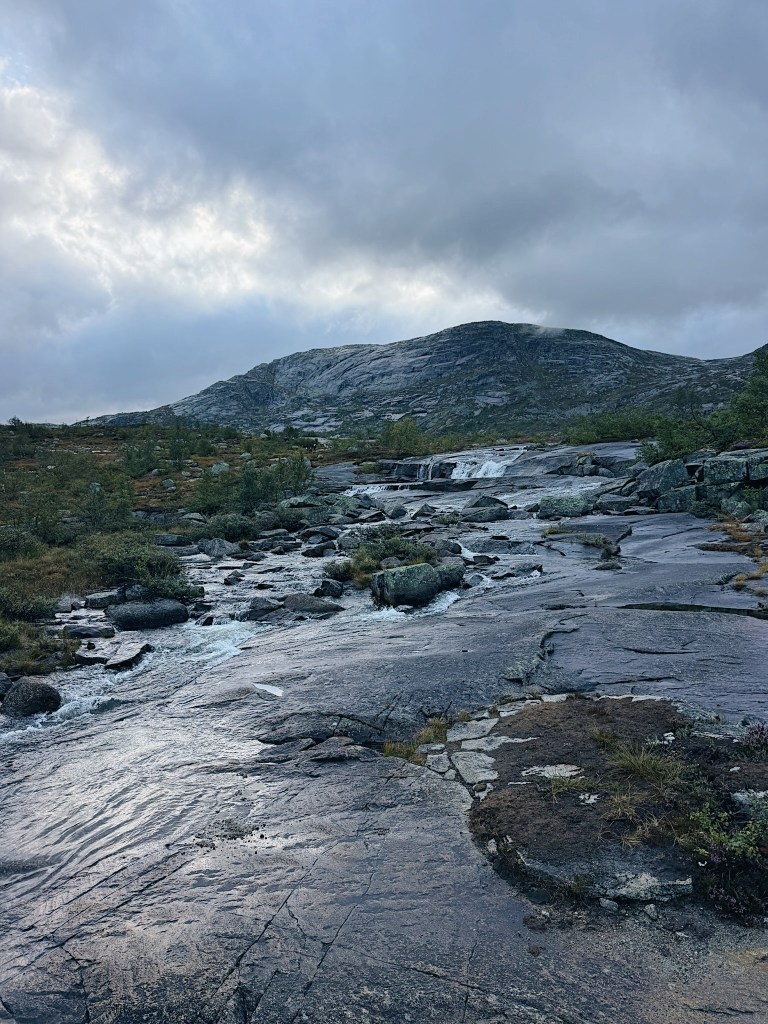
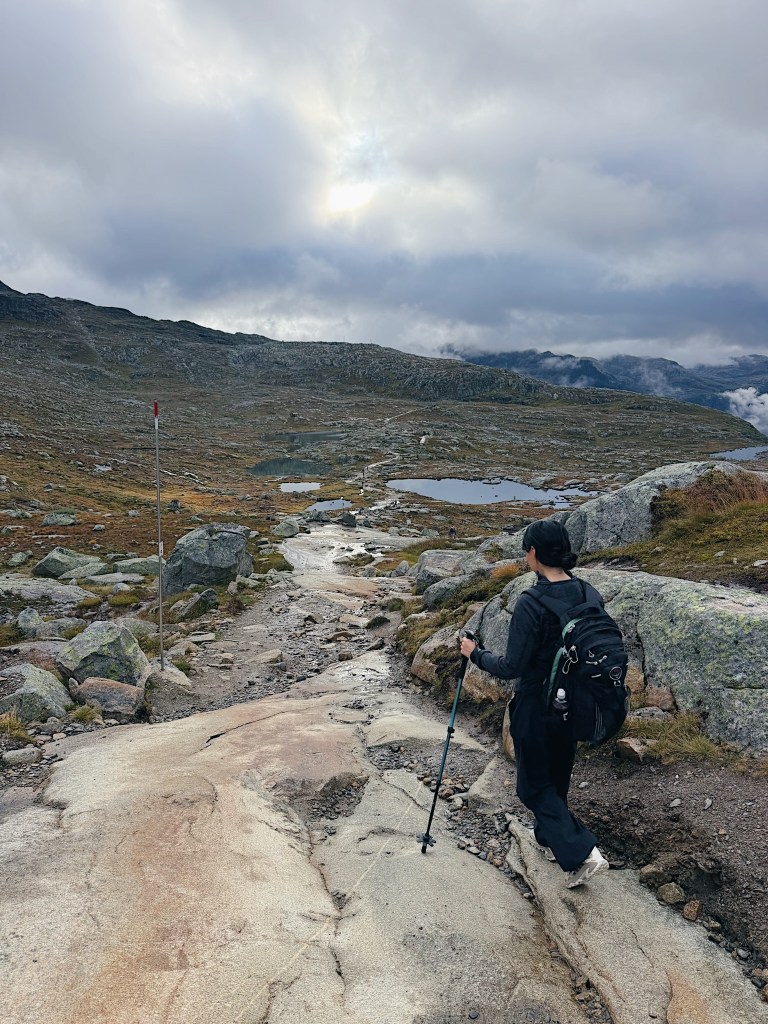
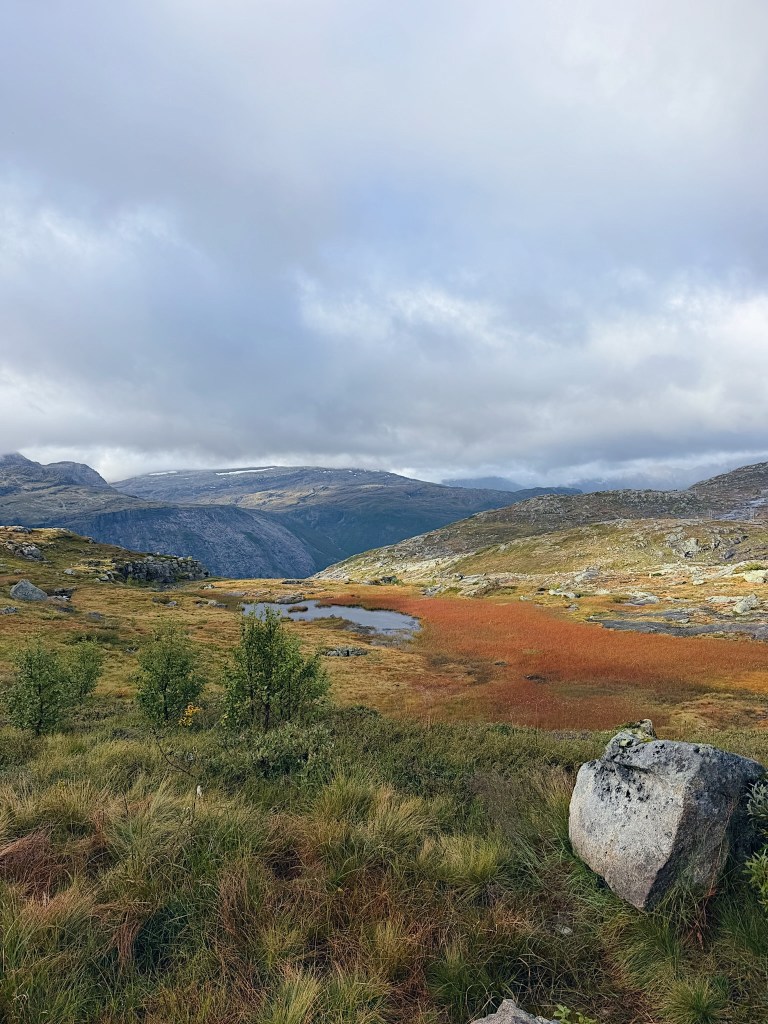
Hours of walking through raw Norwegian mountain landscapes, past lakes, streams and endless views. No roads, no cafés, no shortcuts – just nature. The kind of scenery you only really get to experience when you’re willing to walk quite far to get there.
And yes, it is a long day. But absolutely worth it.
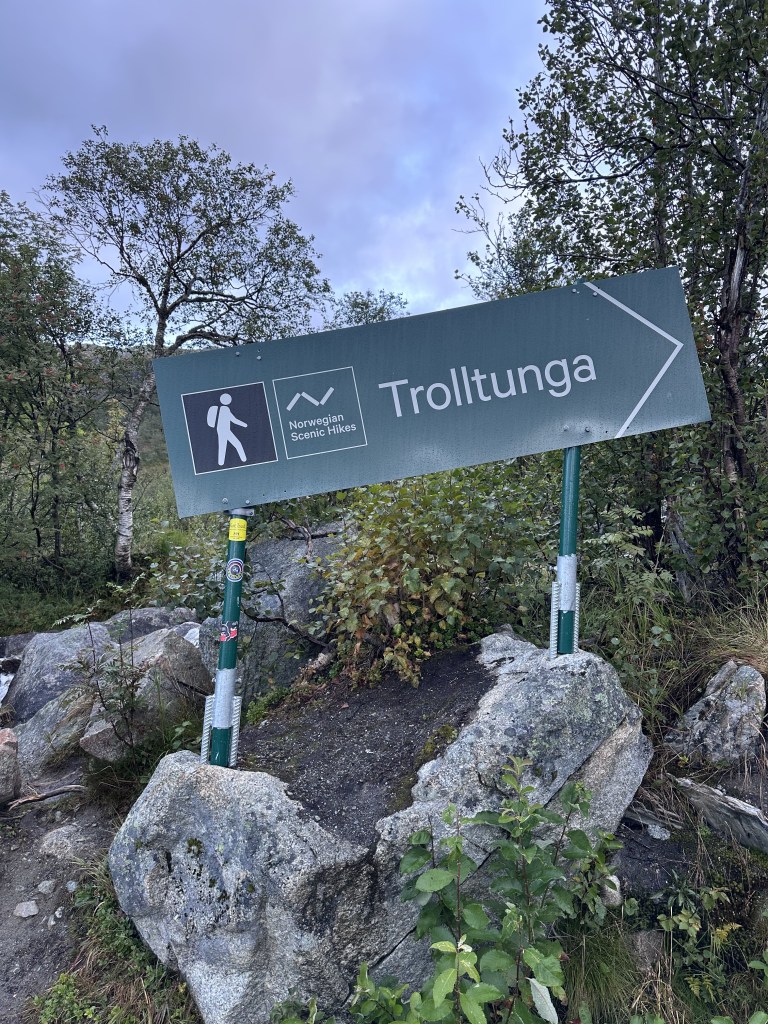
Planning the Trolltunga hike – and watching the weather
We had booked P3 Mågelitopp parking for two different dates several months in advance, giving ourselves some flexibility depending on the weather. And we needed it. Right up until our trip, the forecast basically said: rain, rain, rain.
On the morning of our hike there was still quite a lot of fog, which made us slightly nervous as we started walking. But after around 30 minutes, the sun suddenly appeared – and stayed with us almost all the way until the descent.
Coming down, we had a beautiful mix of sunshine and clouds, and the rain didn’t arrive until that evening when we were safely back at the hotel. Sometimes you simply get lucky in Norway.
My biggest advice would be to keep an eye on the weather, prepare for it to change and, if possible, give yourself some flexibility when planning your hiking day. Don’t do the hike if it really is a full raingy day, the rocks will be way to slippery to climb (and there are a lot of those).
The official Trolltunga website is also the place to check trail conditions, weather advice and practical information before setting out.
Starting from P3 Mågelitopp
We had rented a car and drove ourselves to P3 Mågelitopp, the highest of the three Trolltunga parking areas.
Starting from P3 makes quite a difference: the hike from here is approximately 20 km return, compared with around 27 km if you start at P2 Skjeggedal.
Our parking access started at 7 AM and we arrived around 7.15 AM, which worked perfectly. P3 has very limited parking, so if you’re planning to drive yourself during the main season, I would definitely recommend looking into booking it well in advance.
If you don’t have a car – or don’t manage to get a P3 parking space – there are also Trolltunga shuttle buses from Odda towards the trailhead and from P2 Skjeggedal up to P3 Mågelitopp.
From P3, it took us just under four hours to reach Trolltunga and around three and a half hours to walk back down.
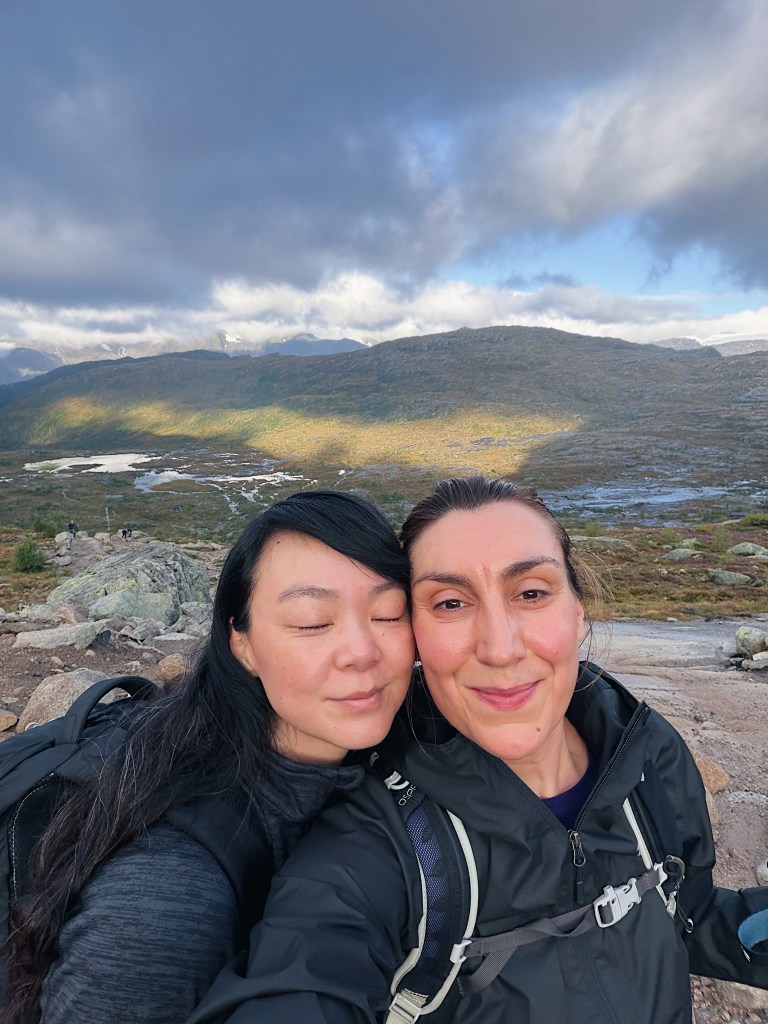
We stayed at the top for approximately an hour, having lunch, taking photos and simply enjoying the view. So in total, this was very much a full-day adventure.
What we packed for Trolltunga
We each carried a 33-litre backpack, which was plenty for a day hike.
One thing we discovered was that there are lots of natural water sources along the trail. We therefore only carried two ½-litre bottles each and refilled them with fresh mountain water along the way instead of carrying litres of water from the beginning.
For lunch, we brought packed food that we had made/bought at our hotel, together with raw bars, protein bars and – obviously, when hiking in Norway – Kvikk Lunsj.
We also packed extra wool socks, gloves and beanies, although luckily we never needed them.
What we wore
Layers are definitely the answer.
We hiked in ski base layers, hiking trousers, wool socks, fleece and shell jackets, so we could easily adjust throughout the day.
And then there were the boots.
I wore my Merrell hiking boots, and they were genuinely one of the best decisions I made for this trip. With so many hours on rocky and uneven terrain, having proper hiking boots made a huge difference – especially towards the end of the day when the kilometres start to feel slightly longer.
We had also bought foldable hiking poles specifically for the trip. Another very good decision. They don’t take up much space in your backpack when you don’t need them, but they were brilliant on some of the steeper sections and especially helpful on the descent.
Staying in Odda
We based ourselves in Odda, approximately 30 minutes by car from the Trolltunga parking area, and stayed at Trolltunga Hotel.
It was practical and comfortable, although I think a small Airbnb or another hotel in Odda would work equally well. The most important thing for us was simply being close enough to get an early start.
The hotel was also able to help us with food for the hike, which made the early morning much easier.
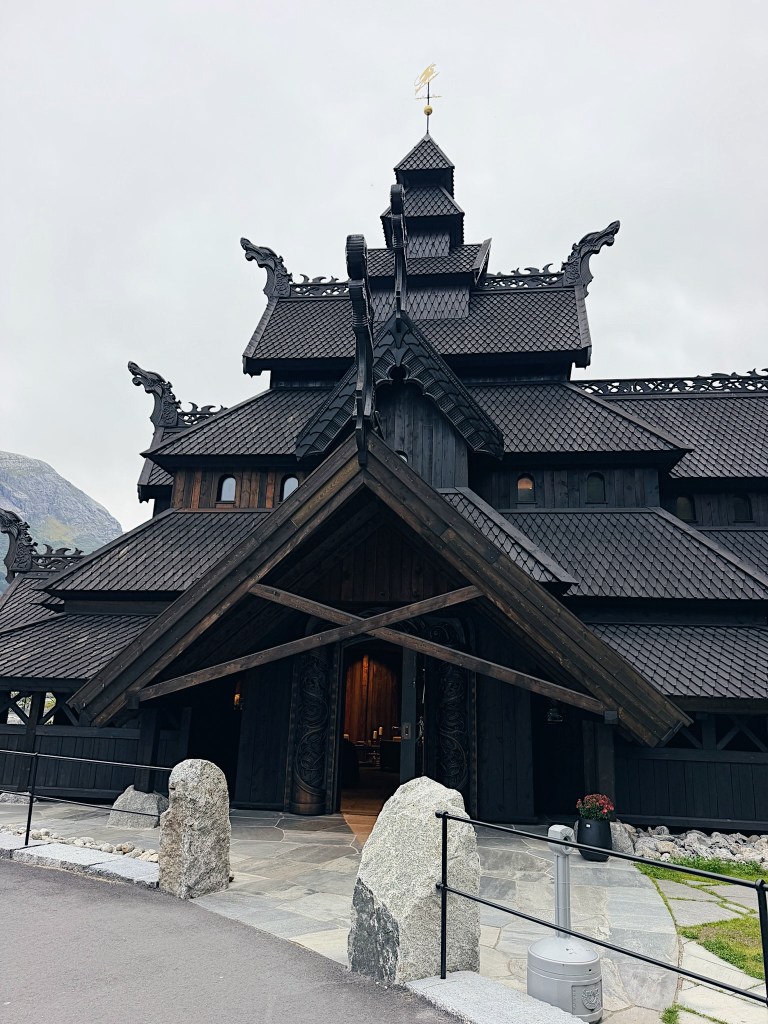
After Trolltunga, we had dinner at Odda Lothepus by the campsite. A slightly quirky Viking-style restaurant – fun, relaxed and exactly the kind of place where you don’t mind arriving after spending an entire day on a mountain.
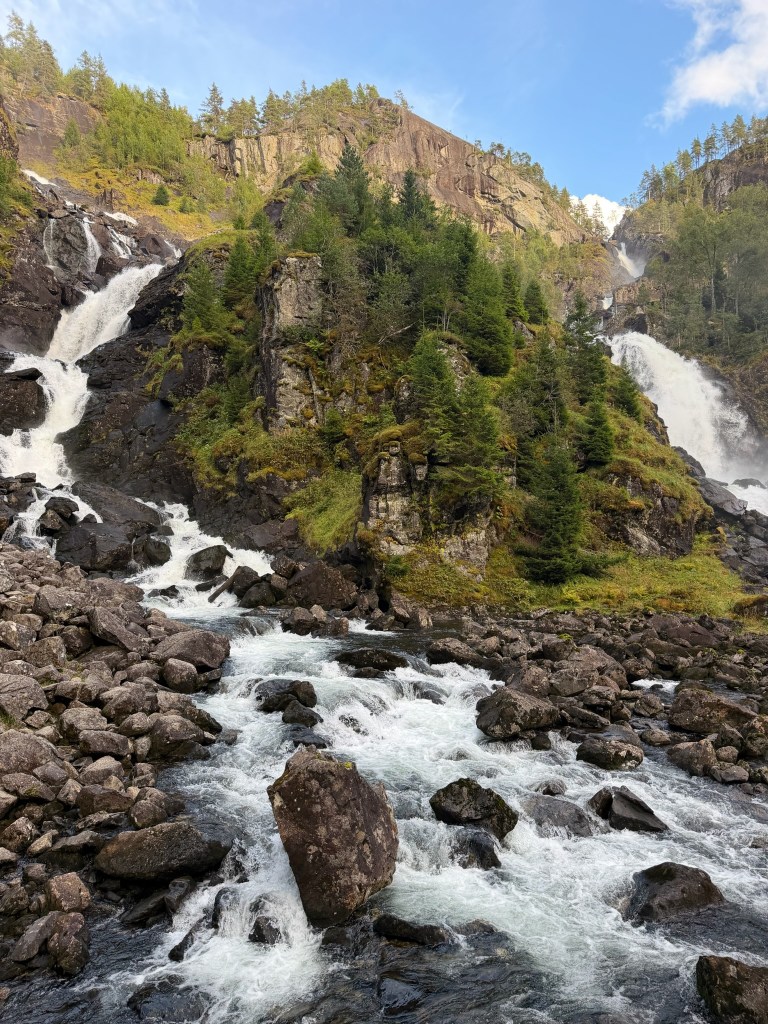
On the way leaving Odda, we went by the Flåtefoss waterfall, just 6 minutes from Odda.
Bergen, Voss and a swim in Norwegian mountain water
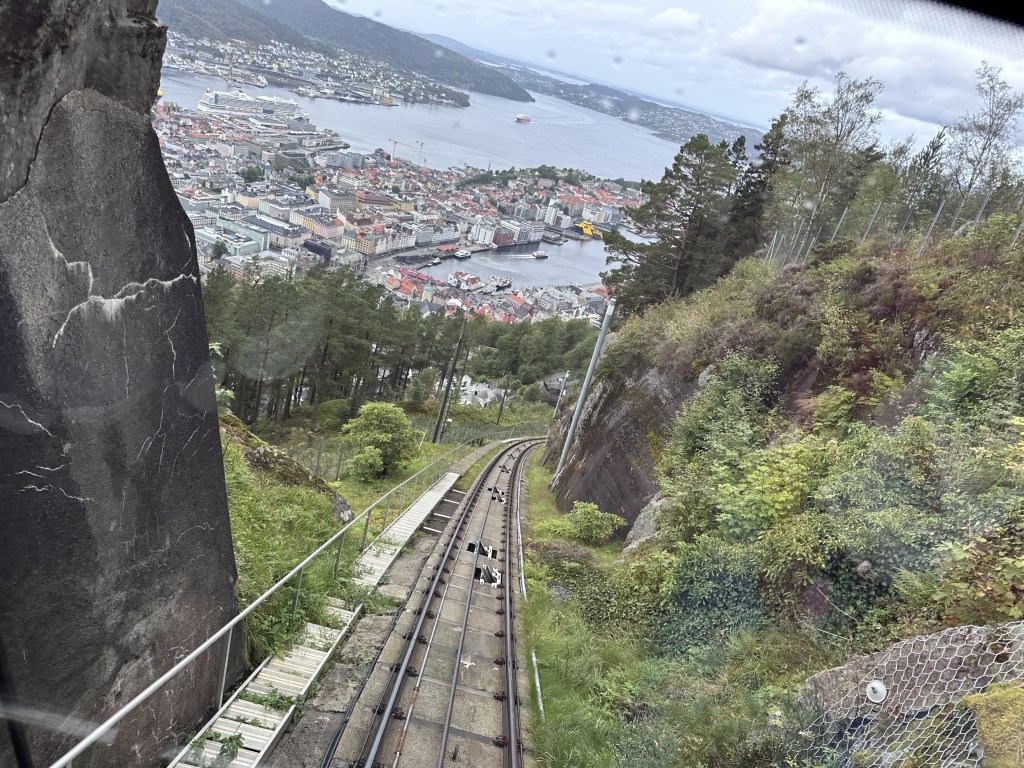
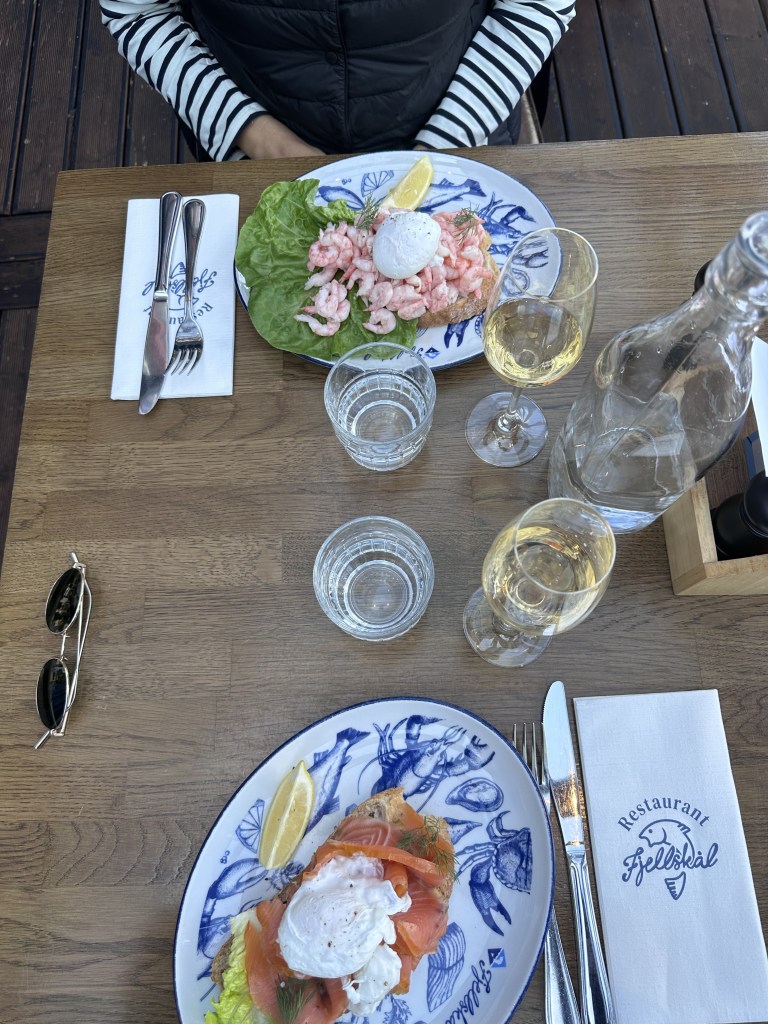
We flew into Bergen, where we of course had to see Bryggen before heading towards Odda. The colourful old wharf is UNESCO World Heritage-listed and, even if you only have a little time in Bergen, definitely worth seeing. We had good weather upon arrival, so we also tried the “Fløjbanen” train up to Bergen mountain for the viewpoint and the (surpricingly) large park just behind it. And had lunch in the Fish Market by the water. A perfect start to a 3nights/4 days stay.
Instead of driving directly from Bergen to Odda, however, we went via Voss for one very specific reason:
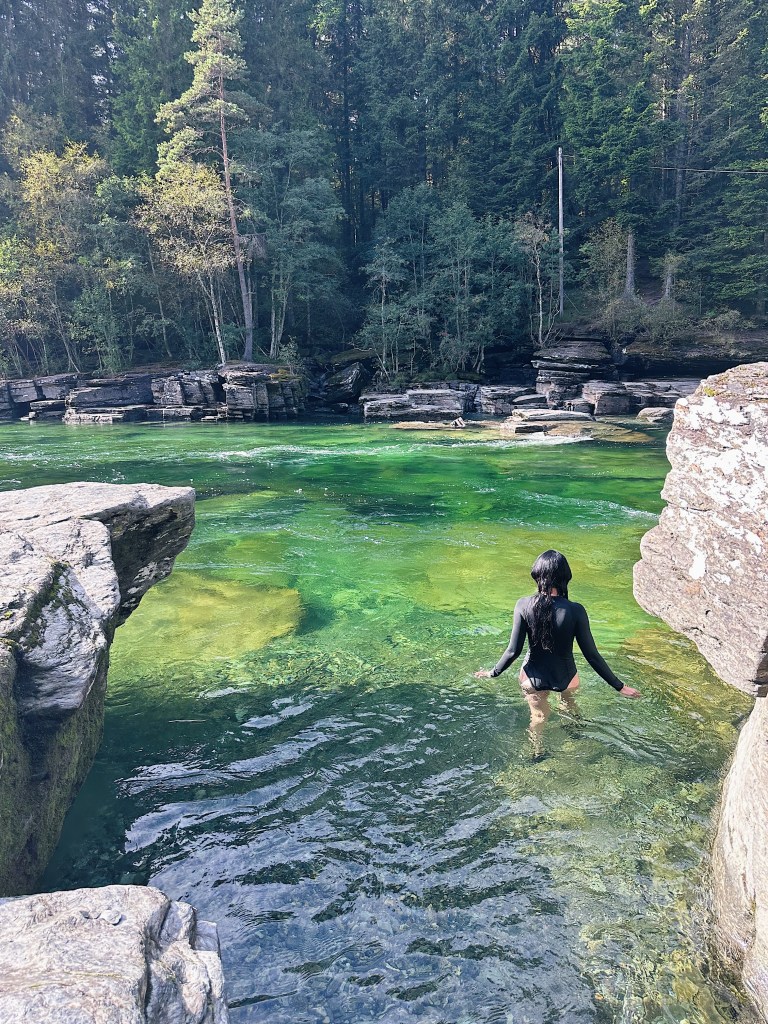
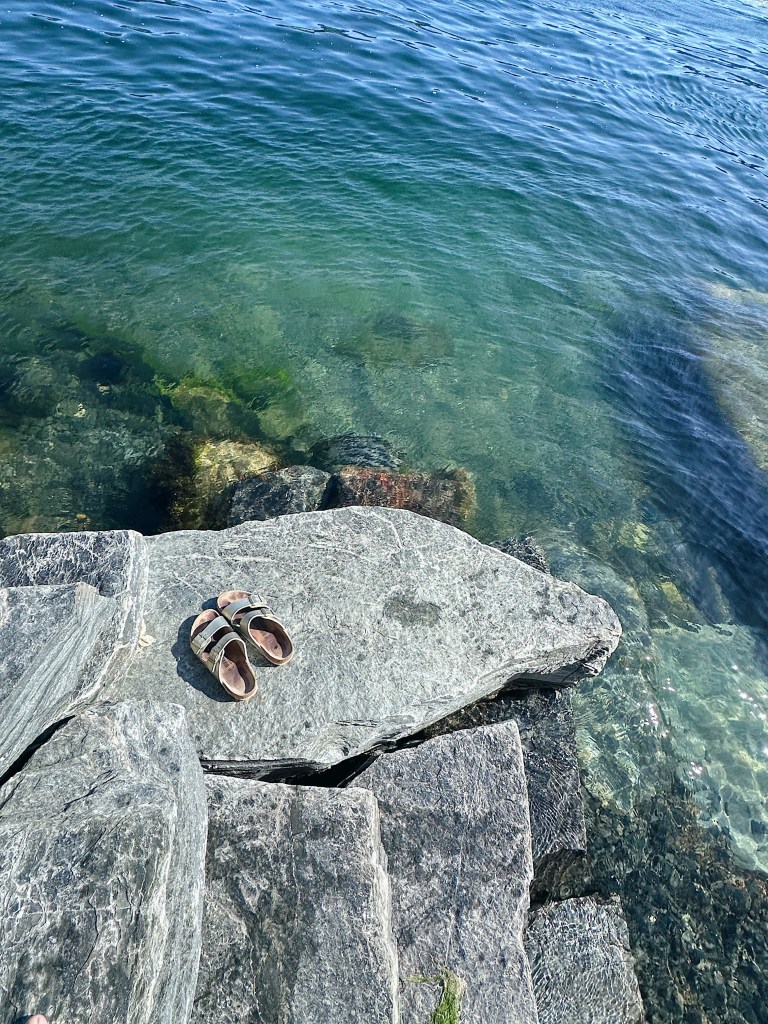
A swim. We stopped at Bjørkemoen Badeplass to swim in the incredibly clear Voss water. 10/10 recommendation.
It’s such a simple stop, but swimming surrounded by Norwegian nature was the perfect way to begin the trip.
Was hiking Trolltunga worth it?
Completely.
Trolltunga was one of those rare travel experiences where the reality somehow manages to live up to all the photographs you’ve seen beforehand.
But again: don’t hike Trolltunga only for Trolltunga. The magic is the entire journey there.
Walking for hours through this enormous Norwegian landscape, with mountains stretching in every direction, drinking water straight from the streams and watching the weather move across the peaks made the hike feel like much more than ticking off an iconic viewpoint. It was wild, peaceful, exhausting and incredibly beautiful.
There is something very special about reaching places that you simply can’t drive to. Places where the only way in is to walk.
And somewhere along those kilometres, surrounded by nothing but mountains, water and Norwegian wilderness, you remember just how small you are.
Trolltunga was one of those days I know I’ll remember for a very long time.
Trolltunga – quick facts from our hike
Where: Trolltunga, Hardanger, Norway Where we stayed:Trolltunga Hotel, Odda Starting point:P3 Mågelitopp Distance from P3: Approx. 20 km return Start: Around 7.15 AM Hiking time up: Just under 4 hours Time at Trolltunga: Around 1 hour Hiking time down: Around 3.5 hours Backpack: 33 litres Water: Two ½-litre bottles each, refilled along the trail What we wore: Cool base layers, hiking trousers, wool socks, fleece and shell jackets Our essentials: Proper hiking boots, foldable hiking poles, food, snacks and layers Getting there: Flight to Bergen + rental car via Voss to Odda Would I do it again? 100%.
Fjord Life in Hardanger – Staying at Hardanger Panorama Lodge
There are places in Norway that make you want to do very little. Not because there isn’t anything to do, but because simply being there somehow feels like enough. Hardangerfjord is one of those places.
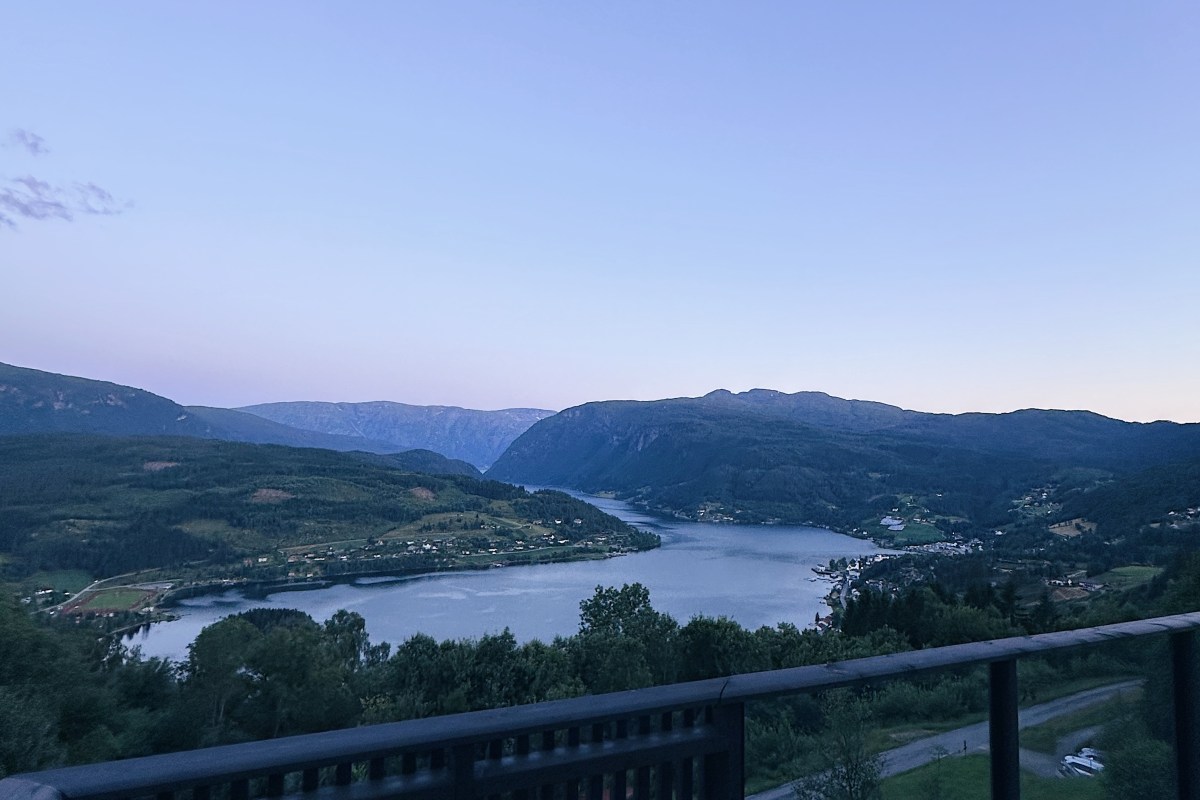
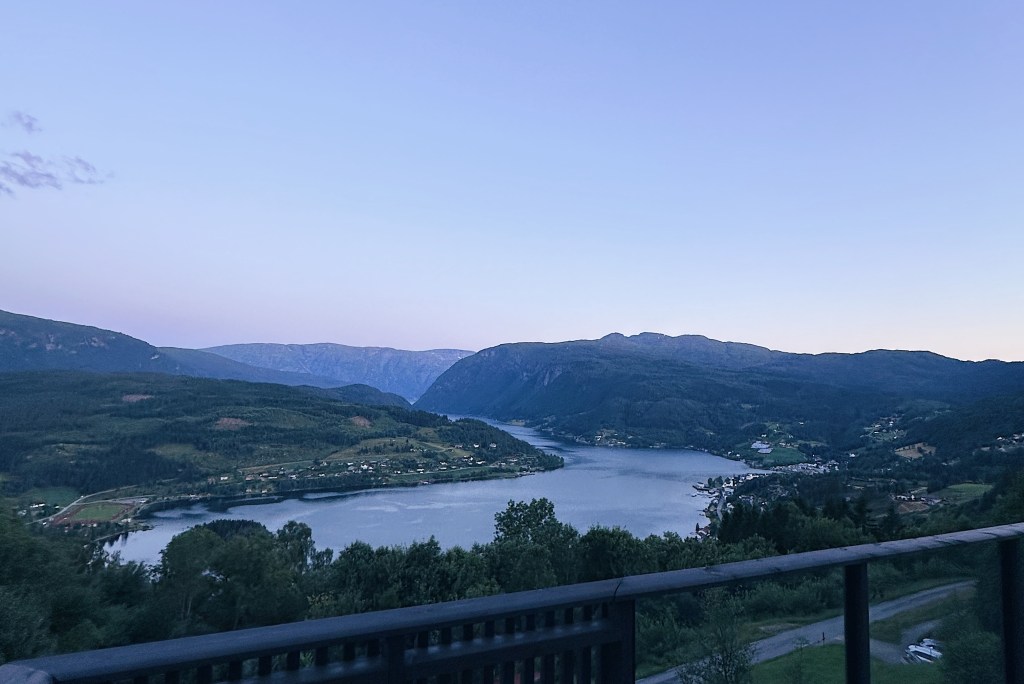
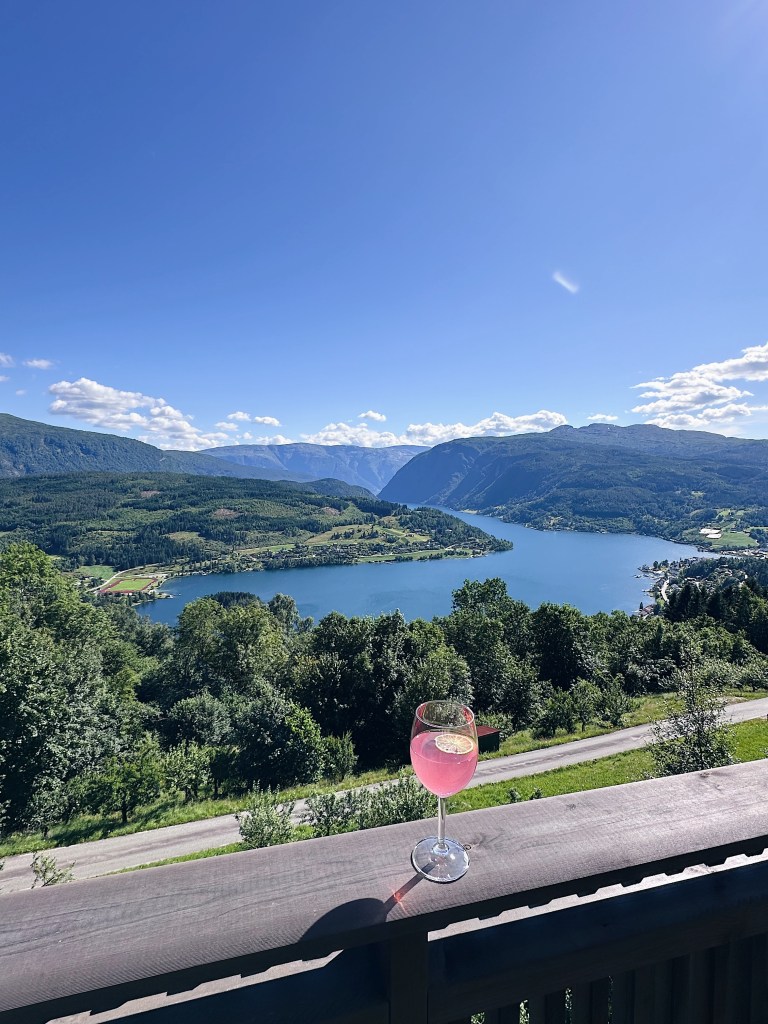
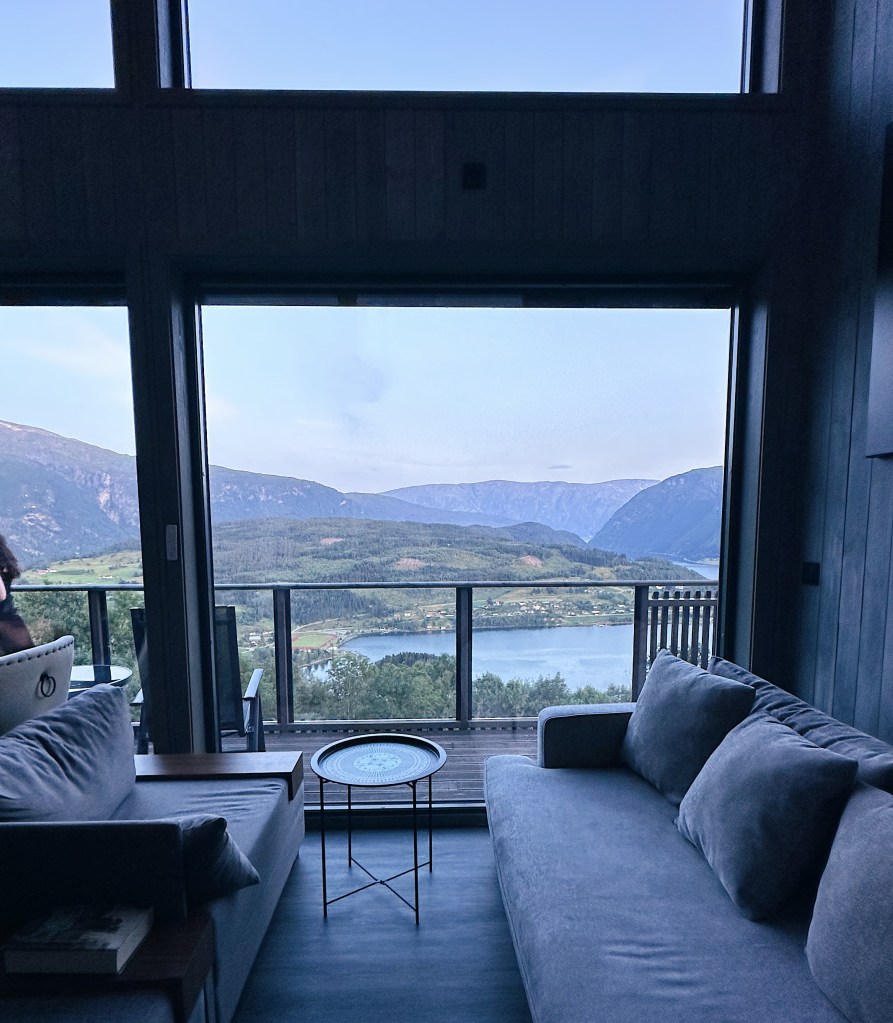
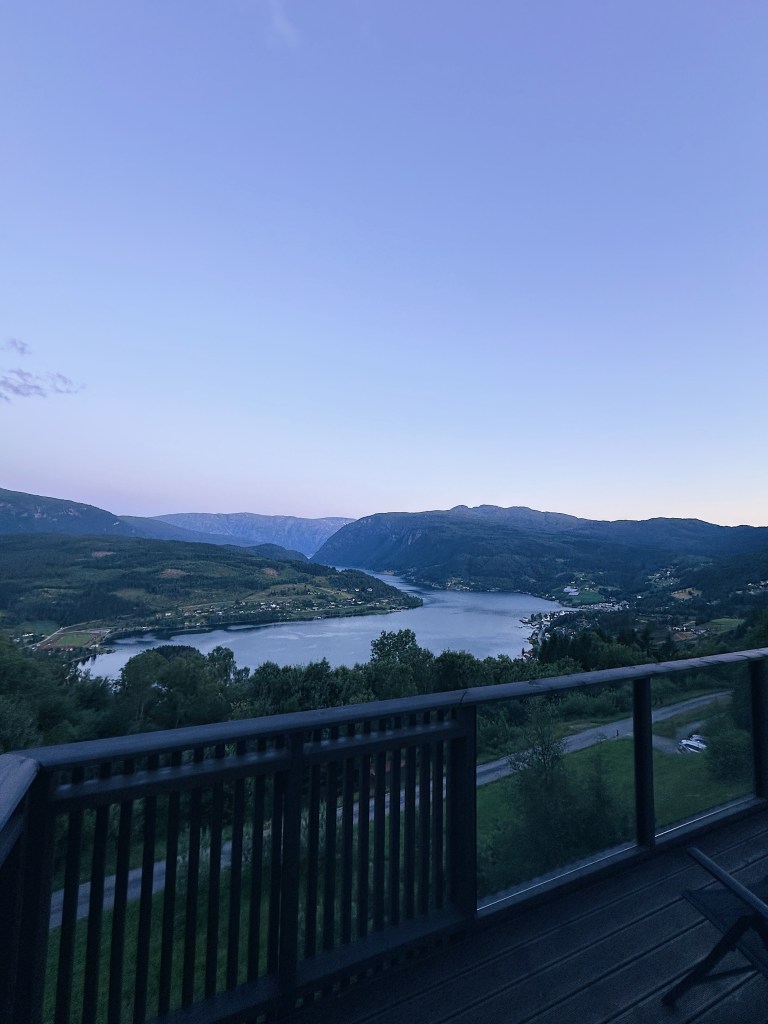
On our latest trip to Norway, we spent a few days in Ulvik, a tiny village tucked away at the end of the Hardangerfjord, surrounded by steep mountains, orchards and water in almost every direction. Our home for the stay was the beautiful Hardanger Panorama Lodge – and the name really says it all. Perched high above Ulvik, Hardanger Panorama Lodge feels almost suspended between the trees and the fjord below.
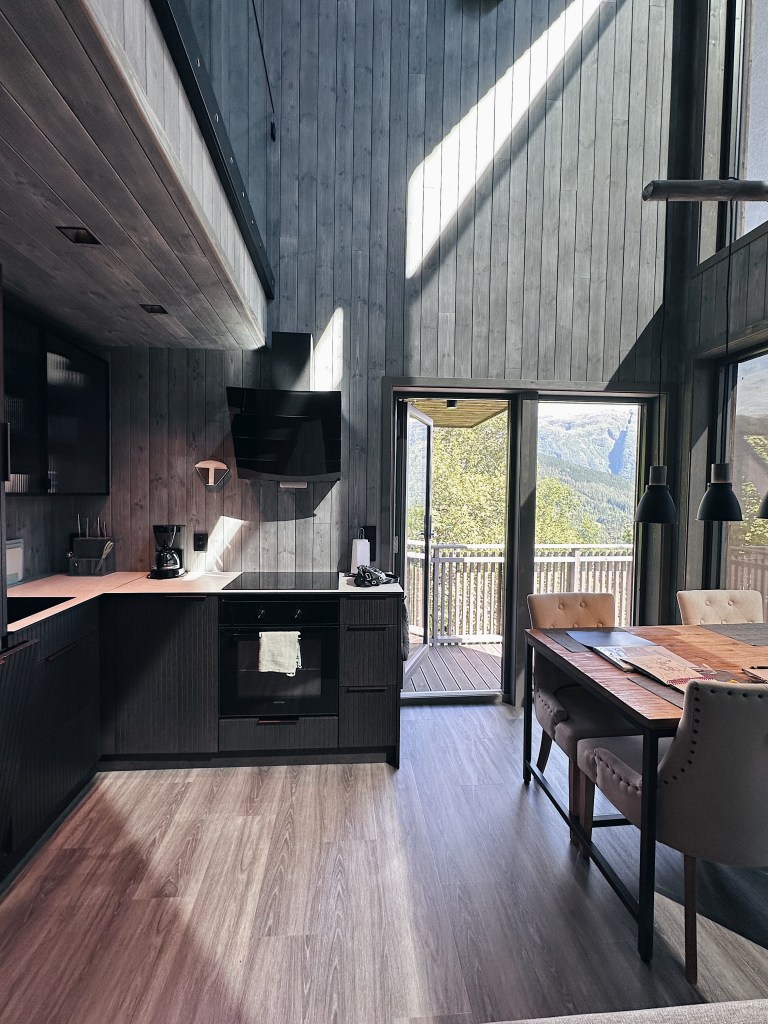
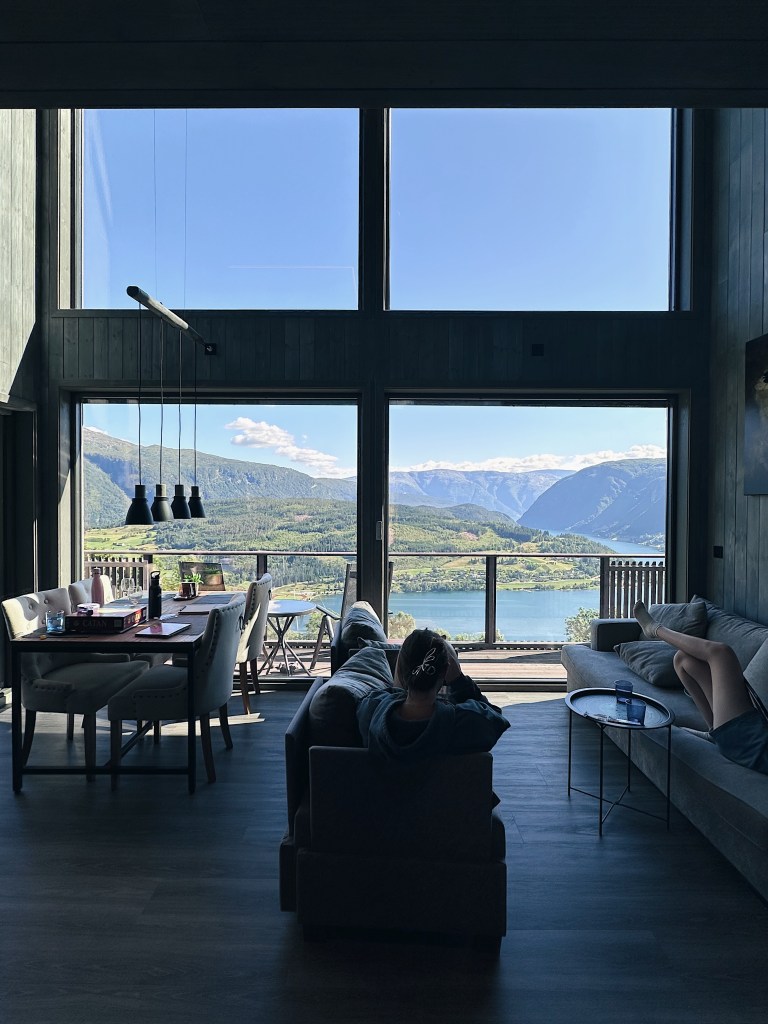
The lodge is modern and beautifully simple, with huge windows framing the landscape rather than competing with it. From the moment we arrived, the fjord became part of everything – morning coffee, breakfast, quiet afternoons and those long Scandinavian summer evenings when nobody really feels like going inside.
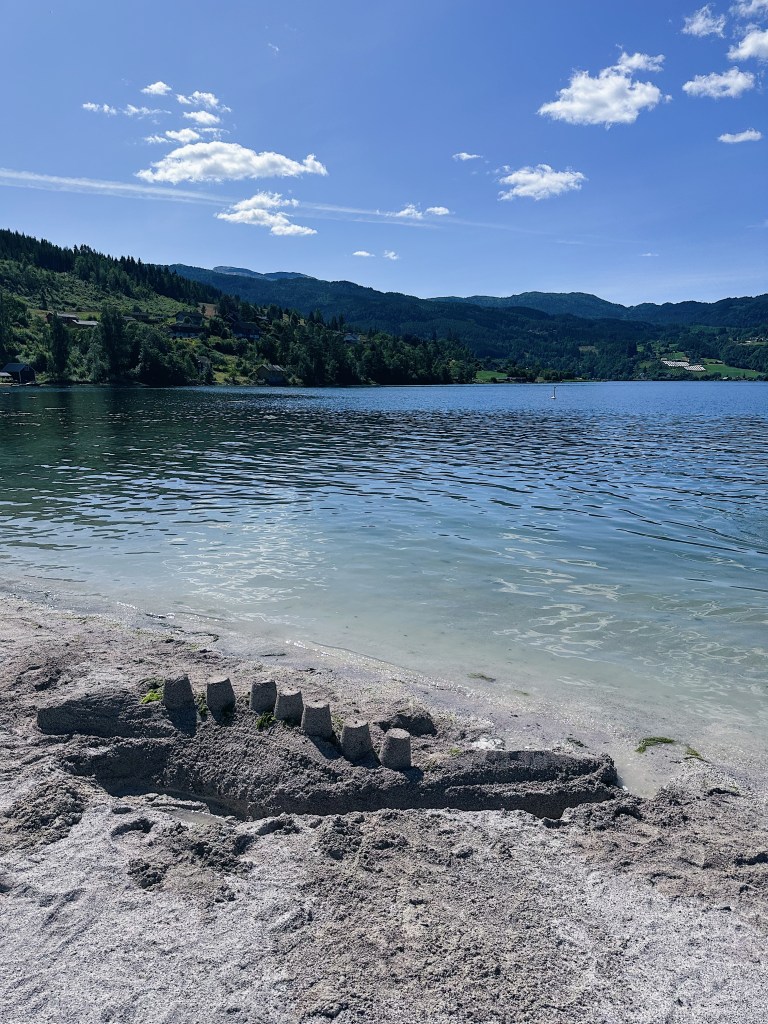
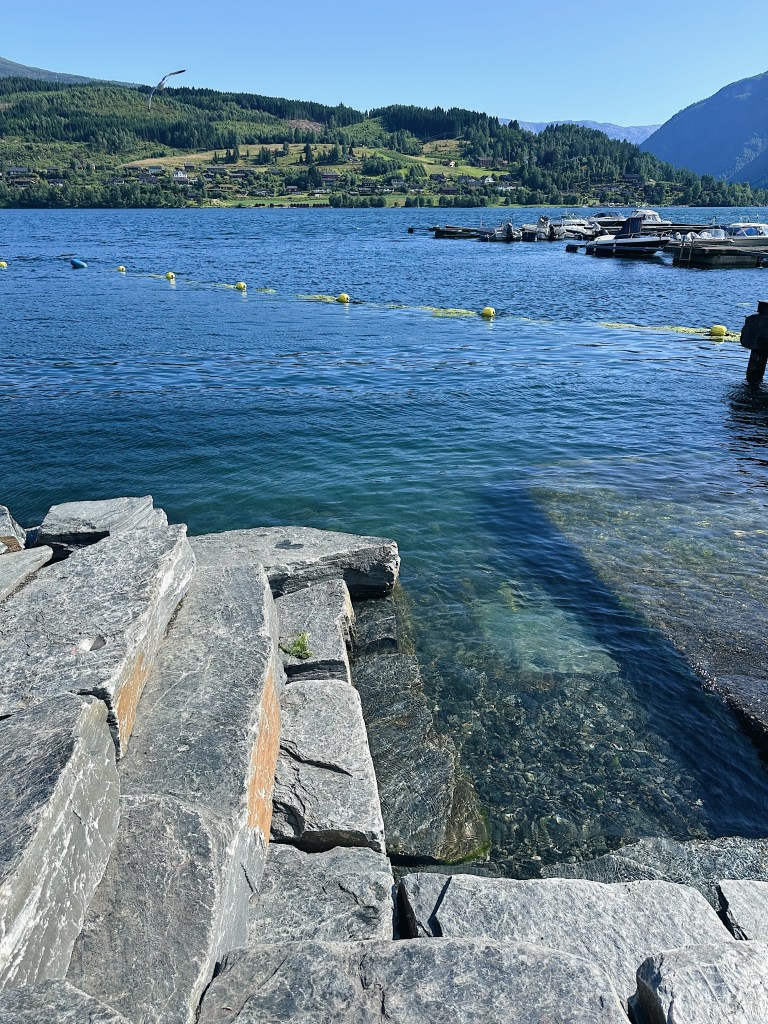
It is the kind of place where you naturally slow down. And while Hardanger is filled with famous sights and spectacular hikes, this time we wanted to experience a little more of the everyday fjord life. We went swimming at the local beach, wandered around the tiny harbour in Ulvik, stopped for coffee and simply spent time by the water. Boats came and went, the mountains changed colour with the light, and life moved at a wonderfully different pace.
Sometimes the best travel days are the ones without much of an itinerary.
Cider country
One thing you quickly realise in Hardanger is that apples are everywhere. The steep hillsides around the fjord are covered in orchards, and Ulvik is home to Norway’s only Fruit & Cider Route, connecting three local farms producing fruit, apple juice and traditional Hardanger cider.
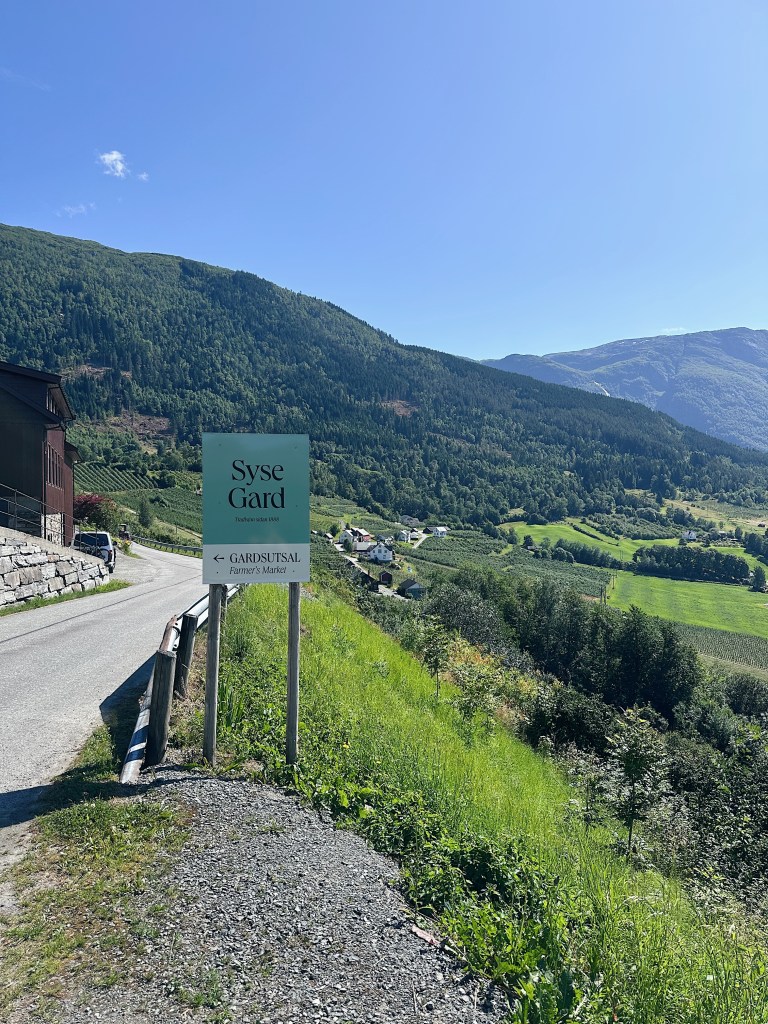
We visited Syse Gard, a family-run fruit, meat and cider farm dating back to 1888. There are 3 farms just close to each other in Ulvik. Syse produces its own cider and apple juice alongside jams, fruit and traditional cured meats, and during summer you can sit outside overlooking the landscape with a cider tasting.
It is a lovely way to understand a little more about Hardanger. The fjord may be the dramatic backdrop, but the orchards and farms are just as much part of the identity of this region.
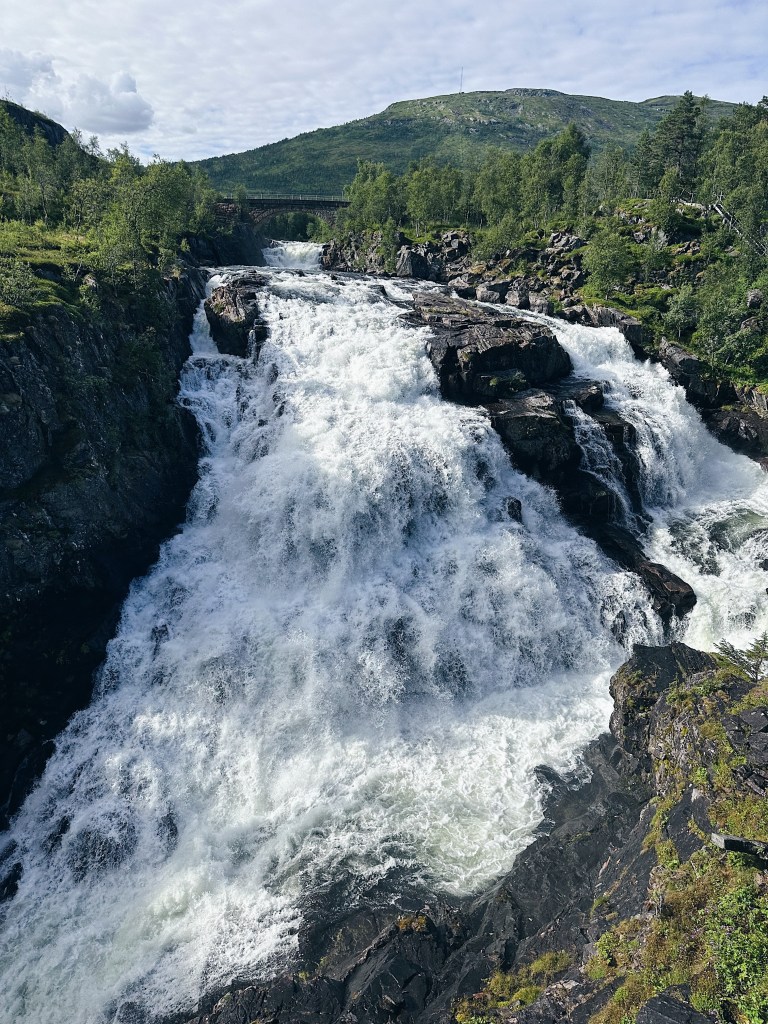
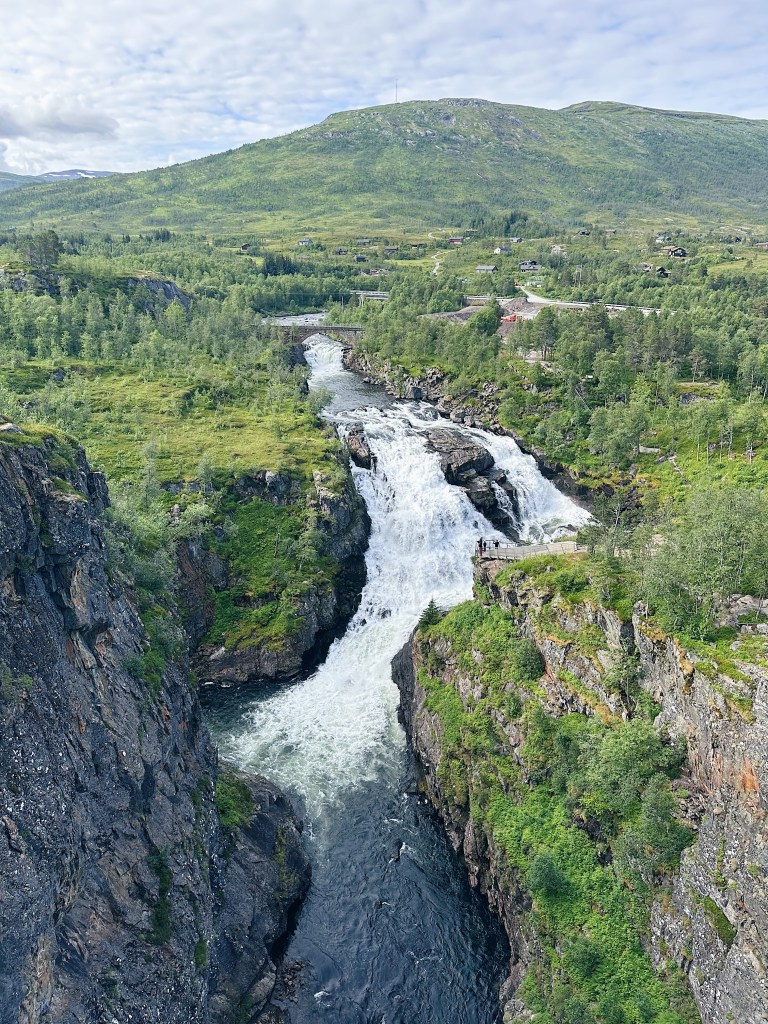
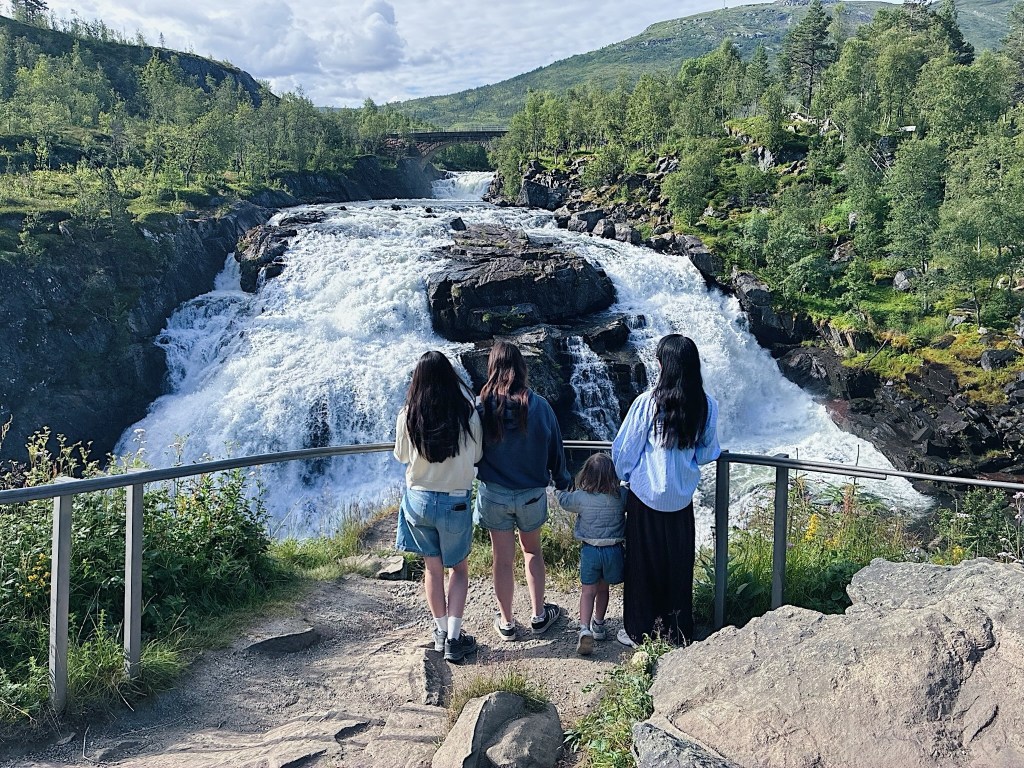
Of course, we couldn’t come back to Hardanger without revisiting Vøringsfossen. We have been here before, and it remains one of those places that is almost impossible to capture properly in photographs.
The waterfall plunges 182 metres from the Hardangervidda plateau into the dramatic Måbødalen valley below. You hear it before you really take in the scale of it – an enormous rush of water disappearing into the gorge. It’s impossible to take a “true” Picture, you just have to go experience it yourself ;-).
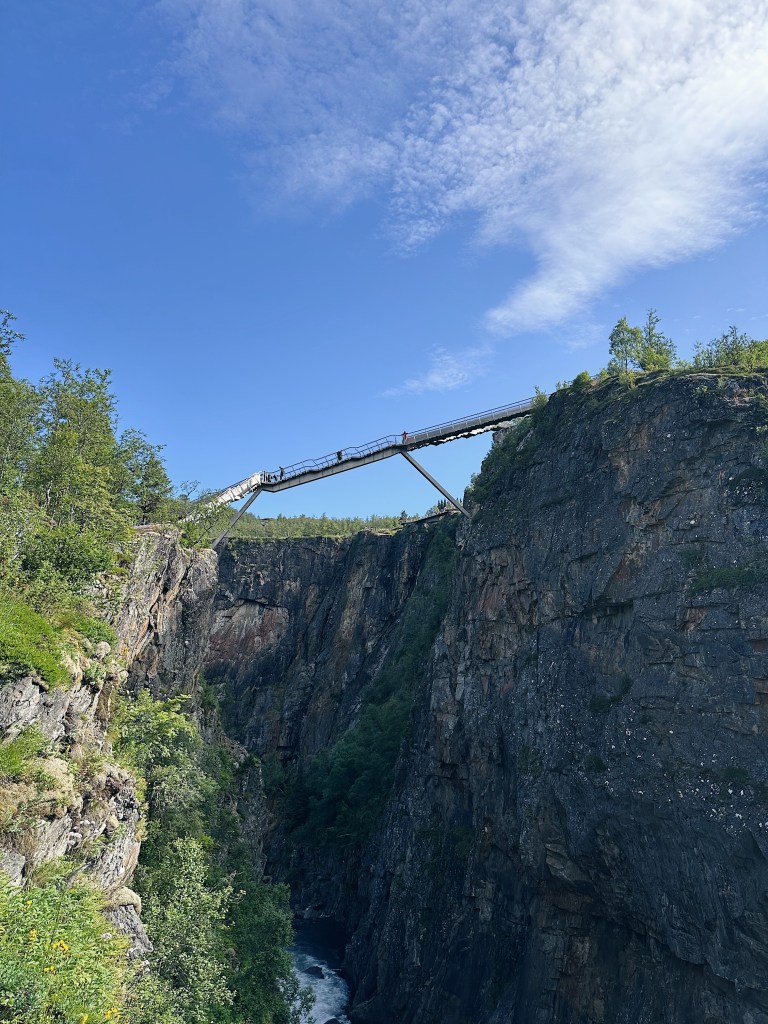
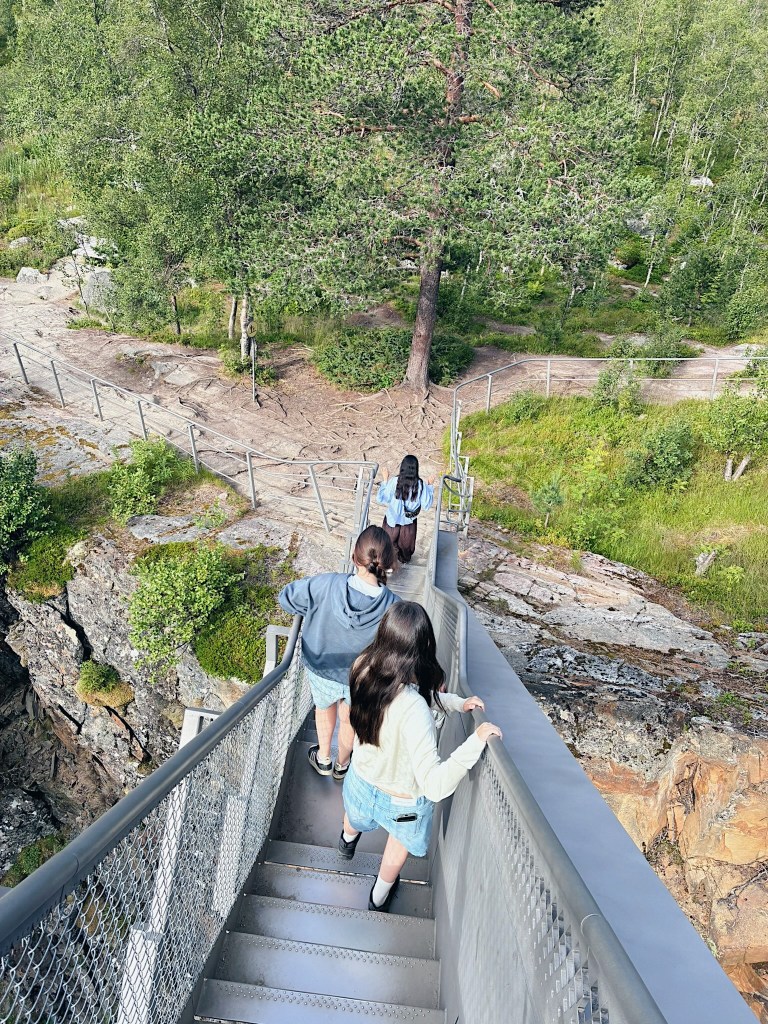
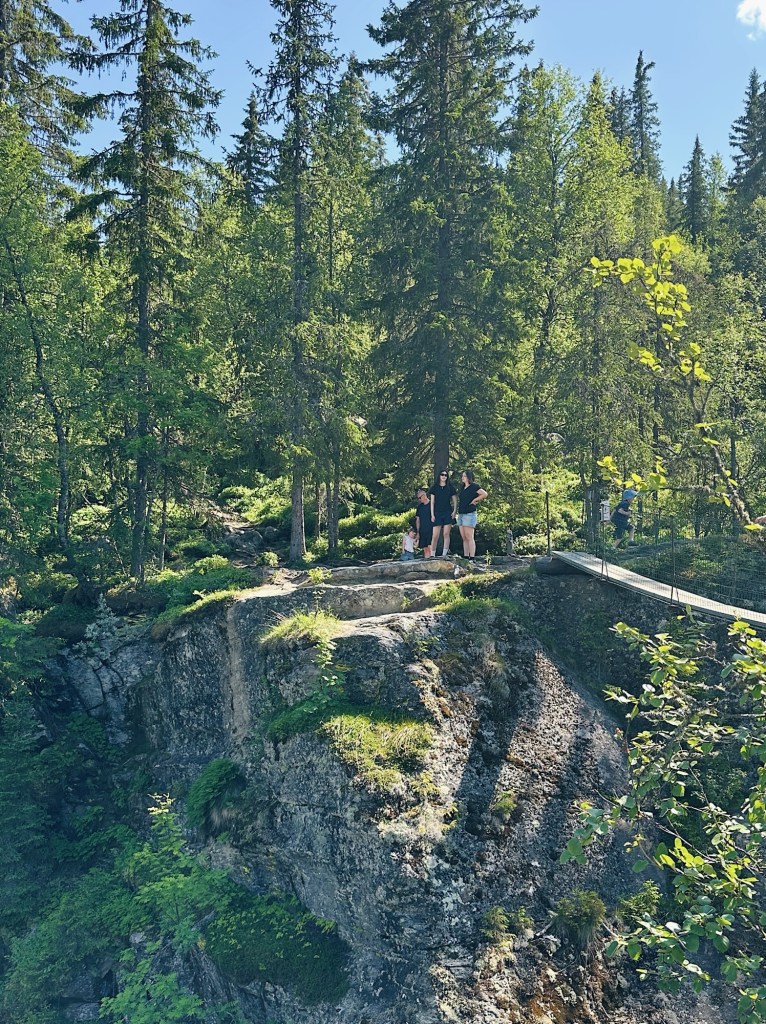
This time, however, there was something new for us. Since our previous visit, a spectacular step bridge has been built across the river above the waterfall. Designed by Norwegian architect Carl-Viggo Hølmebakk, the bridge stretches 47 metres across the landscape with 99 steps connecting the two sides. It was hobestly a Little scary for those of us that are affraid of heights, but we all made it over and back again.
Norway has always been exceptionally good at this particular combination of architecture and wilderness: adding just enough structure to allow you to experience the landscape differently, without taking attention away from nature itself.
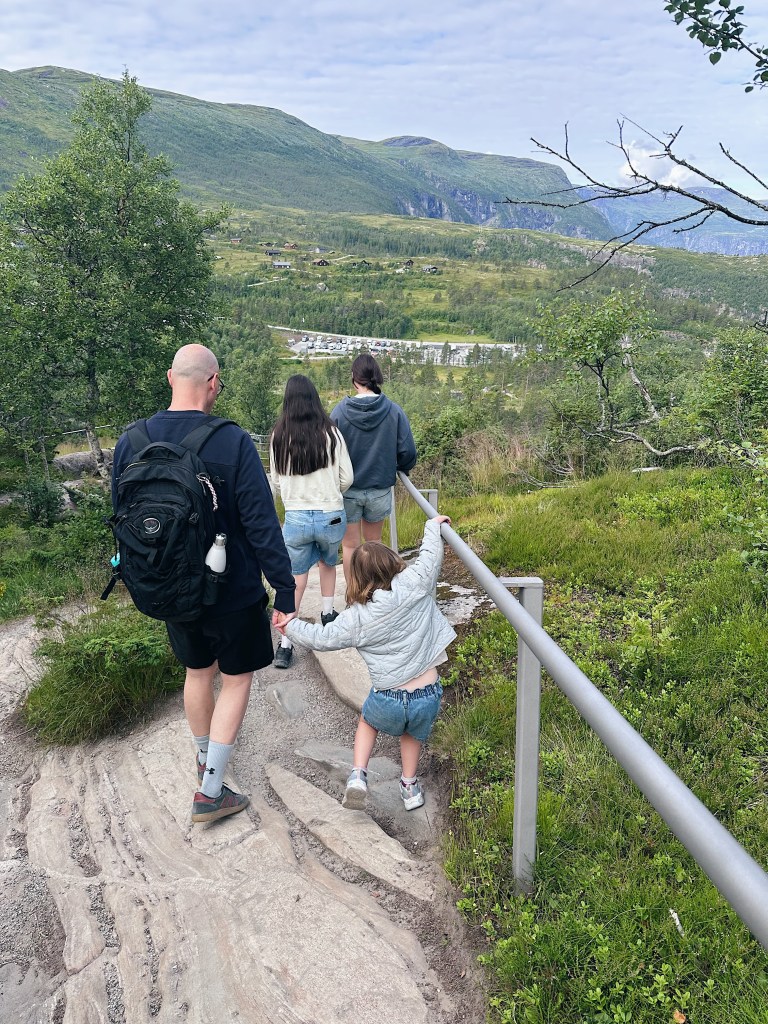
Part of vøringsfossenVøringsfossenMe & my 3 girlsSkybridgeSkybrigdeThe family viking around the waterfall
The beauty of staying a little longer
Hardanger is easily the kind of place you could race through – stopping at waterfalls, viewpoints and famous landmarks before continuing to the next destination. But I think you would miss something.
Staying for a few days allowed us to discover the quieter side of the fjord: swimming from the local beach, drinking cider among the orchards, having coffee by the harbour and coming home to our little lodge above the water.
It wasn’t really about ticking things off a list. It was about fjord life. And waking up at Hardanger Panorama Lodge with the entire Hardangerfjord outside the window might just be one of my favourite ways of experiencing Norway.
Last time we visited Hardanger we stayed here, which I also would still recommend for anyone visiting this region of Norway <3.
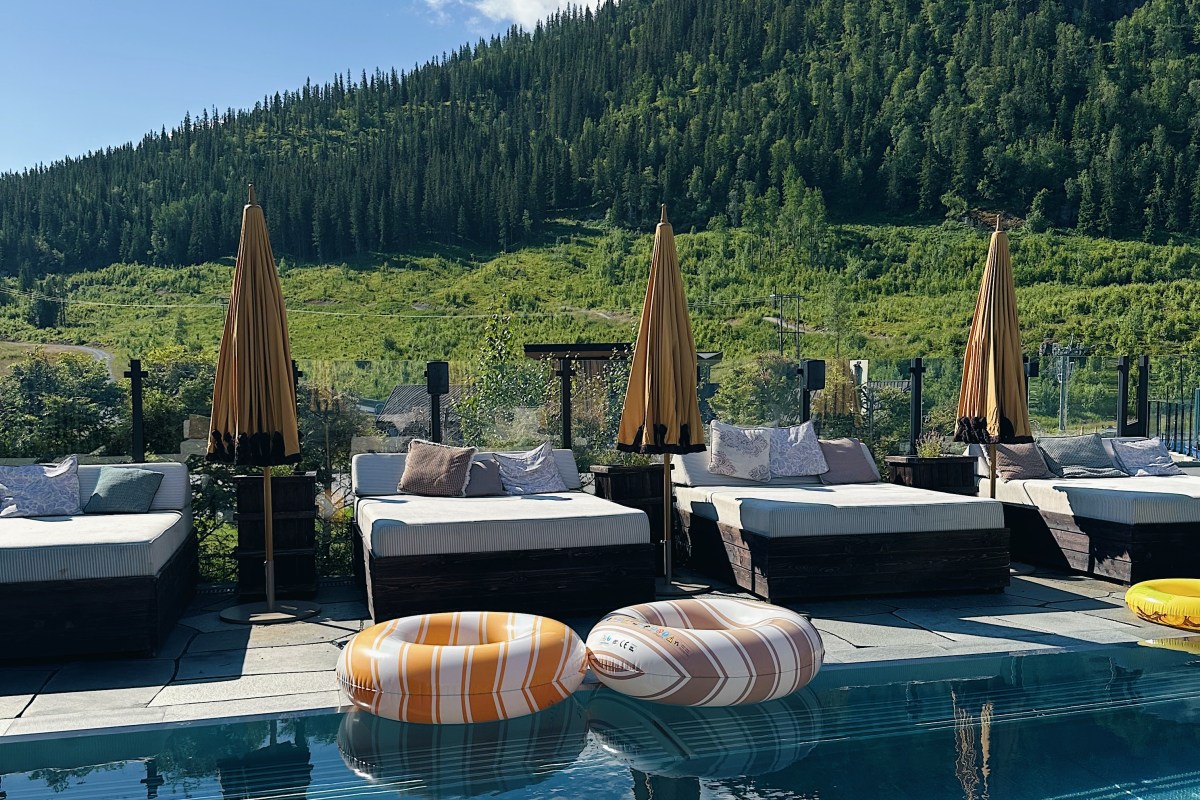
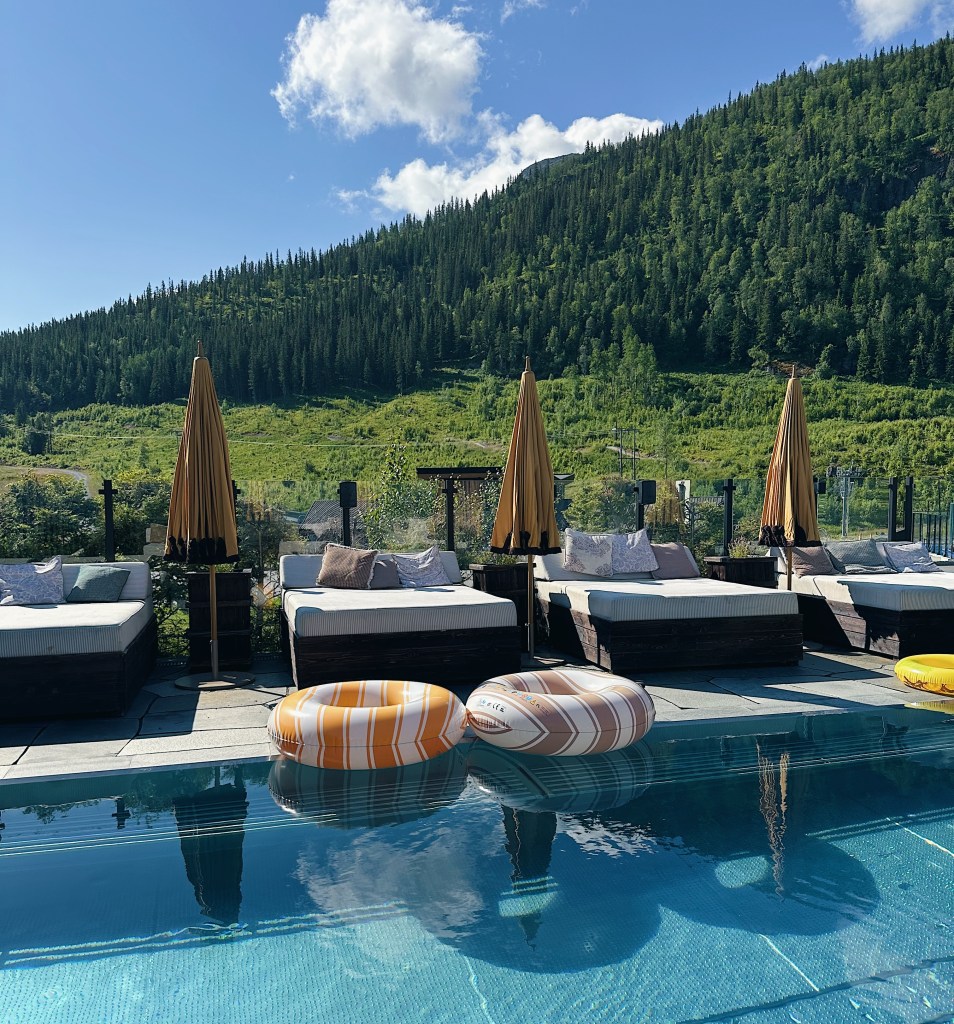
As tempting as it is to spend an entire day at Fyri Resort’s Pool Club, there’s one place you shouldn’t miss while you’re here.
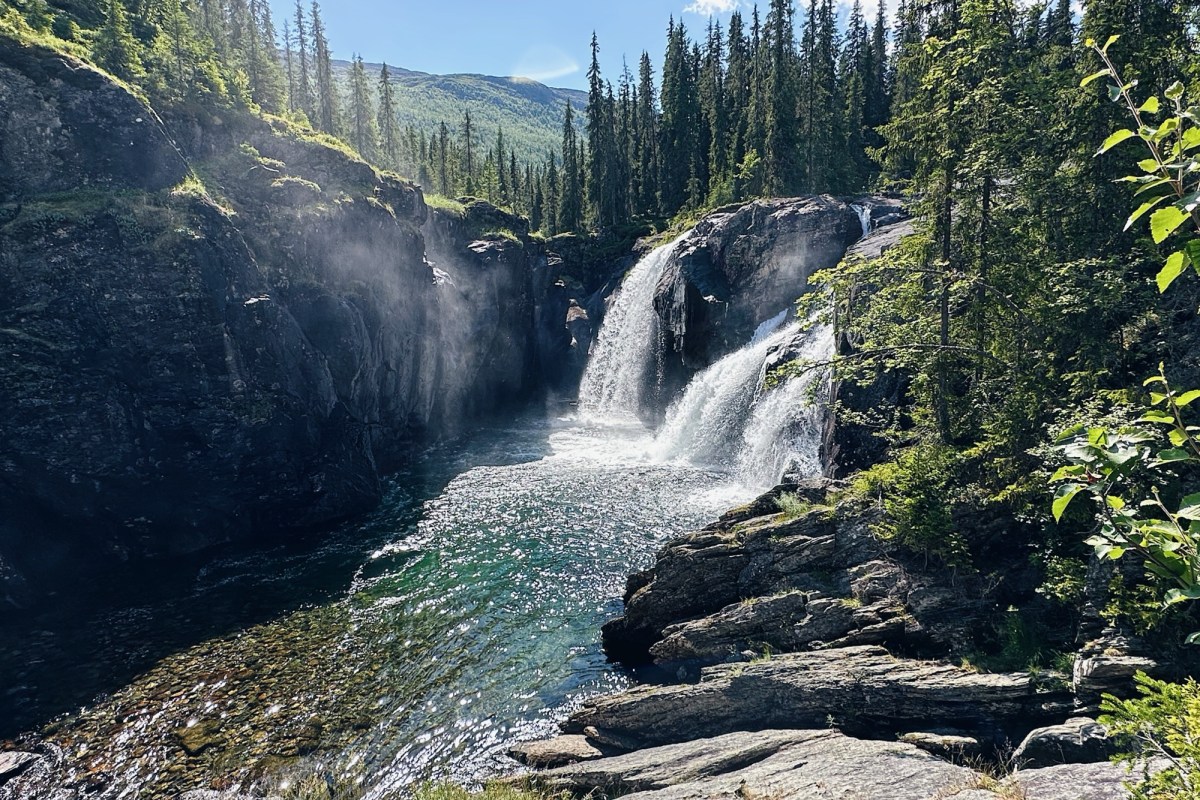
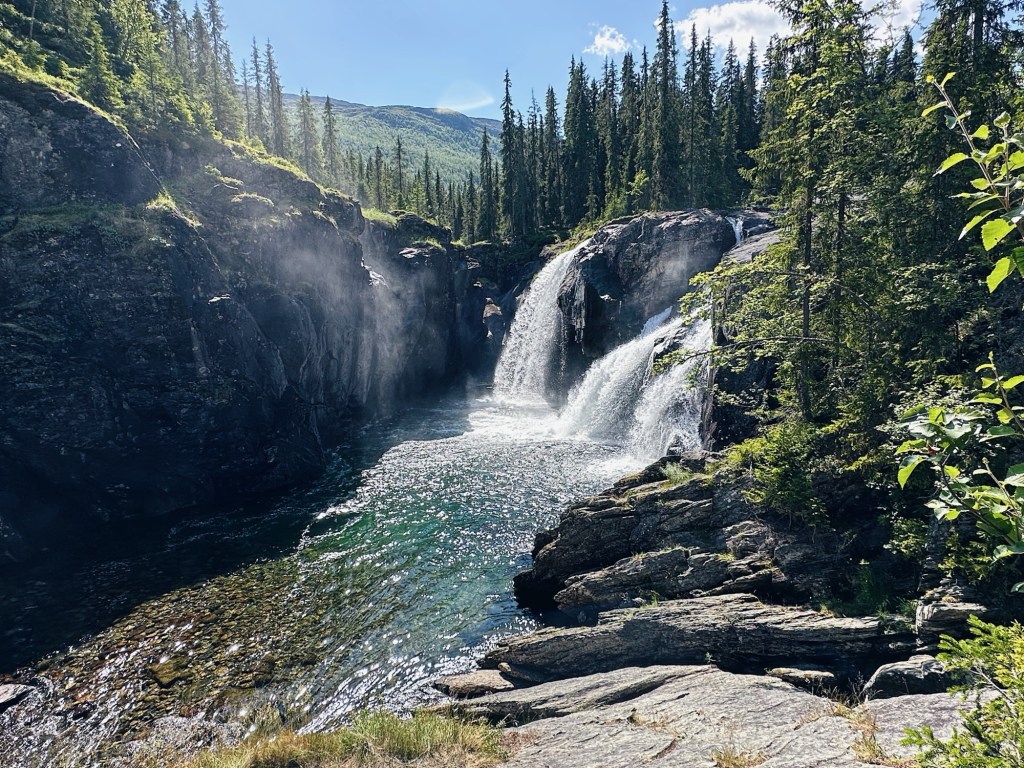
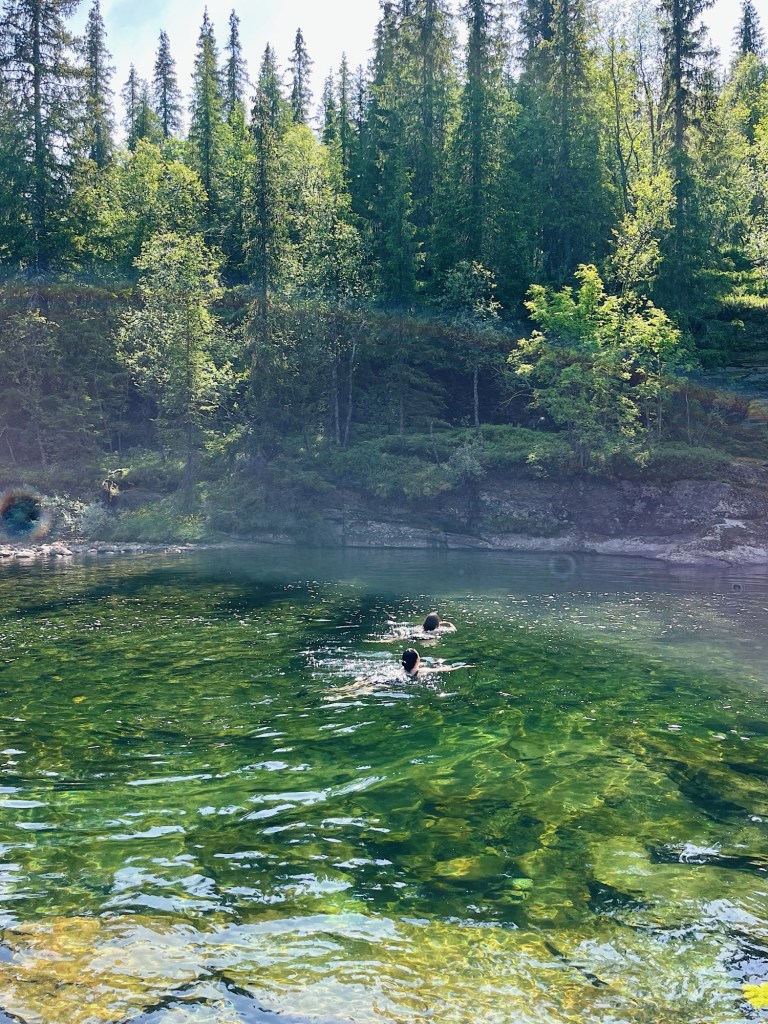
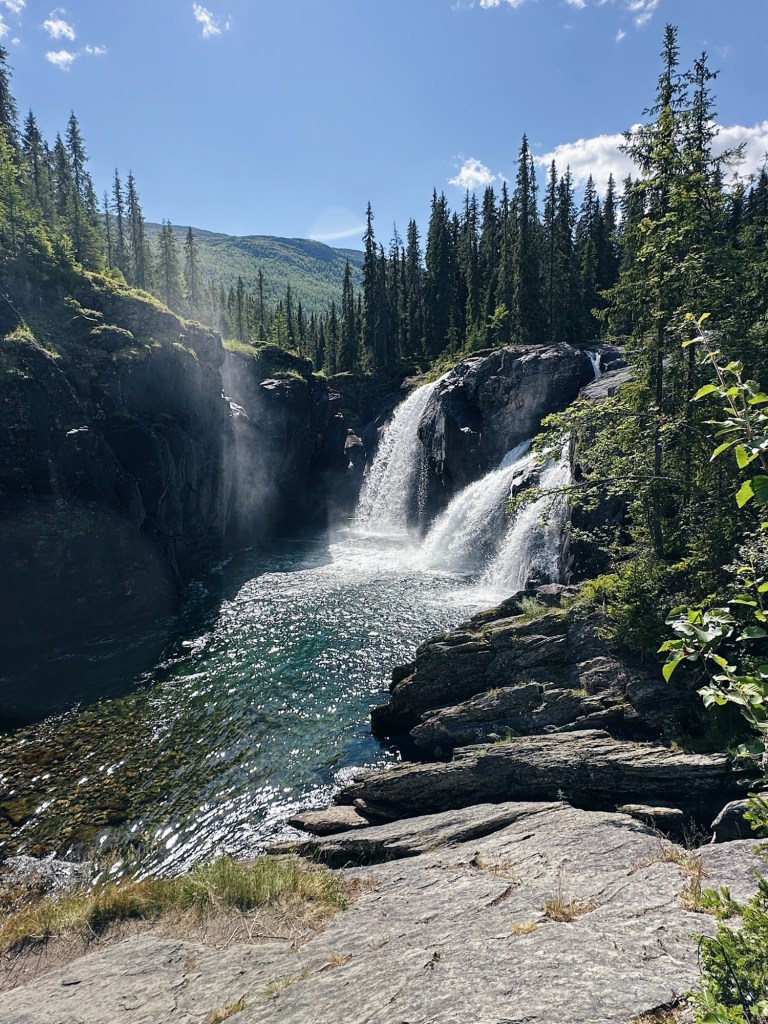
Just a seven-minute drive from the resort, you’ll find Rjukandefossen – a waterfall that feels almost too beautiful to be real.
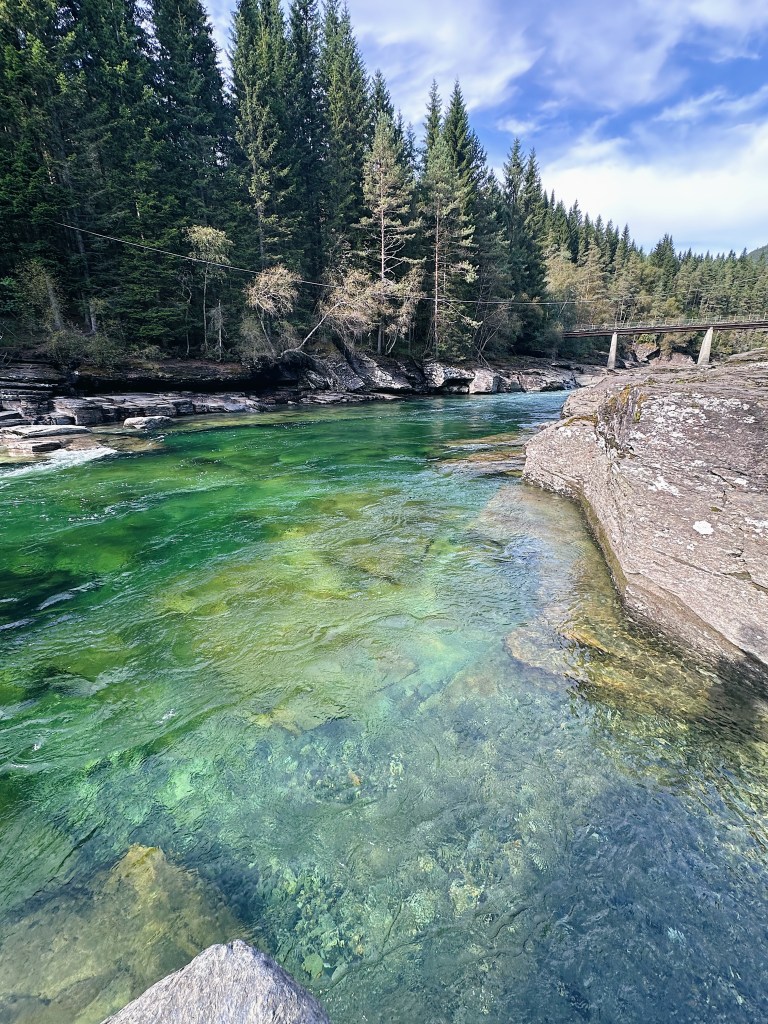
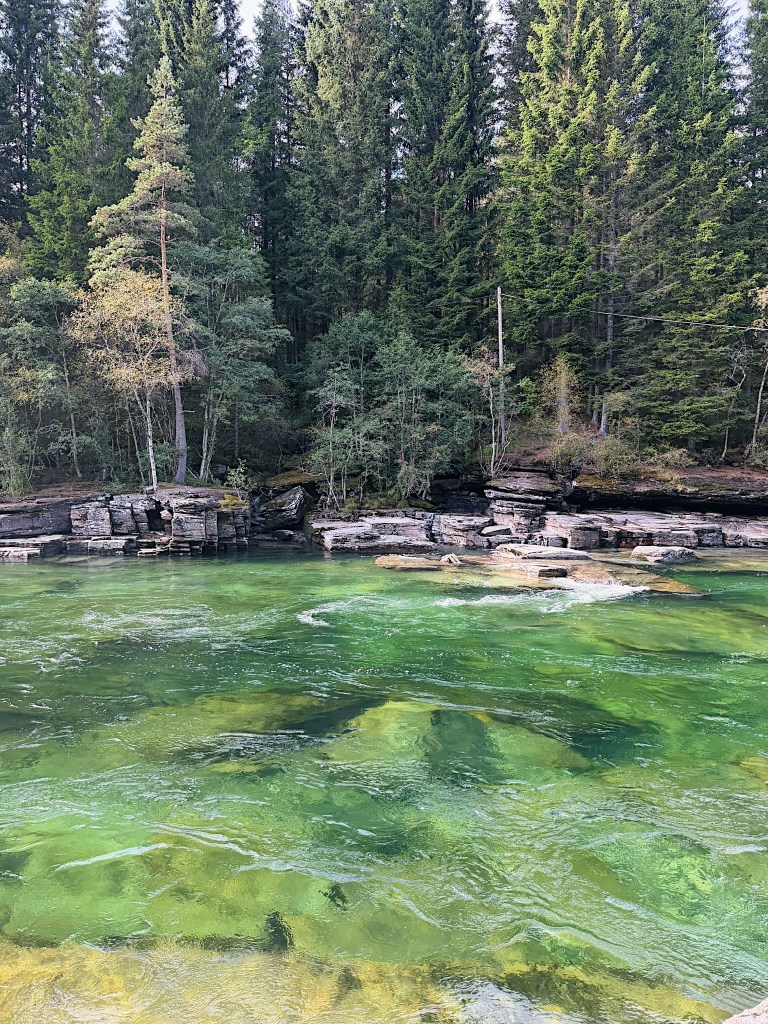
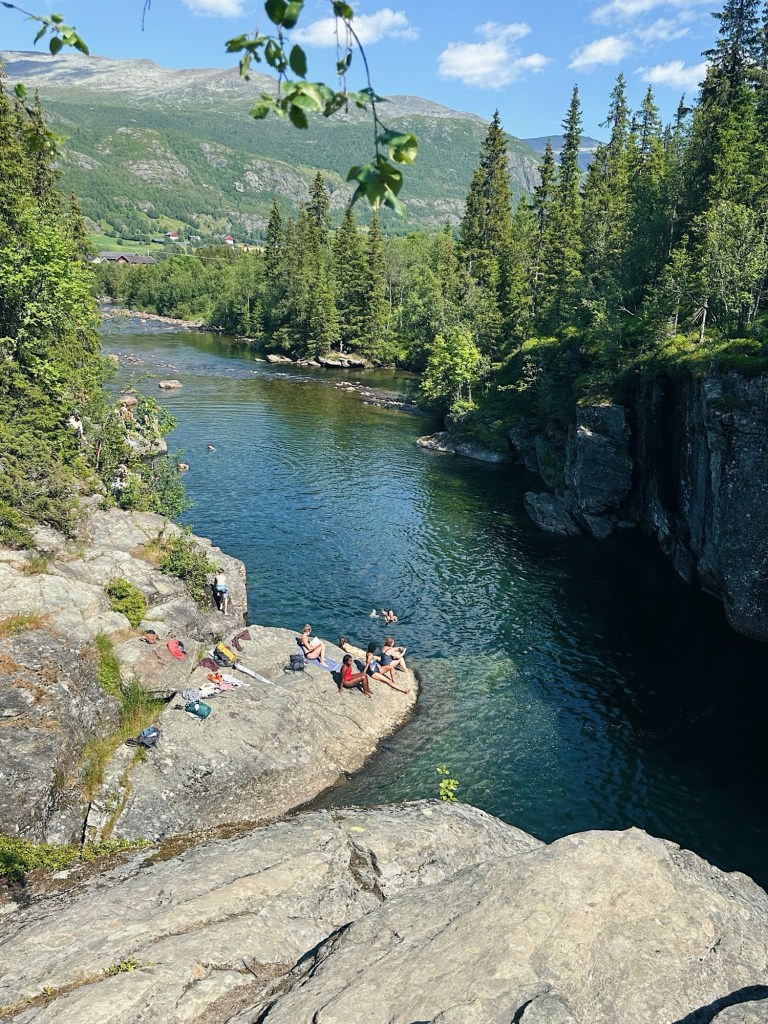
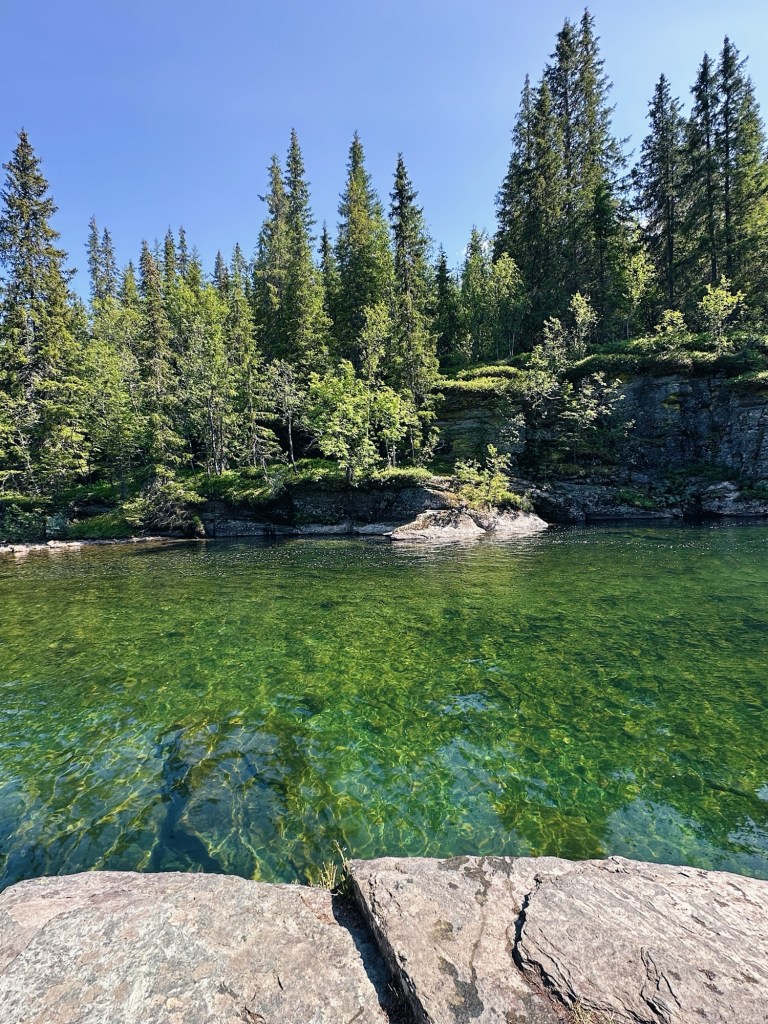
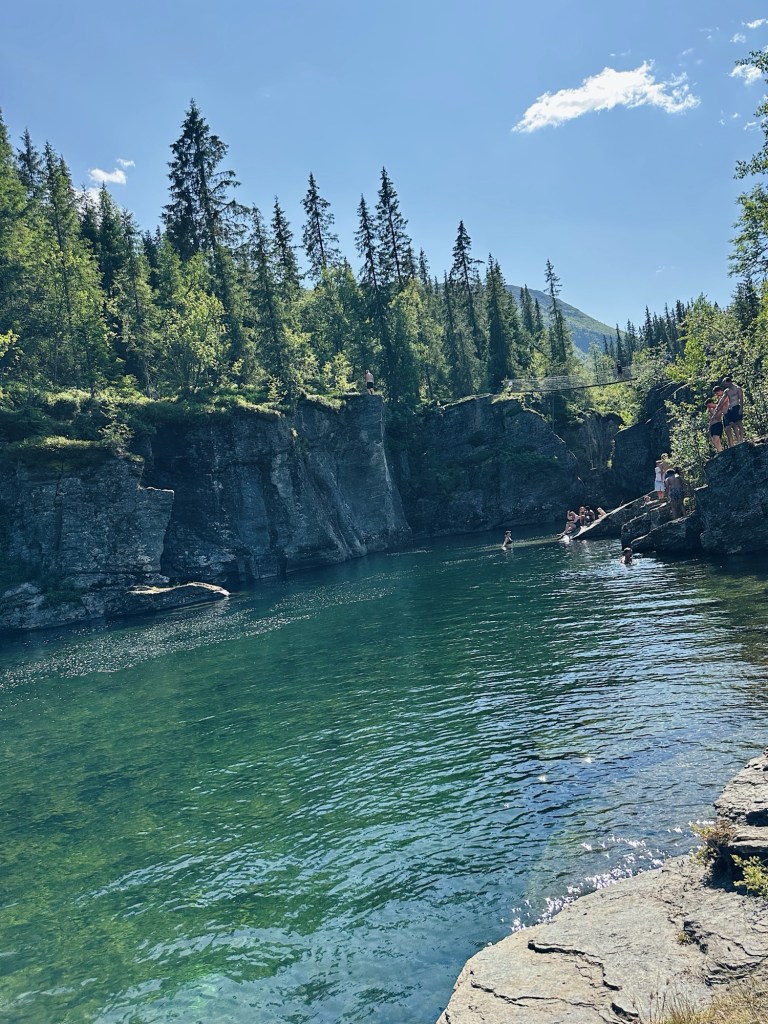
The water crashes into an impossibly clear emerald pool, surrounded by pine forests and mountains. Standing there, it’s hard not to stop for a moment and simply take it all in.
If you’re feeling brave, you can even take a swim.
The water is cold, but fresh, and not as icy as you’d might expect from a Norwegian mountain river – but on a warm summer day, it’s one of those experiences you’ll remember long after you’ve returned home.
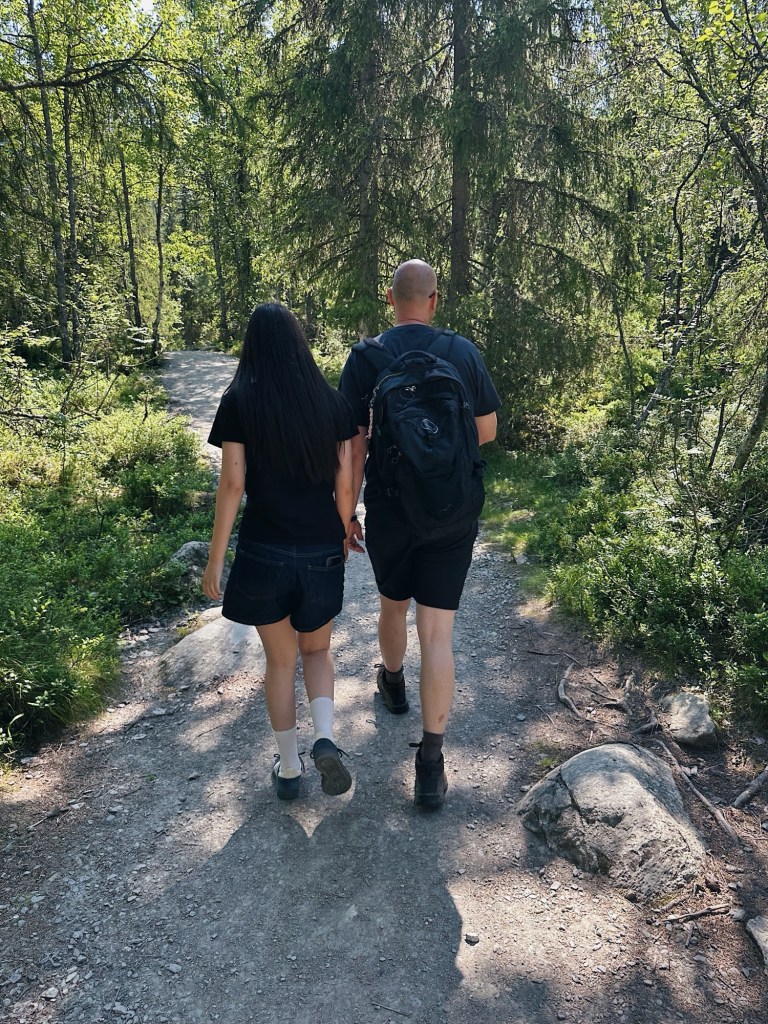
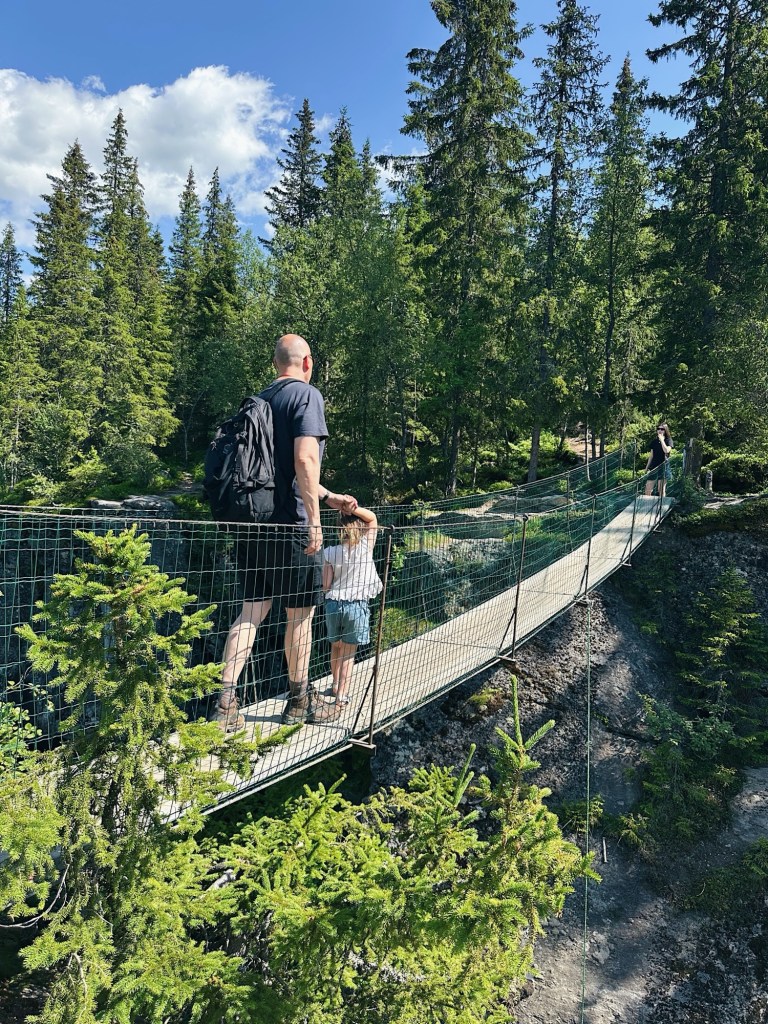
There is a small parking lot very close to the waterfall. You just have to follow the small forrest trail. Then already after the 2nd lille wood bridge you turn left into the forrest. Here you will find a very narrow trail leading you a bit down, just keep following and then you will get to the part of the river where you can jump in. Bred on a very spontaneous decision (to run back and get our swimsuits, but definitely one of the highlights of our time in Hemsedal. In fact of all our vacation in Norway…
If you keep following the trail and don’t turn left after the 2nd bridge, but keep striaght a head, then you will come to the actual waterfall (which you should not miss ;-)).
Hemsedal is best known as one of Norway’s most popular ski destinations, but after spending a summer weekend at Fyri Resort, I discovered a completely different side of the Norwegian mountains.
Some places surprise you. Hemsedal was one of them.
I have been travelling to Norway more times than I can count, and like many others, I’d always associated this corner of Norway with winter. Snow-covered mountains, skiing, après-ski and cosy cabins. Summer had honestly never crossed my mind.
However, the drive alone is enough to remind you why Norway keeps calling people back. Winding mountain roads, emerald valleys, waterfalls appearing around almost every bend and landscapes that somehow become even more dramatic with every kilometre.
And then you arrive at Hemsedal. Instead of a sleepy ski village waiting for winter, we found a destination full of life. Families hiking together, cyclists heading into the mountains, people enjoying long lunches in the sunshine and crystal-clear rivers inviting you to jump in after a warm day. It felt effortless. Calm without being quiet. Luxurious without trying too hard.
There’s something incredibly refreshing about travelling somewhere that hasn’t yet become everyone’s summer destination.
Staying at Fyri Resort
If Hemsedal was the surprise, Fyri Resort became the place that tied the whole experience together.
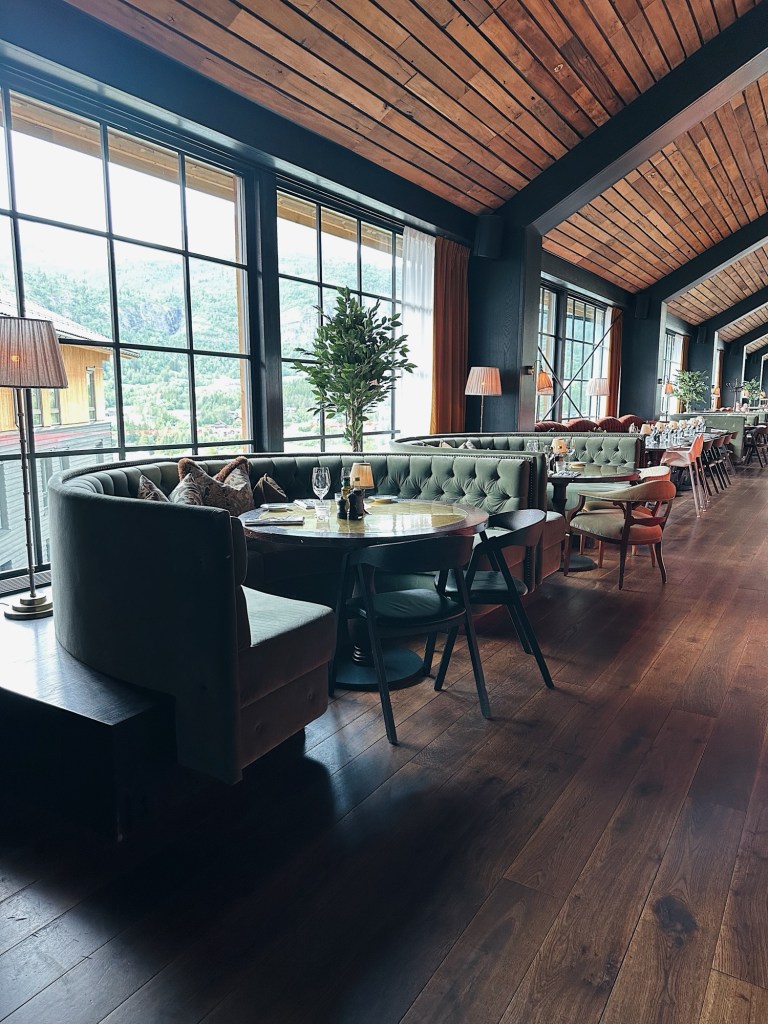
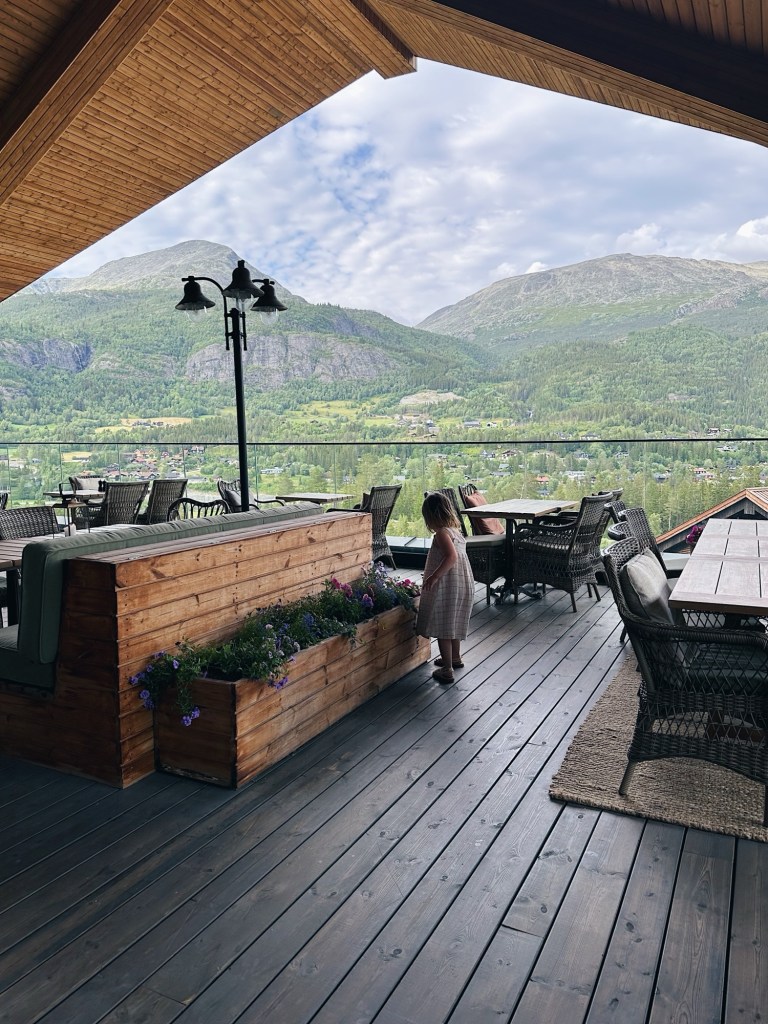
Designed with warm Scandinavian interiors, natural materials and panoramic mountain views, it feels more like a contemporary mountain retreat than a traditional ski hotel. Even during summer, the atmosphere is exactly what you’d hope for.
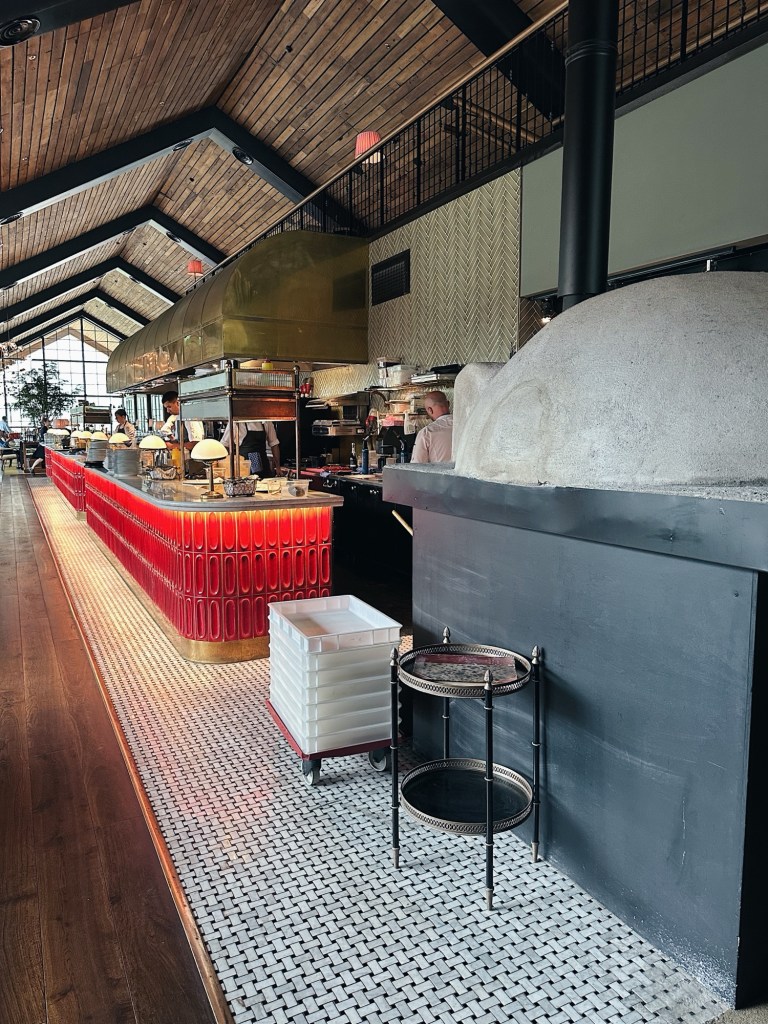
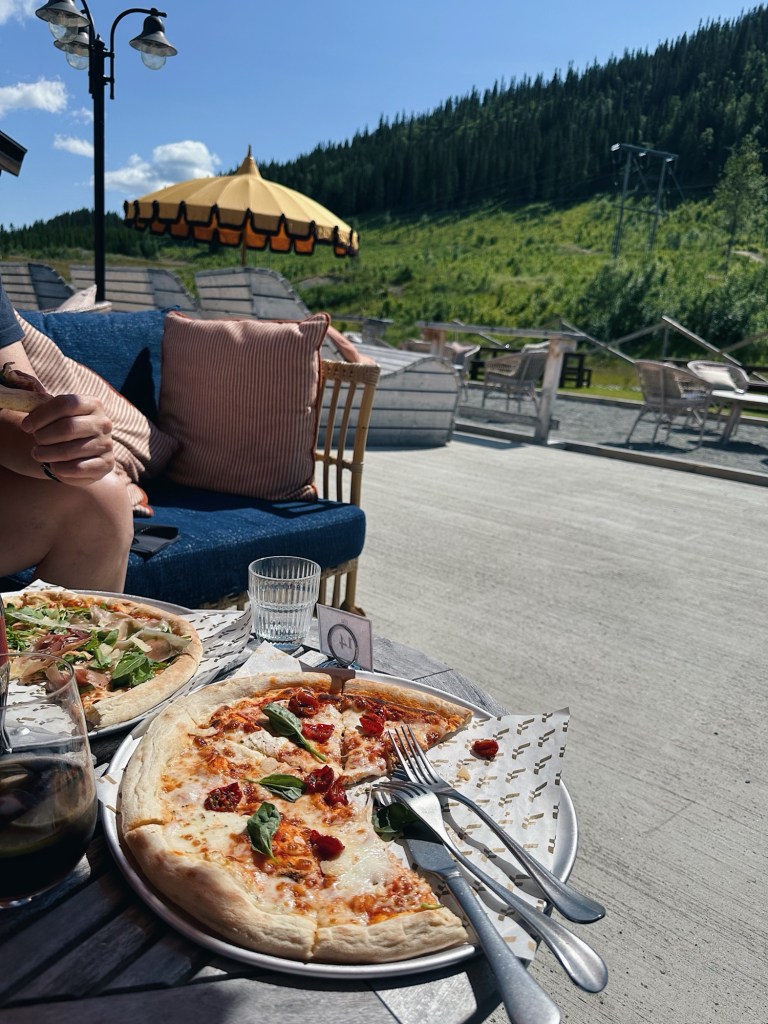
We spent hours by the Pool Club (and in the lounge playing pool), where time seemed to slow down between mountain views and mocktails. And we had the best pizza we have ever had in all of Norway, directly from their huge stone oven. To be honest food in Norway can be “tricky” outside of Oslo or Bergen, but this pizza is worth a stop-over, even if you don’t stay at the hotel.
Beyond the Hotel
One of my favourite things about Hemsedal is how quickly you can leave the village behind and find yourself surrounded by untouched nature with great viking trails. It’s the kind of destination that doesn’t require a detailed itinerary.
For anyone looking for a Scandinavian destination that combines dramatic nature, beautiful design, outdoor adventures and genuine calm, Hemsedal deserves a place on your list.
And if you’re looking for somewhere to stay, Fyri Resort makes it wonderfully easy to settle into mountain life—whether your perfect day includes hiking to a summit, relaxing by the pool or simply enjoying another slow evening as the sun disappears behind the mountains.
Some weekends stay with you. This one certainly will.
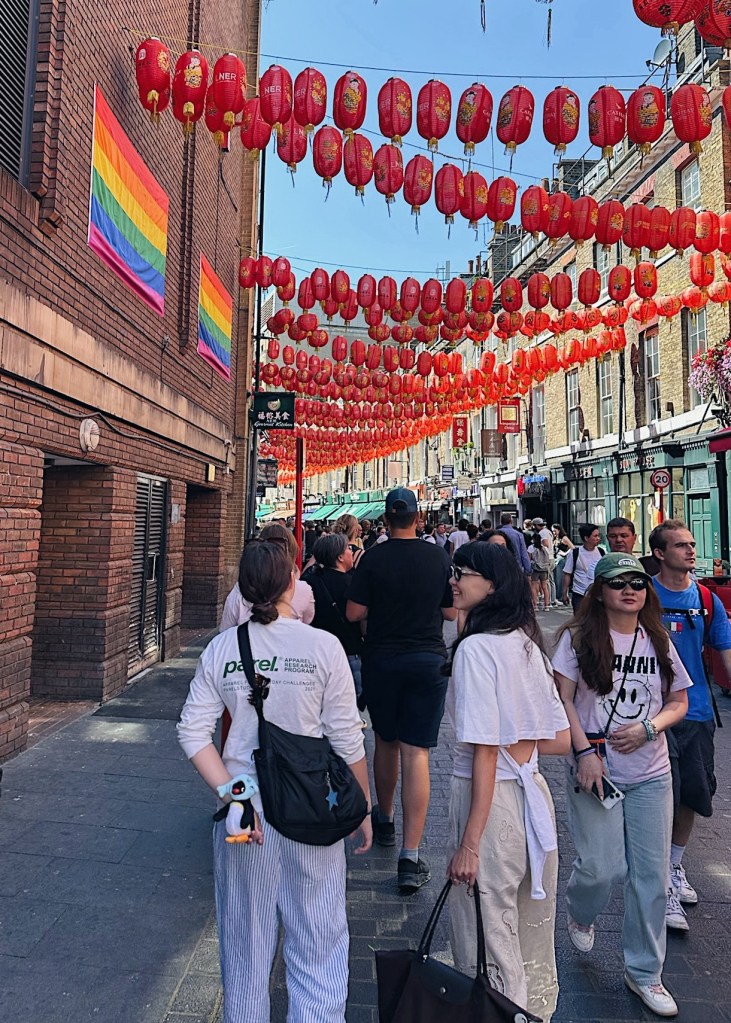
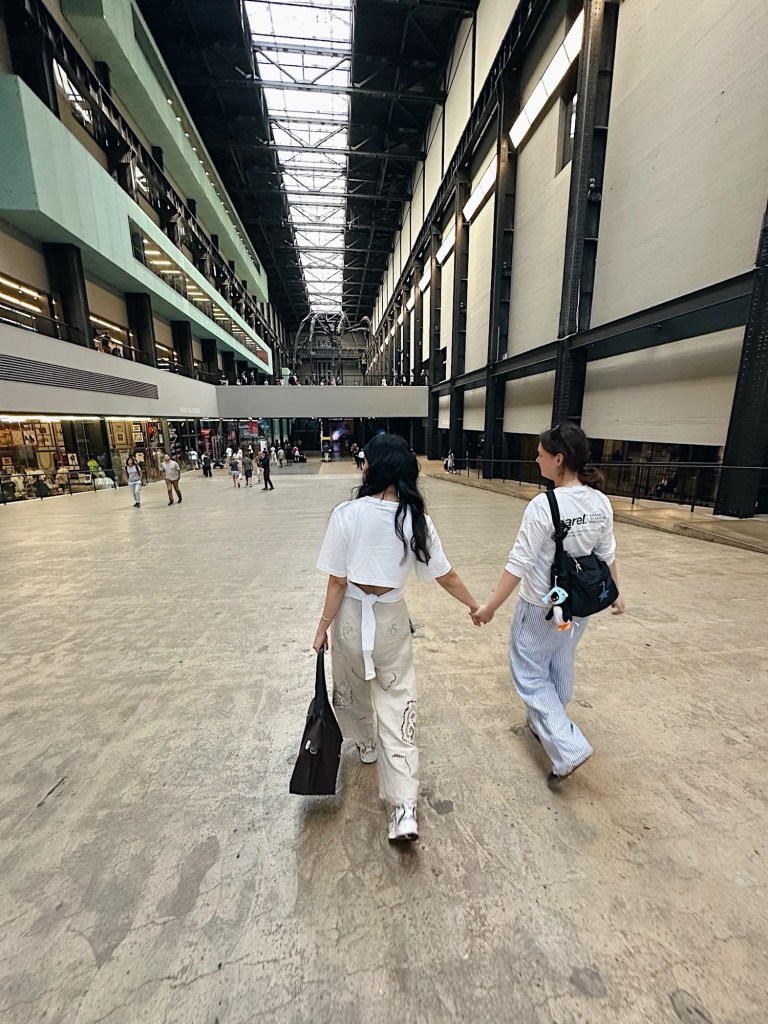
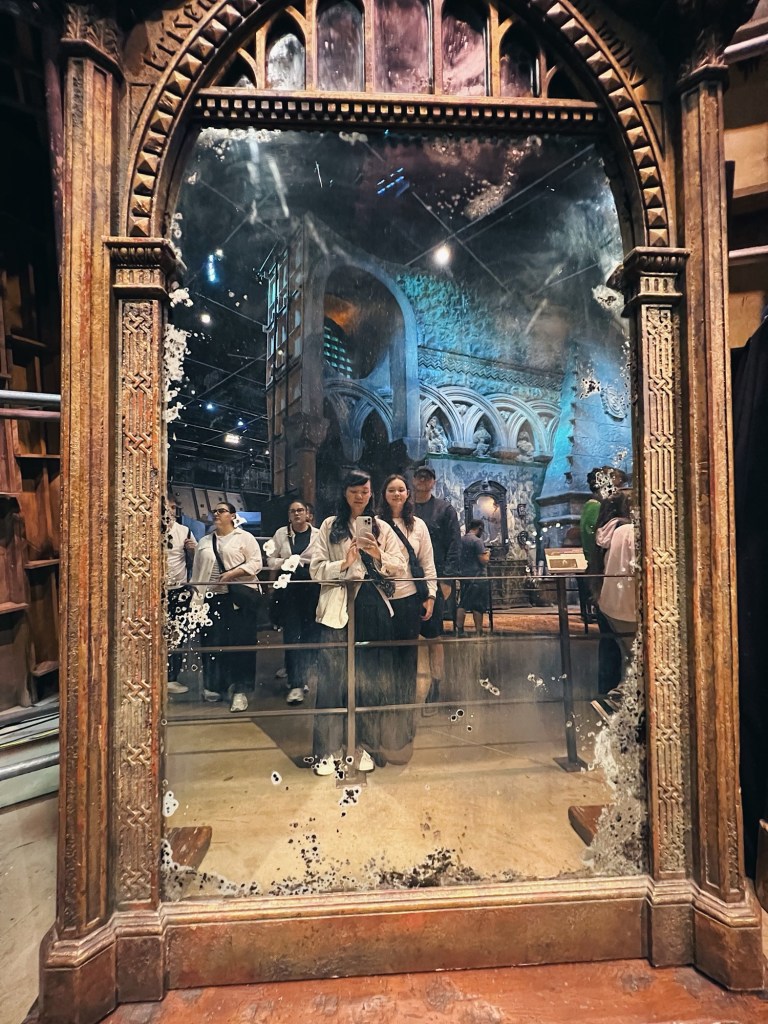
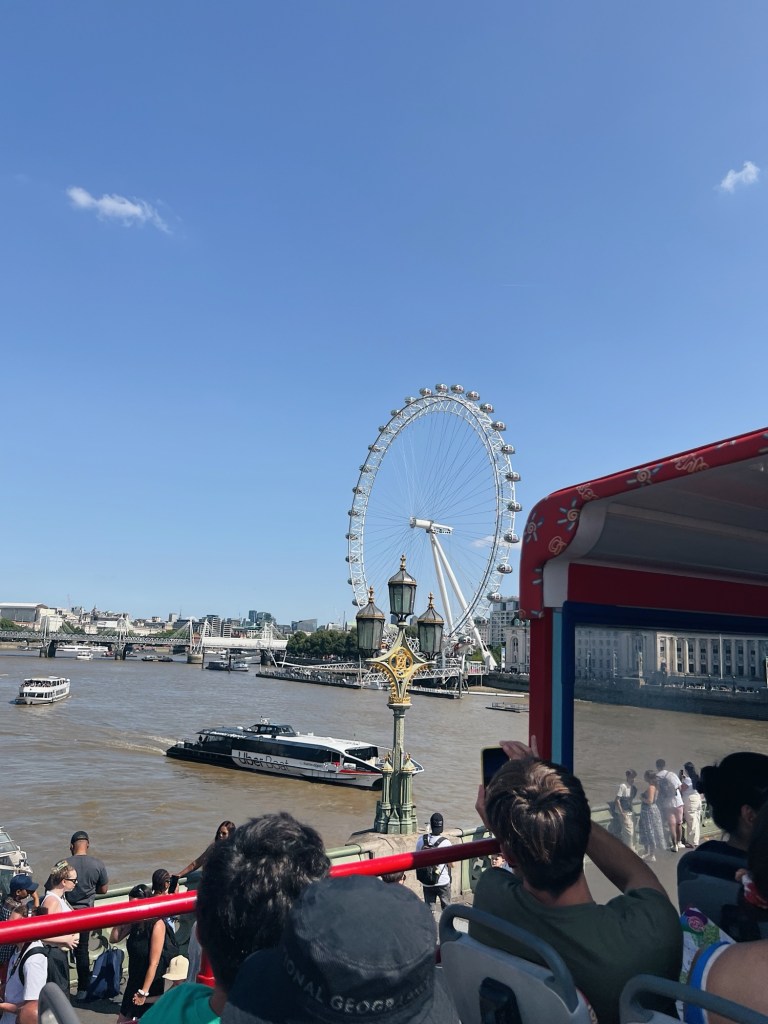
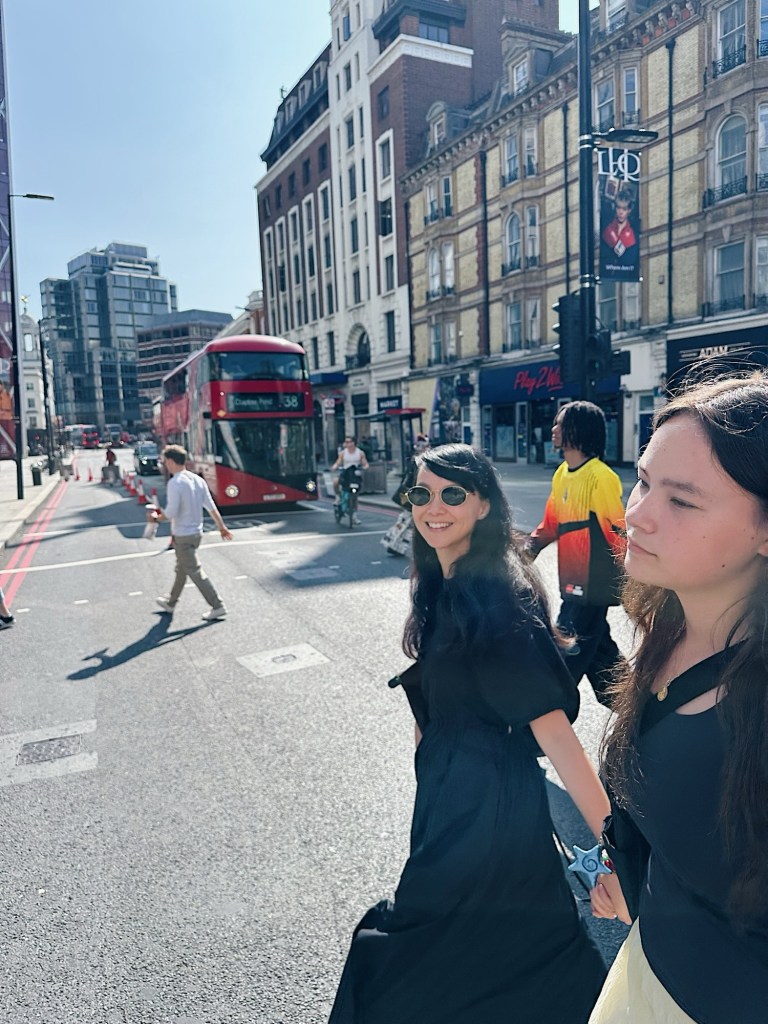
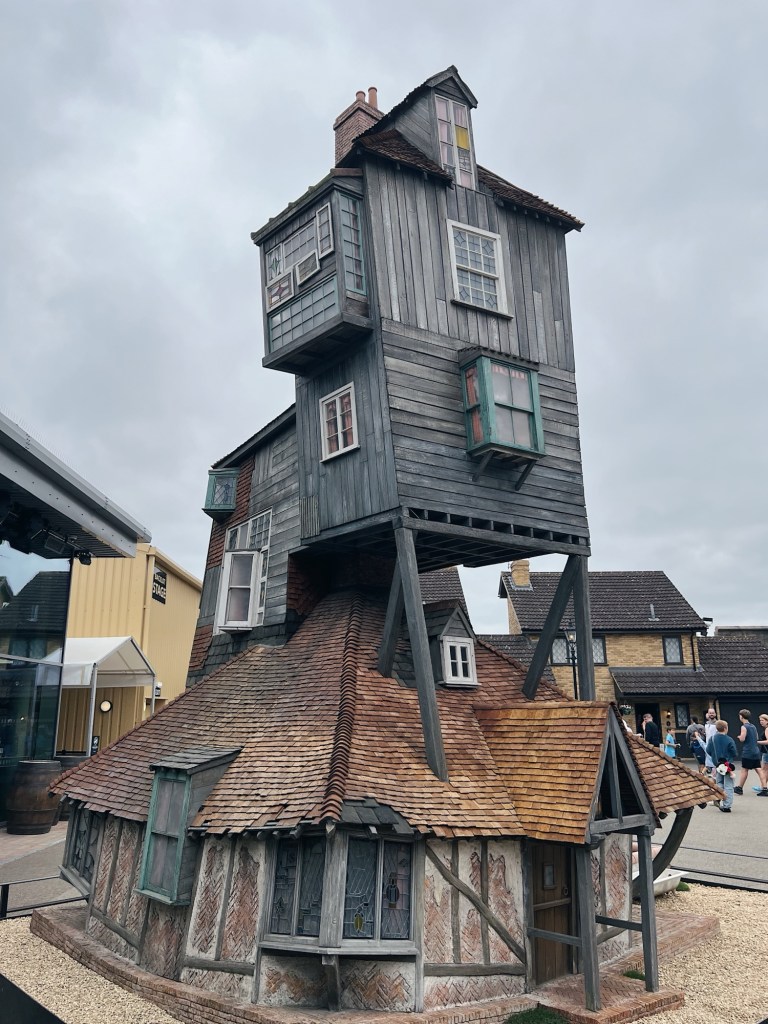
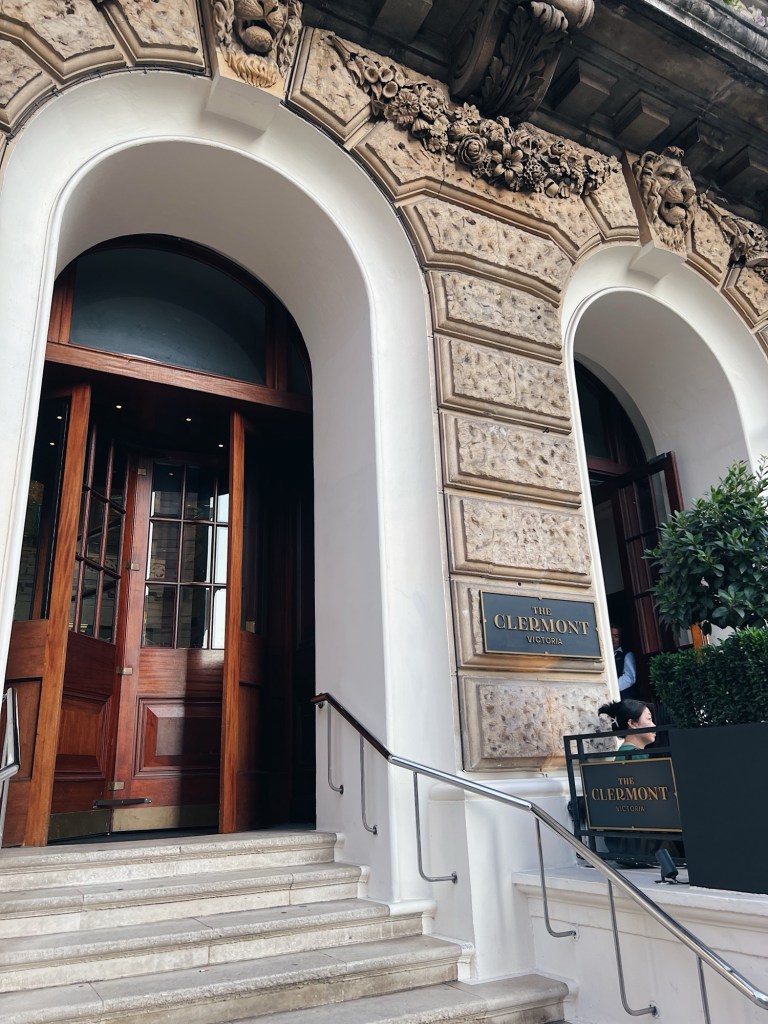
A trip to London is just unbeatable when it comes to sightseeing, art, food and shopping. It was on the top of my daughter’s wish list for her confirmation, and as we really wanted to give her an experience to last, it was perfect. We stayed at The Clermont London, Victoria – not our usual boutique-style choice, but the location was great: walking distance to Buckingham Palace, The Wolseley, and the CitySightseeing bus stop, plus right next to Victoria Coach Station (perfect for the Harry Potter Warner Bros Studio Tour). Big, comfortable rooms and excellent service made it a perfect base.
NB! As of April 2025 all nok-UK-residents must have a visa to enter. Pls allow 3 days for this process, to make sure you are granted the visa before entering the UK. You can get an Express visa, if you forget to get one, however, it is relatively expensive.
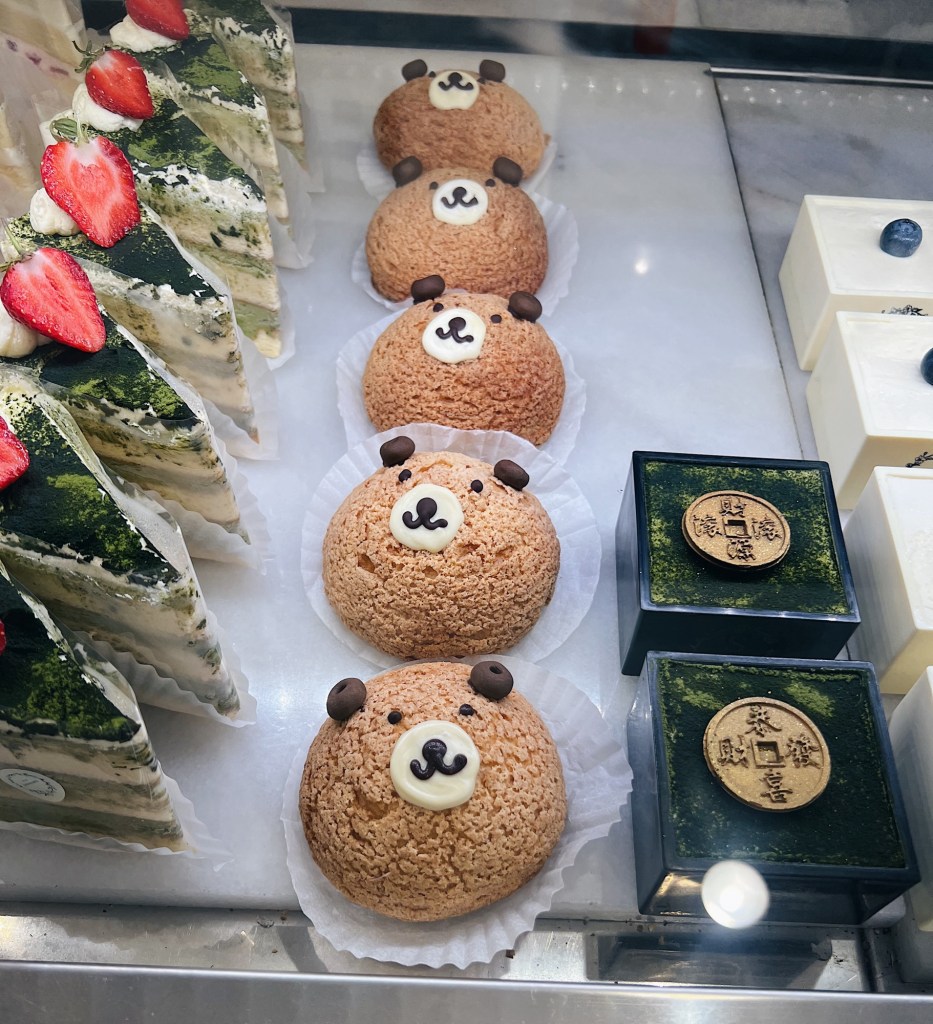
Sakurado Mochi, Chinatown – freshly made mochis (the best we ever had); Chinatown in general is foodie heaven.
Fish & Chips – Golden Union, Soho for a classic, sustainably sourced version, or the Camden Market riverside stall for a casual, surprisingly good option.
Buckingham Palace – watch the iconic Changing of the Guard ceremony (be sure to get there 30-60 minutes before, otherwise the crowds will not allow you a chance to see anything).
We didn’t get to see a show/musical, which we would love to do another time, and of course a ton of other things; London is just always a treat to come back to again and again.
Ps. Just using your creditcard in the Tube (metro) by the card reader at the ticket gates instead of buying a ticket, is both money and time saving.
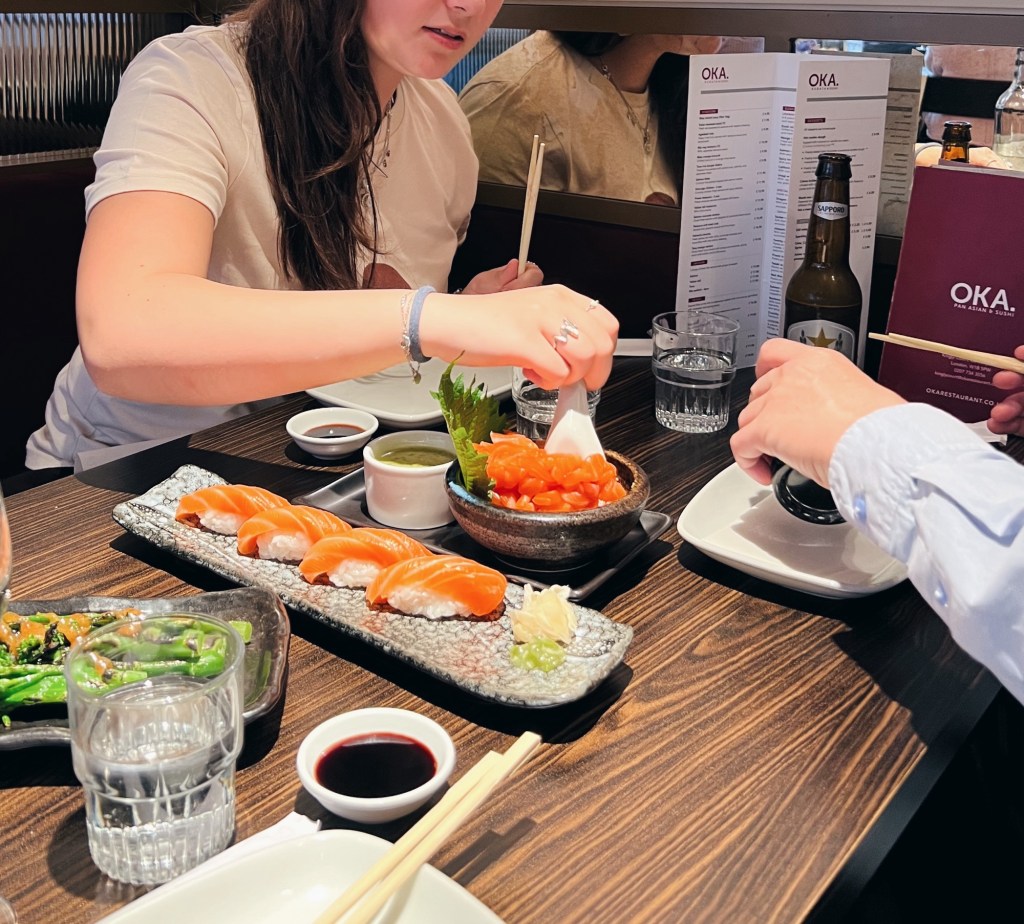
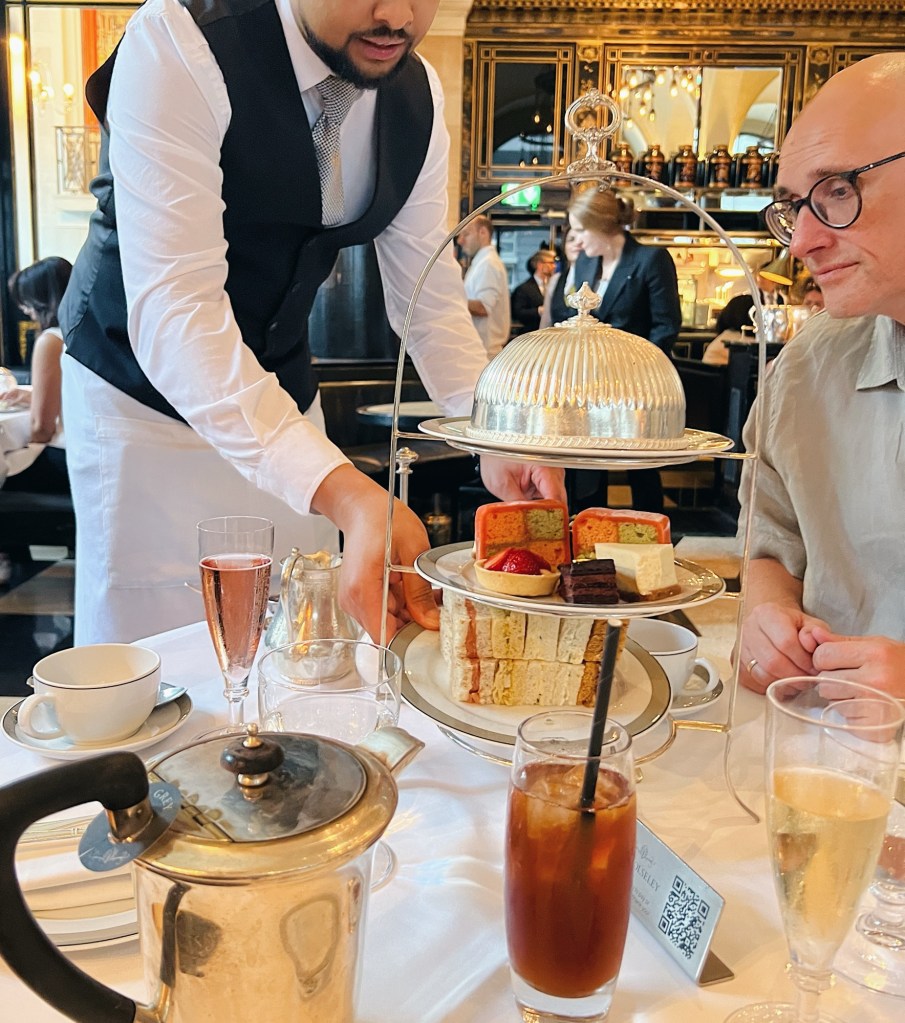
Camden marketChinatownCity Sightseeing BusFish’n’ChipsCamden MarketLondonTate ModernHarry Potter StudiosBuckingham PalaceNara t-shirtsNara ExhibitionHayward GalleryLondon EyeStreets of LondonMillennium BridgeSakurado Picadelly CircusOka restaurant Buckingham PalaceHarry Potter StudiosThe ClermontLiberty / SohoHigh tea at the Wolseley
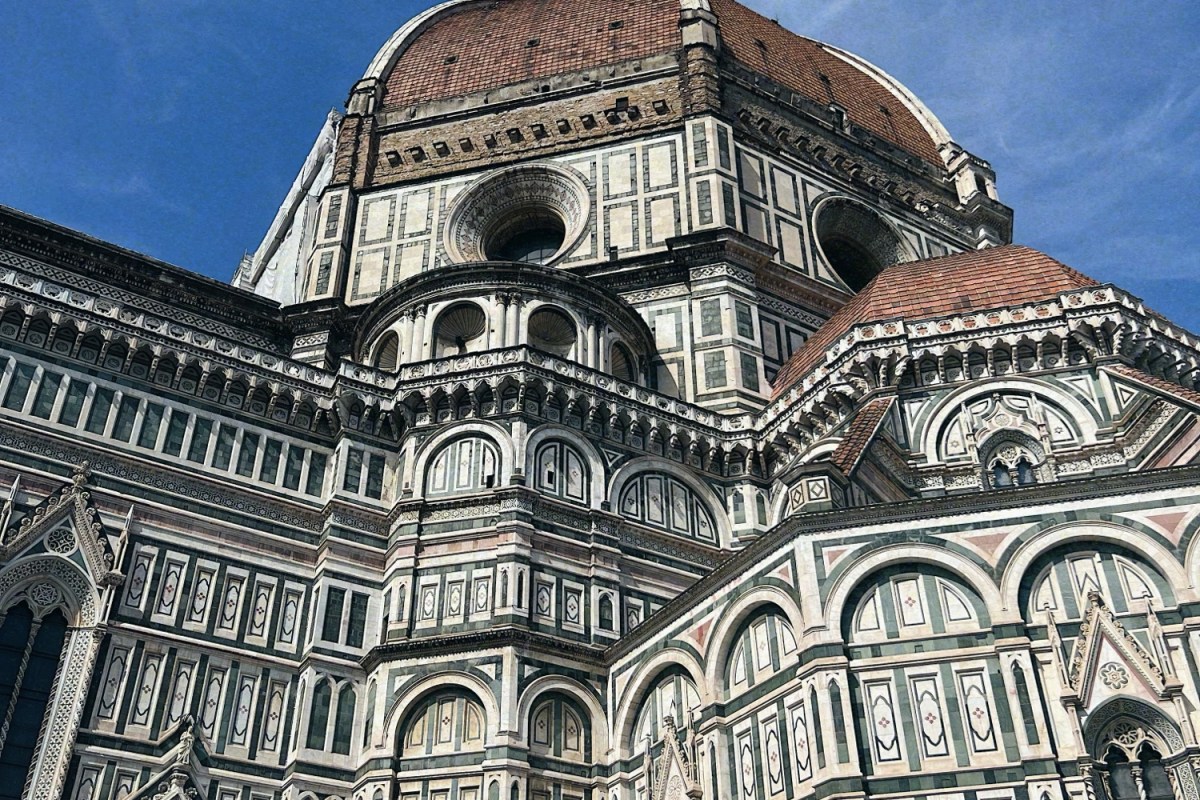
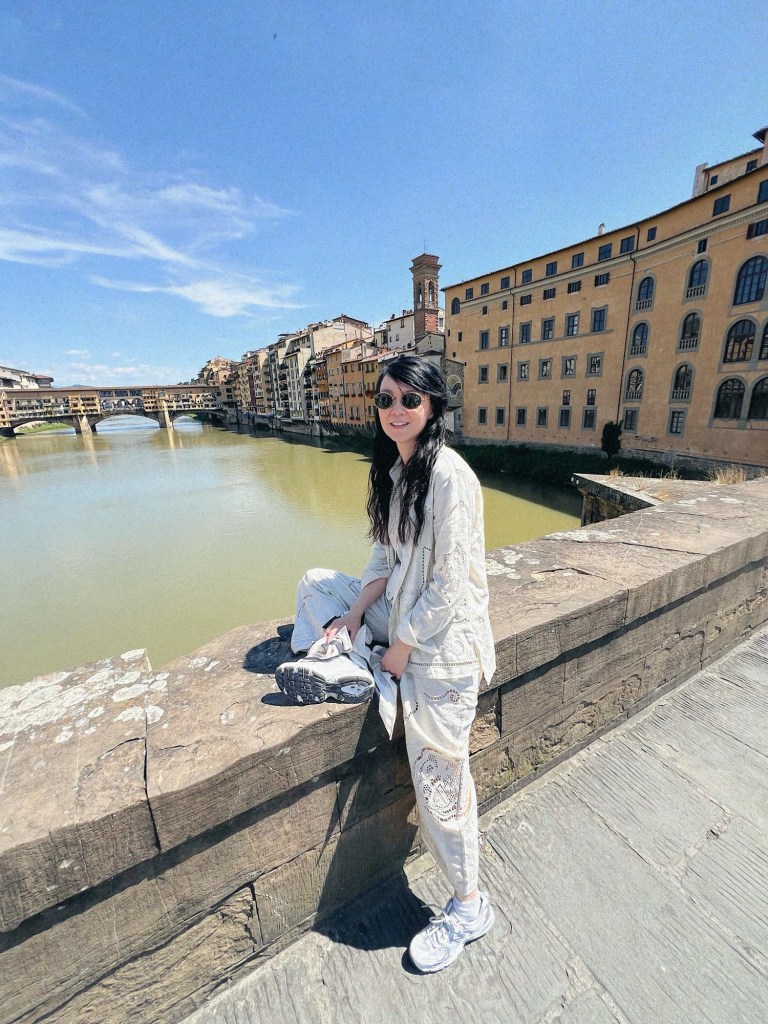
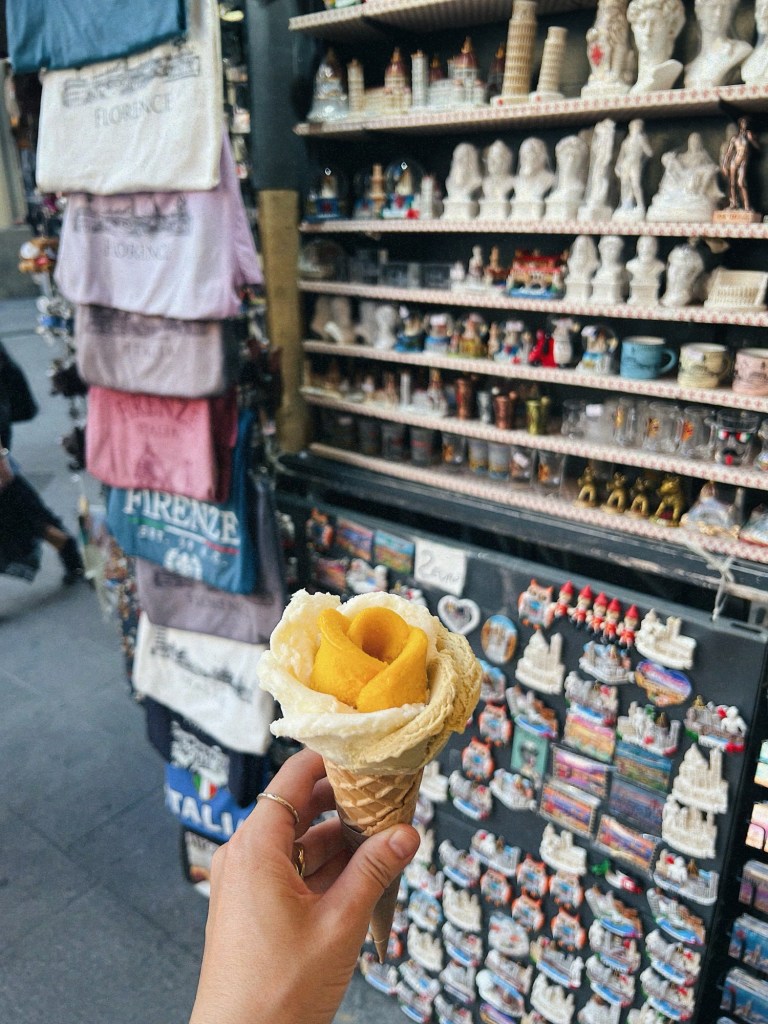
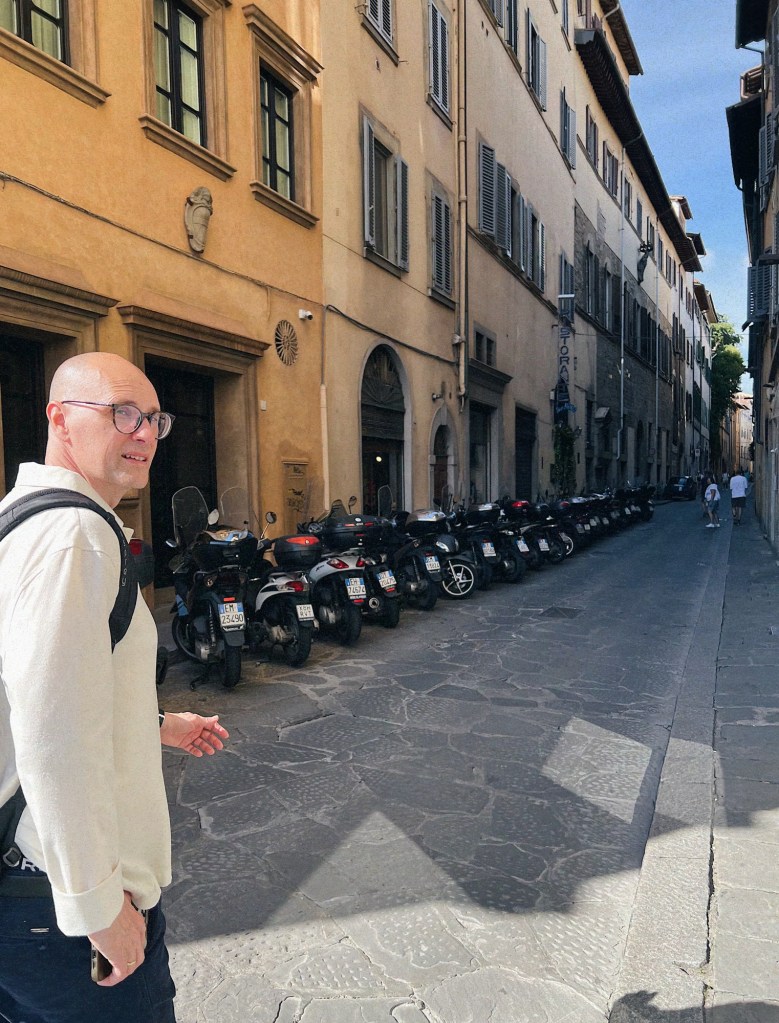
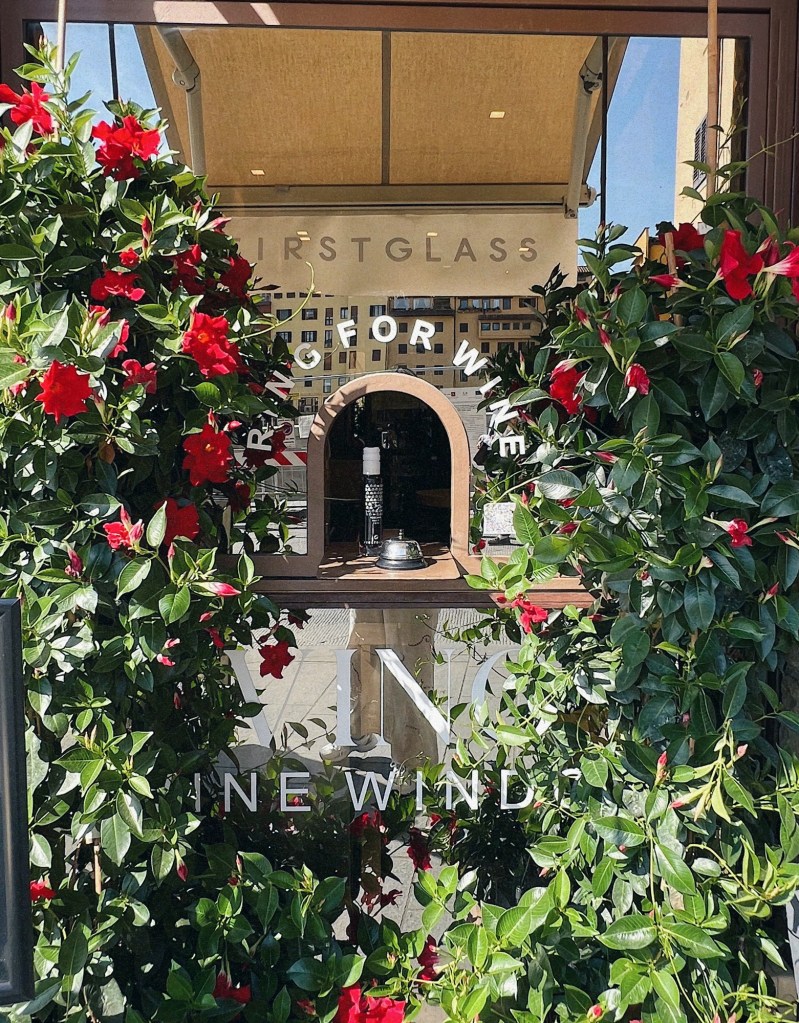
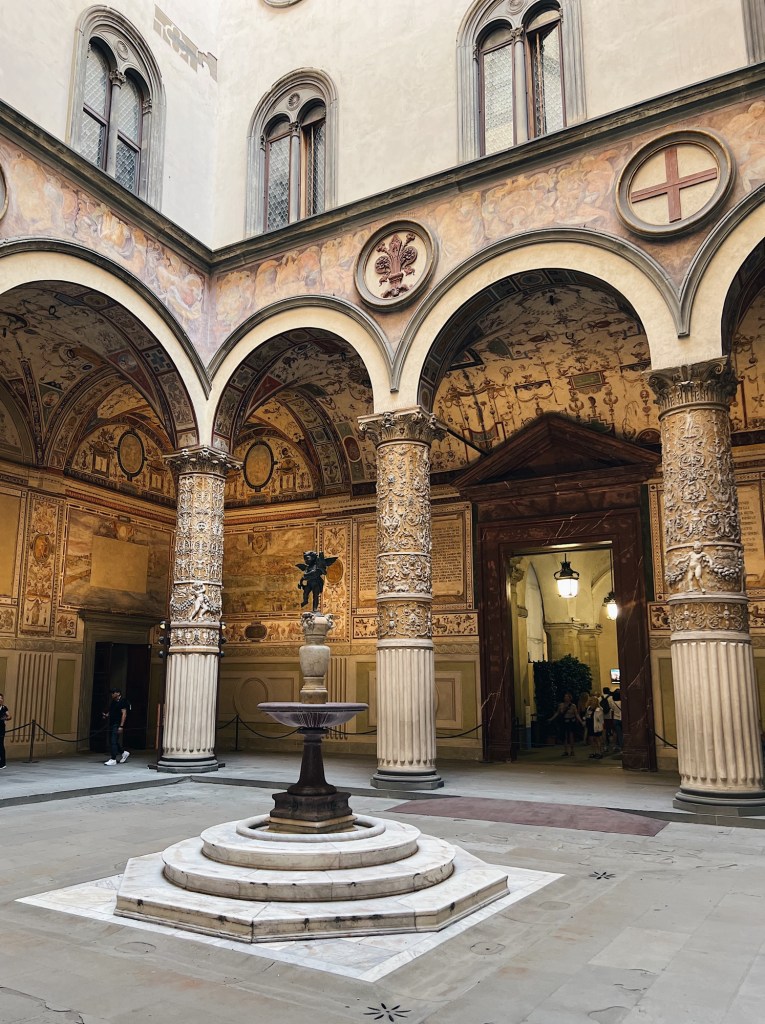
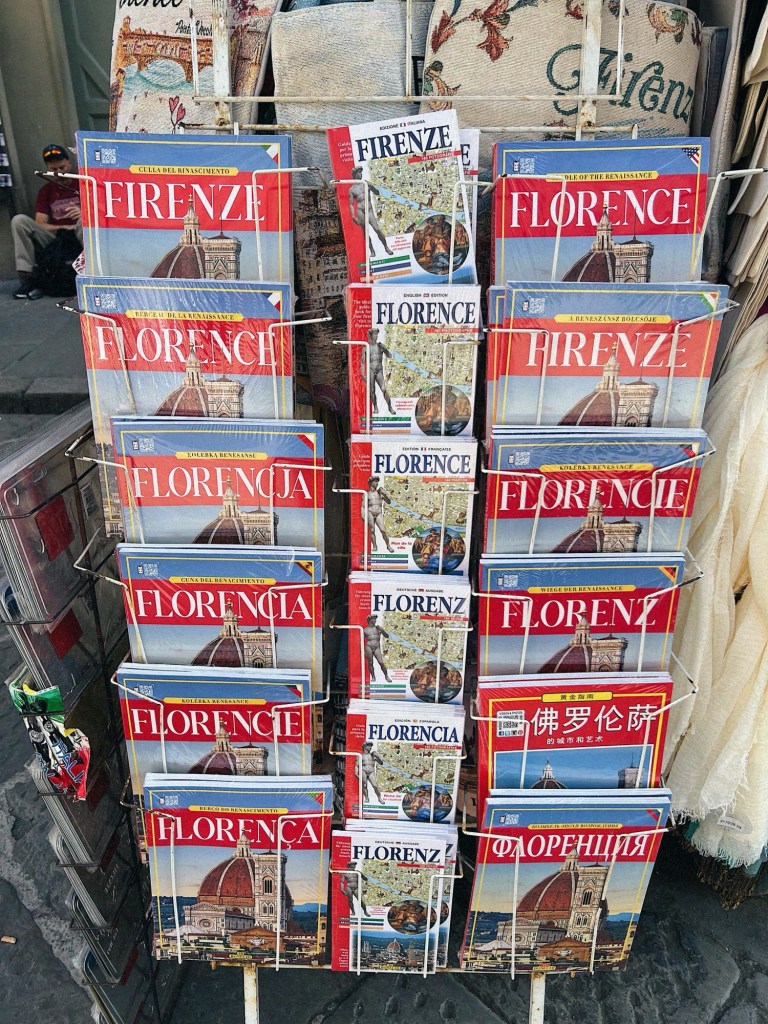
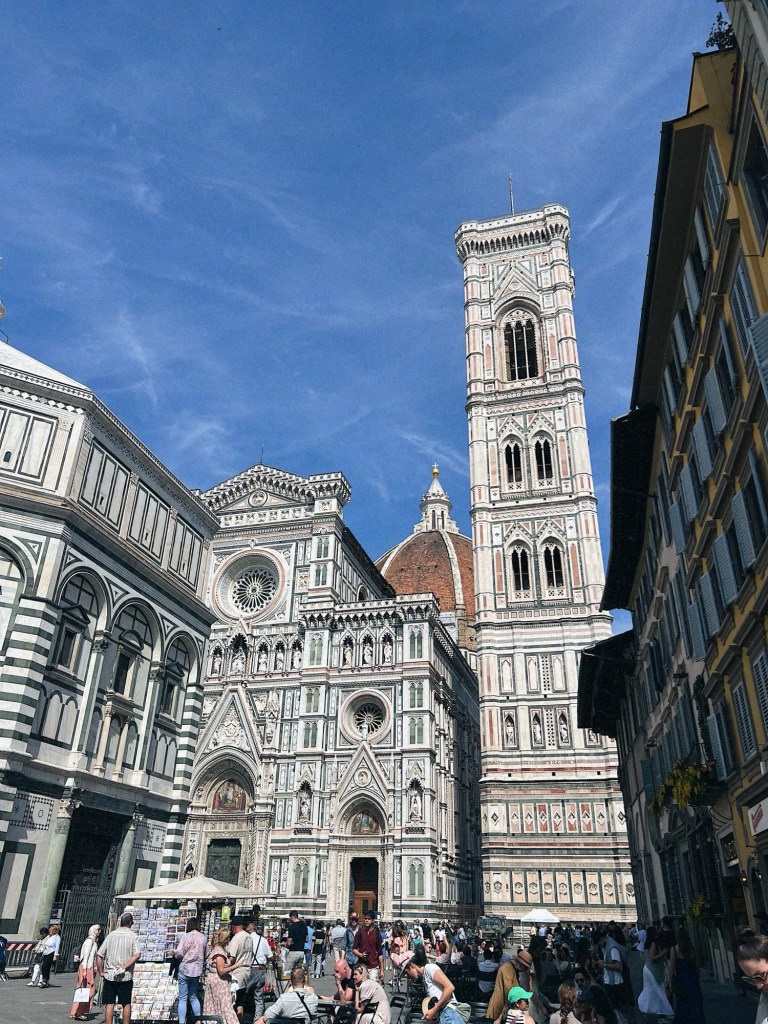
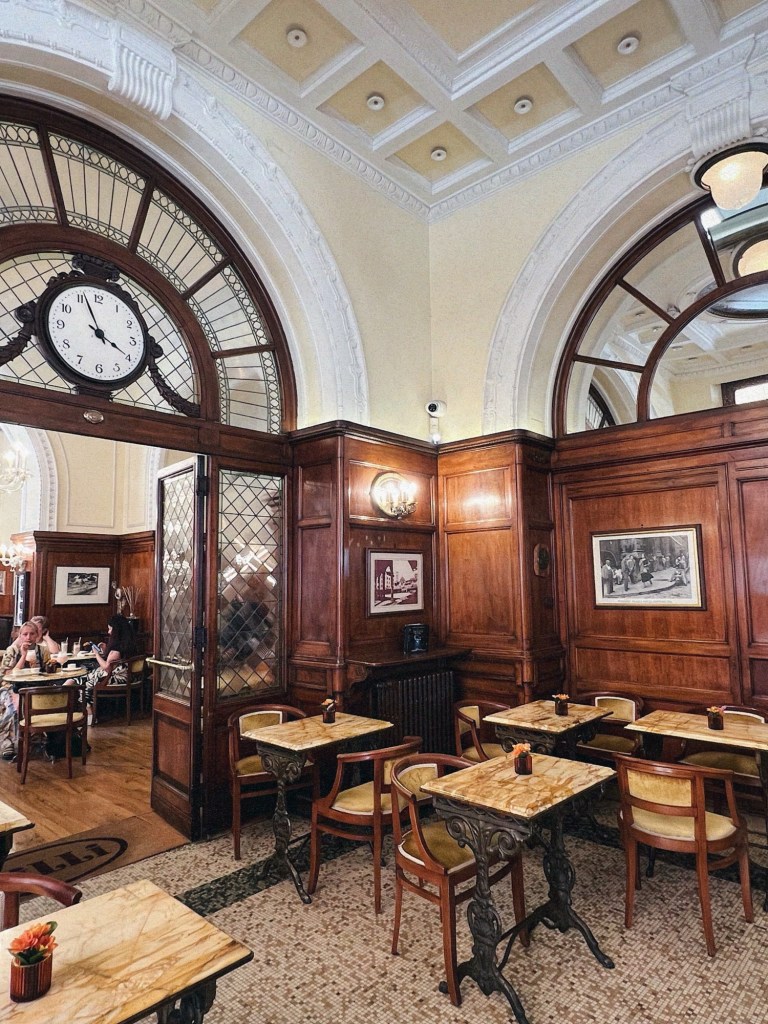
Florence is a city of golden light and Renaissance soul — where every narrow street opens onto timeless beauty. From Botticelli’s brushstrokes to the aroma of truffle pasta and espresso, the city stirs all the senses. Whether you’re here for fashion, food, or just to wander, Florence rewards slowness and curiosity. Here’s a small curated list of classic, stylish, and quietly exceptional places in the city.
🍝 Where to Eat (Classic + Cult Favorites)
Trattoria Cammillo – Family-run since 1945 in Oltrarno; cozy vibes and Tuscan staples .
The Space Outlet – Prada (Levanella) – Designer outlet for Prada, Miu Miu & Church’s; pair with The Mall (that offers Gucci, Marin, Versace, and many many more). You can take a shuttle bus from the city centre to go there, it costs 18 euros return and takes approximerer 50 minutes
📚 Culture
Biblioteca delle Oblate – Rooftop café, city views, calm workspace
Giardino dell’Orticoltura – Historic garden & greenhouse with seasonal events
Palazzo Gucci (Gucci Garden) – Fashion-museum & exhibition space with on-site café
Uffizi, Bargello, Marino Marini & Palazzo Gucci – Museum-rich Florence for slow cultural immersion
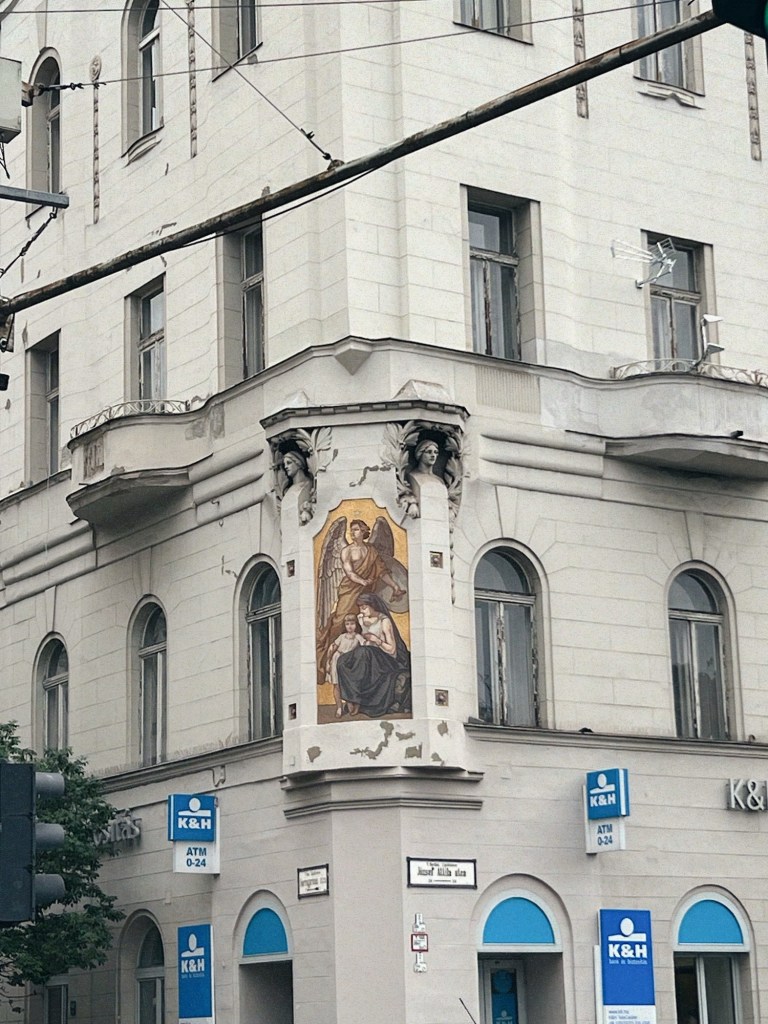
Budapest is a city split by the Danube and stitched together with history, design, and thermal waters. From grand architecture, cool cafés, playful parks and world-class culture, here’s a curated micro-guide of where to stay, eat, explore — and just enjoy the city.
🛏️ Where to Stay
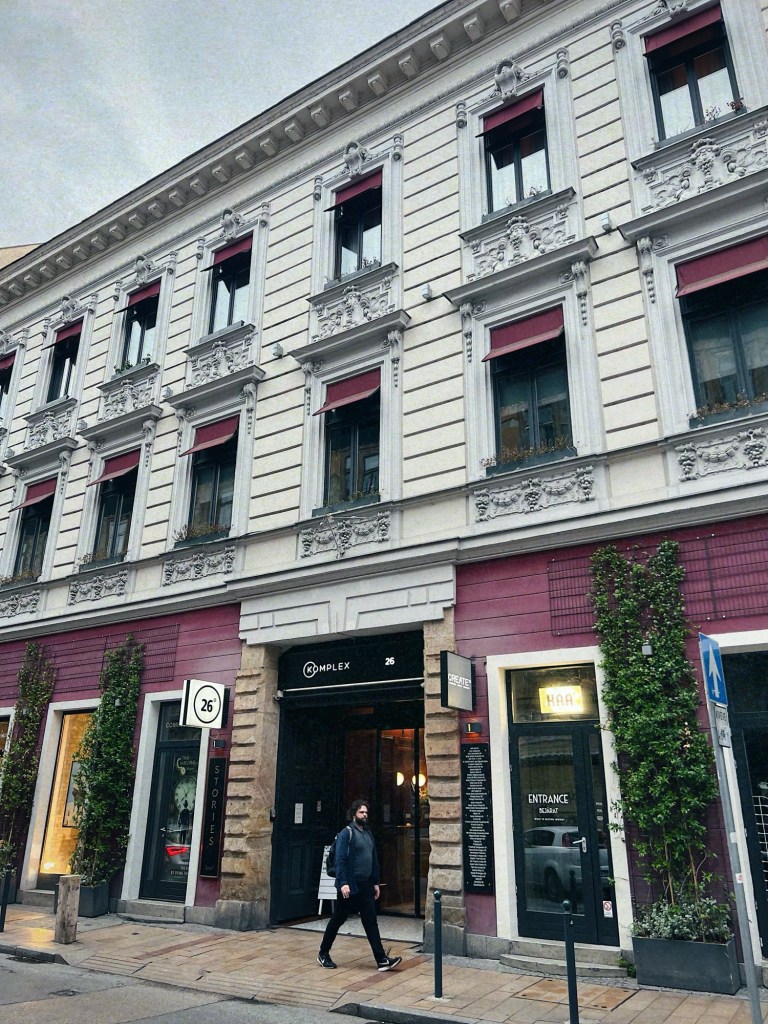
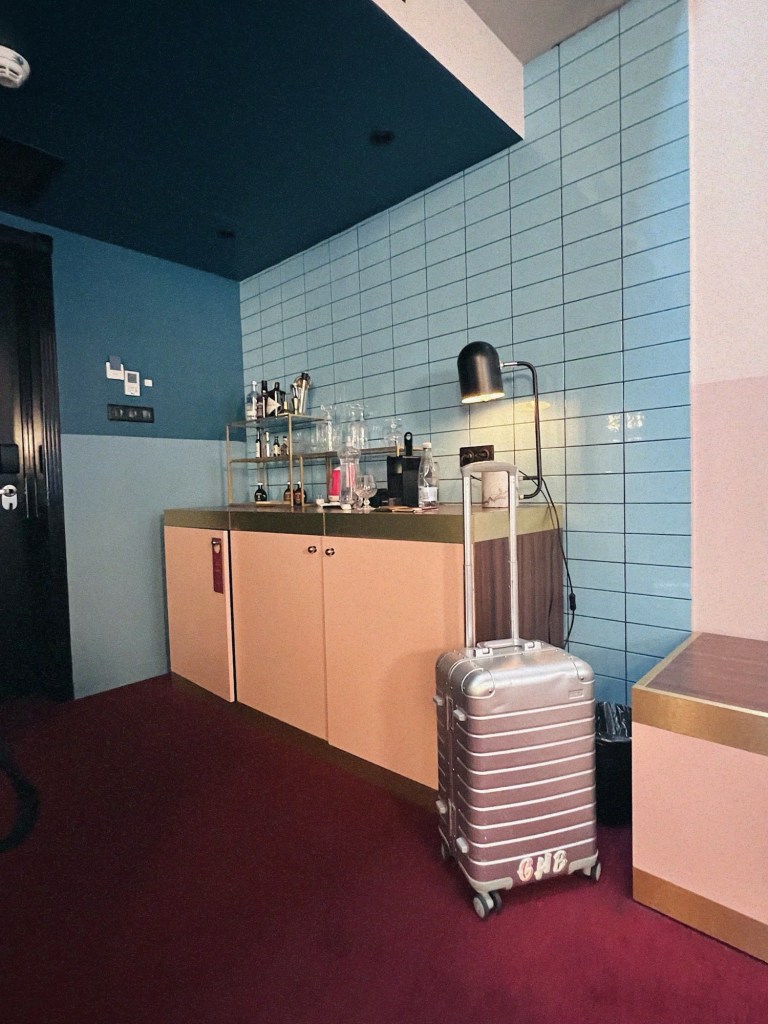
Stories Boutique Hotel
Eclectic, colorful, with a cozy courtyard. Located in the lively Jewish Quarter and with all the good restaurants just around every corner: Stories Hotel
Vernon House
Modern, minimalist, and peaceful. Perfect design entusiasts and great location: Vernon House
Moments Hotel
Elegant hotel on Andrássy Avenue with spa and comfortable rooms and a also close to everything. Andrássey Avenue was inspired by Champs Elysee in Paris and is home to the main international fashion houses: Moments Hotel
A beautiful little spot serving elegant dishes and (good) local wines. It is a mix between tapas and Asian fusion, and we absolutely loved it. Very small. Get there early or make a reservation: Restobar
Costes Downtown
Michelin-star dining in a light, relaxed setting. Recommended for an amazing lunch: Costes
Mazel Tov
Lush ruin courtyard with greenery, lights, and delicious Middle Eastern food: Mazeltov
Franziska
Bright, modern brunch spot in Buda with healthy dishes and good coffee: Franziska
New York Café
Gilded and dramatic — come for the atmosphere, stay for the cake: New York
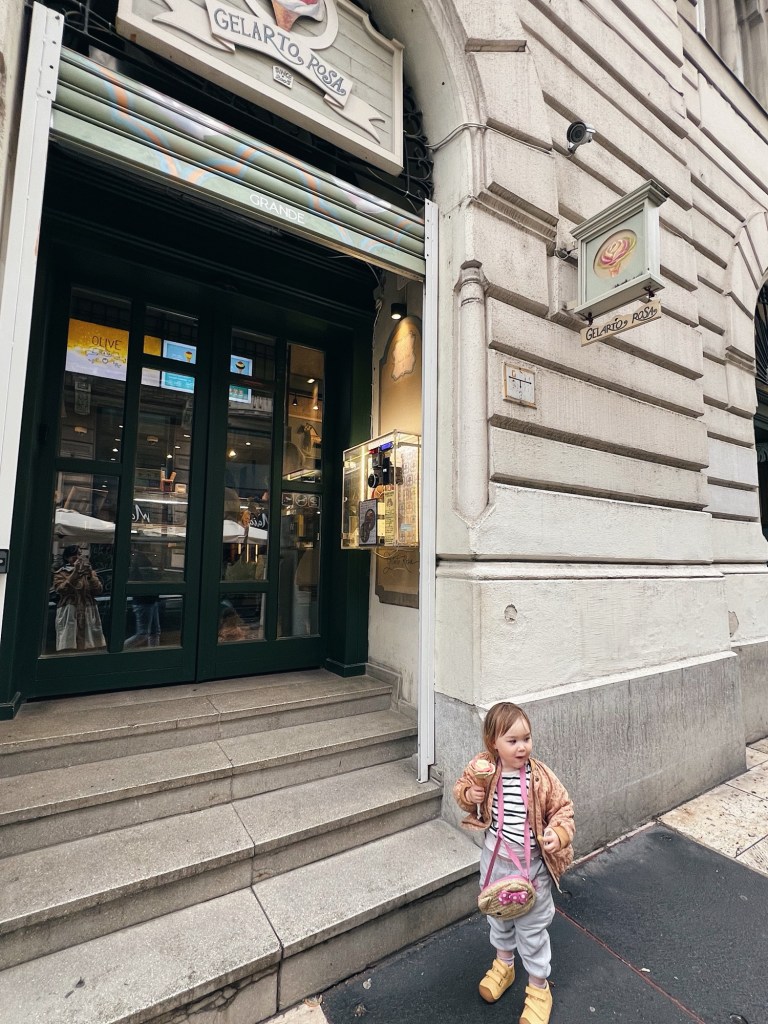
Gelarto Rosa
Because gelato as a rose is always a good idea: Gelarto Rosa
RestobarRestobarGelarto Rosa
🖼️ Museums & Culture
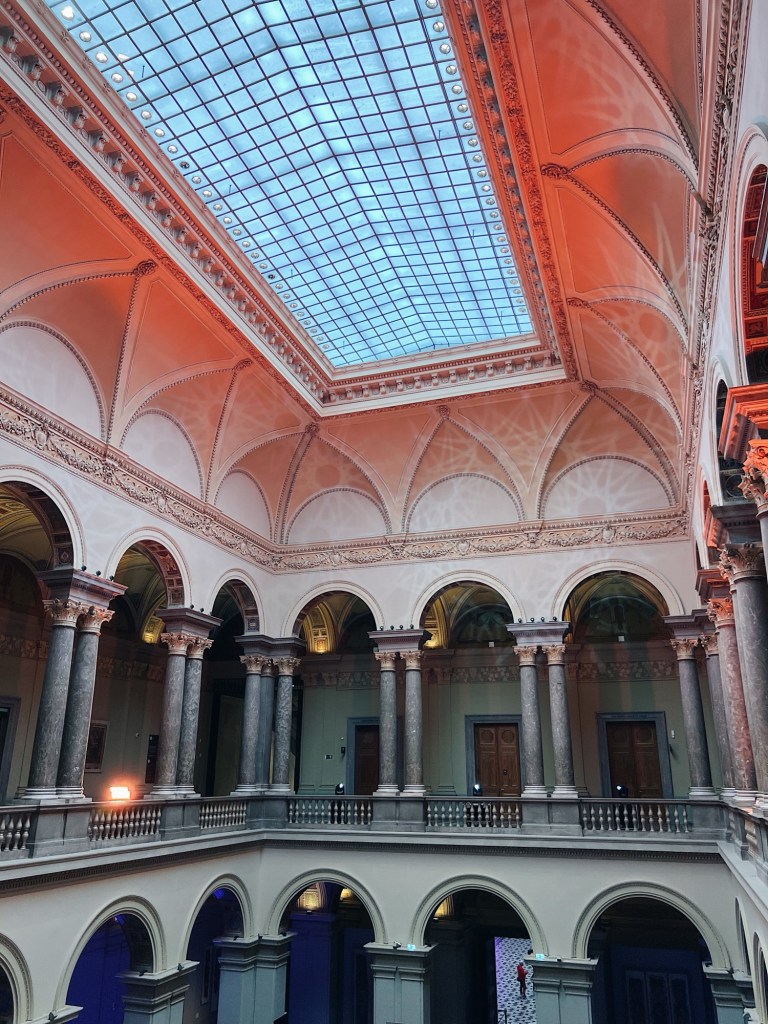
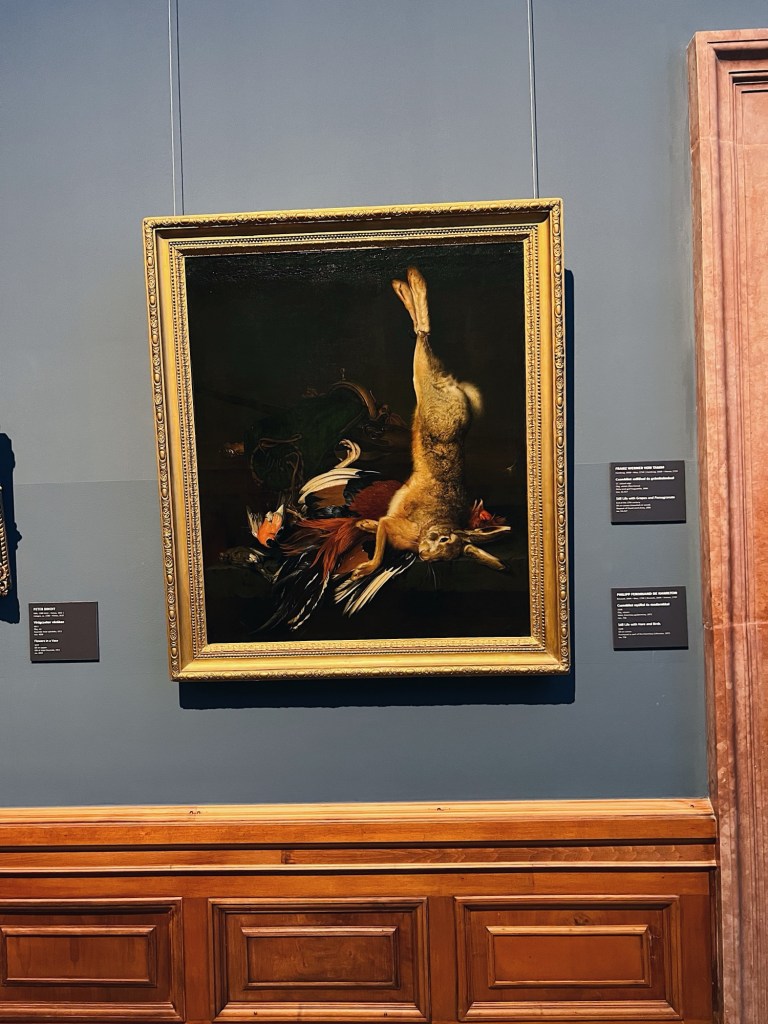
Museum of Fine Arts
From ancient Egypt to 20th-century masters, all housed in a stunning neoclassical building: Szepmuveszeti
Lumiere Hall
Immersive digital art experiences in a striking industrial space: Lumiere
Museum of Fine ArtsMuseum of Fine ArtsMuseum of Fine ArtsMuseum of Fine ArtsMuseum of Fine ArtsMuseum of Fine Arts
👀 Things to See & Do
• Parliament Building – Neo-Gothic beauty right by the river.
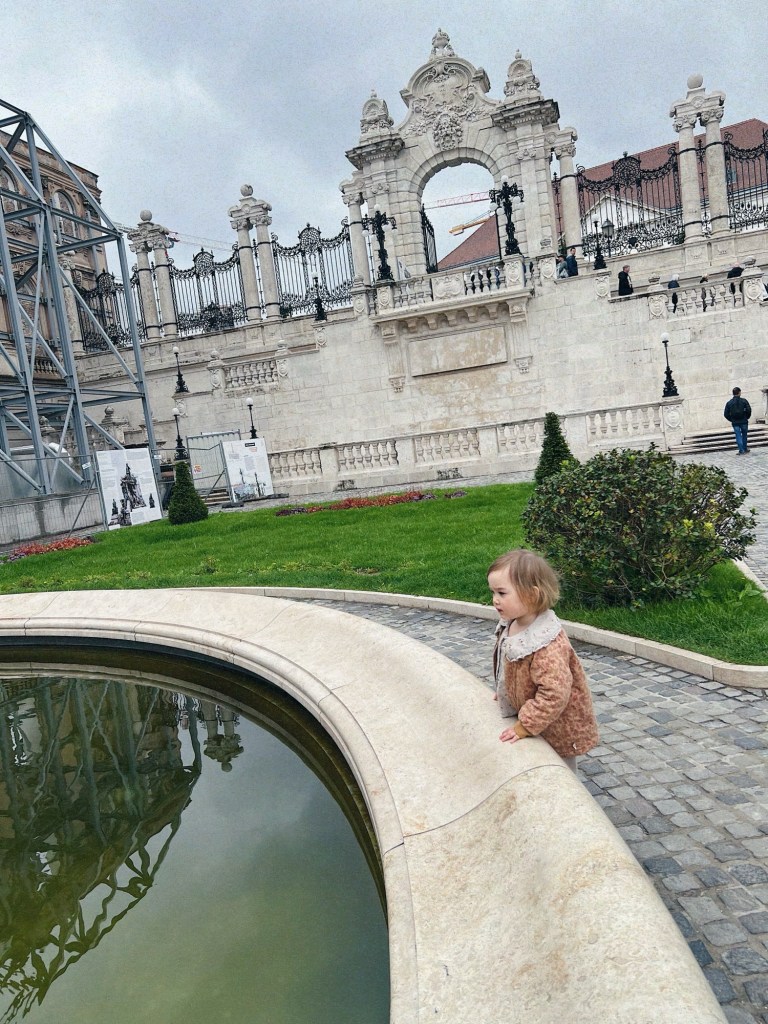
• Buda Castle Funicular – Ride the old cable car up Castle Hill for views and charm.
• Fisherman’s Bastion – White stone lookout towers with panoramic views.
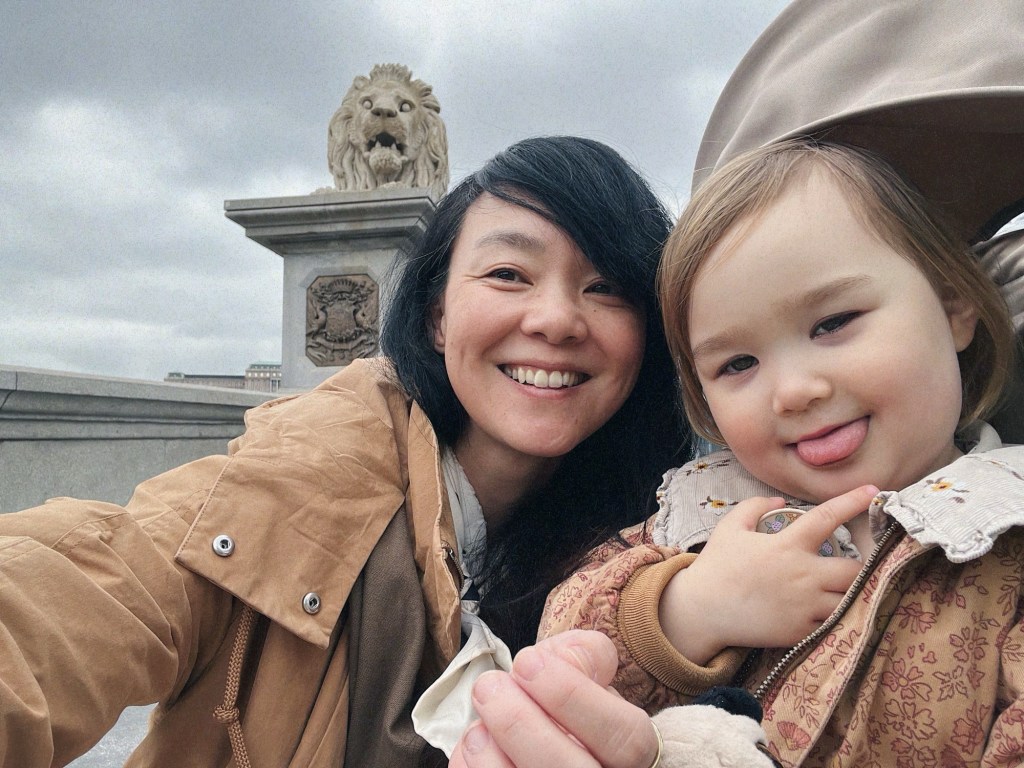
• Chain Bridge – Budapest’s most iconic bridge, glowing beautifully at night.
• Heroes’ Square – Monumental statues and a gateway to City Park.
• City Park (Városliget) – Green space with lakes, playgrounds, and castles.
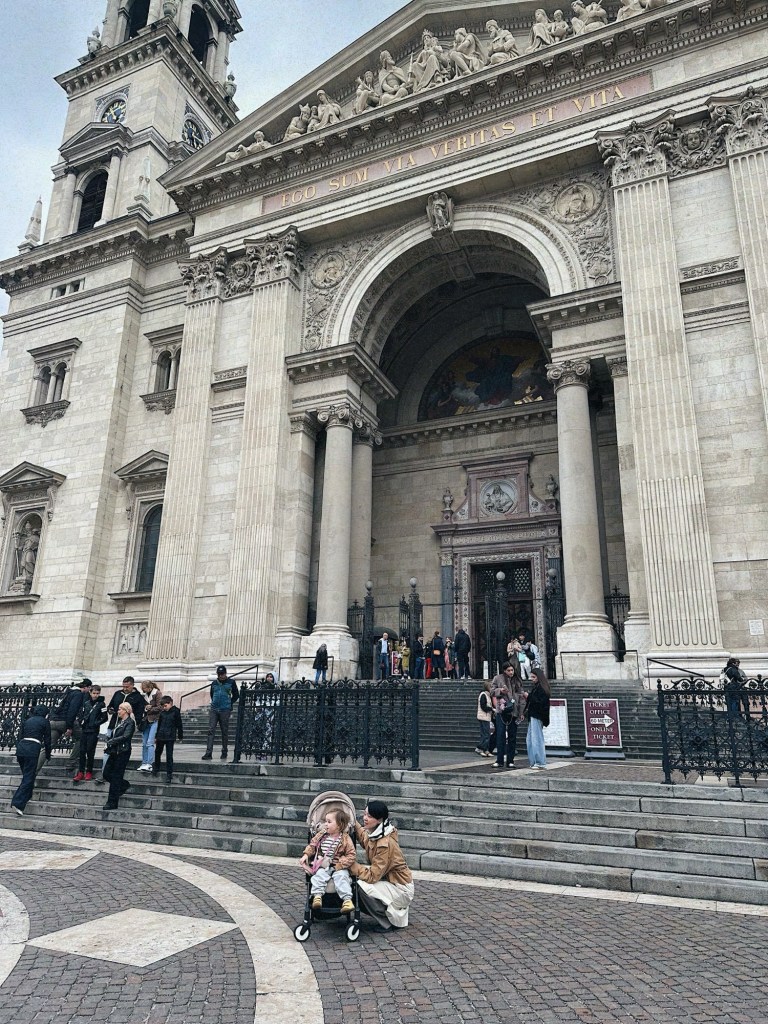
Skt Stephen’sSkt Stephen’sIn front of the ParlamentParlamentPlaygroundBuda FunicularBuda FunicularBuda FunicularView from Buda FunicularView from Buda CastleBuda CastleChain BridgeChain brigde selphie
✨ Local Highlights (that we did not get to try, but is on the list for our next visit)
Széchenyi Baths
Baroque-style thermal baths — We heard you should go early morning or near sunset for the best experience.
Margaret Island 🏝️
A traffic-free island in the middle of the Danube with fountains, bike rentals, and shady walking paths.
Boat tour on Danube 🚤
We just stayed 3 days and though we could have spend more time, I would sat that 3 days is enough that you get a good feel of the city. Till next time, Budapest ❤️.































 hee bune diaries